



If I asked you to name Hall of Famers who have played for the Yankees, you would probably list the likes of Babe Ruth, Mickey Mantle, Derek Jeter and the other big names and legends from the franchise’s history. There are quite a few of people on that list who you can pick from who are in the Hall as Yankees, who only or primarily played in New York.
That being said, there are also some Hall of Famers who only passed through pinstripes. In some cases, you might not even realize they ever played for
the Yankees. Today is the birthday of one of those guys.
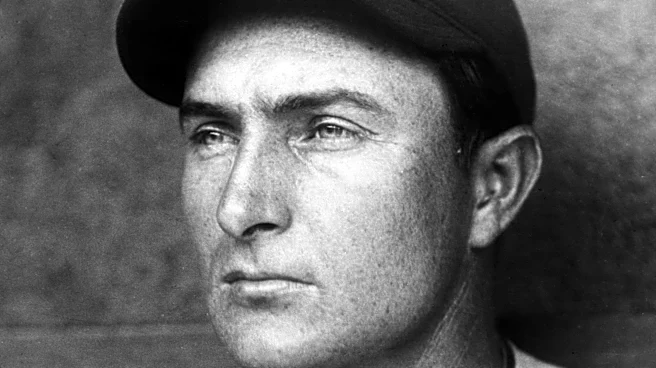
Paul Glee Waner
Born: April 16, 1903 (Harrah, OK)
Died: August 29, 1965 (Sarasota, FL)
Yankees Tenure: 1944-45
The man who would be dubbed “Big Poison” was born in what was then the Oklahoma Territory, a couple years before it became a state. He came from a talented baseball family. For one, he had a little brother, Lloyd, with whom Paul would play much of his career along side, and who was also elected to the Hall of Fame. However, his father had also once been offered a contract with the then Chicago White Stockings, but turned it down and eventually settled into Oklahoma farm life. Paul credited a game they played on the farm, where they would use corncobs as a ball, as how he was able to hone his hitting ability.
After his youth, Waner enrolled at what is now East Central University in Oklahoma and played on the baseball team. There, he was spotted by pro teams, and despite his parents wishes that he pursue a career as a teacher, Paul elected to enter try to make it in baseball.
In 1923, Waner ended up with the Pacific Coast League’s San Francisco Seals. He had initially come up as a pitcher, but after developing a sore arm, the Seals moved him to the outfield. That turned out to be a prescient move, as Waner soon showed his ability as a future Hall of Fame hitter.
In San Francisco, Paul took off, hitting over .350 in his three seasons there, include .401 in 174 games in 1925. That caught the eye of several major league teams, including the Pirates, who purchased him from the Seals in October 1925.
In the big leagues, Waner hit the ground running. He debuted in the majors with a .336 batting average and a .941 OPS as a 23-year old in 1926. The following year, with Lloyd also joining the Pirates and playing center field with Paul in right, Waner led the league with a .380 batting average. The brothers helped the Pirates to the World Series, although they were swept by the 1927 “Murderers’ Row” Yankees.
Over 15 years in Pittsburgh, Waner would became a legend for the team. From 1926-40, he hit .340/.407/.490 with over 2800 hits. He won the batting title twice more after 1927 and put up 70.1 rWAR as a member of the Pirates. He also gained his nickname, which supposedly came from a Brooklyn Dodgers’ fan, who was trying to call Paul and Lloyd “Big Person” and “Little Person,” but the Brooklyn accent made it sound like “Big Poison” and “Little Poison,” which would stick to the brothers.
Towards the late 1930s, the Pirates began to slip in the NL standings. In 1940, Waner suffered an injury, and while he only missed a couple weeks, Pittsburgh decided to move him and Lloyd to bench roles as they looked towards the future. Not getting regular playing time, Paul’s stats slipped and the Pirates decided to release him following the season.
For 1941, Waner signed with the Dodgers, but hit just .171 in 11 games with them and was again released. He soon joined the Boston Braves with his brother, playing for future Yankee manager Casey Stengel. While still not at his previous Hall of Fame level, Waner rebounded in Boston. It also helped that Stengel helped him realize that his eyesight was going and that Waner should wear glasses on the field. In Boston, Waner also surpassed the 3000-hit mark, recording the milestone against his former Pirates’ team. At that time, he was only the seventh player to reach that mark.
After two seasons in Boston, Waner signed back with the Dodgers in 1943. His second go-round in Brooklyn went much better, as, despite missing some time with an injury, he OPSed .802 in 82 games for his best season in years. He returned to the Dodgers for 1944, where he was mostly used as a pinch hitter. However with the the Dodgers in last place, he was again released. This time he only had to go across the city for a new gig, as the Yankees picked him up.
Late in the 1944 season, the Yankees were still battling in a three-way race for the AL pennant. The Yankees thought the future Hall of Famer could be a serviceable, veteran bench bat to use in that race. As it turned out, Waner would go just 1-for-7 with two walks in his nine appearances, as the Yankees ended up in third place. The team did bring Waner back for 1945, but after just one pinch-hit appearance, where he drew a walk, the Big Poison decided to hang up his spikes after 20 seasons in the majors.
Despite his over 3000 hits, it took Waner a couple tries to get inducted into the Hall of Fame, but he was eventually voted in on the 1952 ballot. His brother joined him 15 years later via the Veterans Committee. As of now, they are one of just two sets of brothers to be inducted together. The elder Waner wouldn’t actually get to see Lloyd make it in, as he passed away in 1965 after a series of health issues.
Paul Waner’s best days obviously did not come as a Yankee; he only played 10 games for them. However, if you look up a list of Yankees in the Hall of Fame, he’ll forever be on the list.
See more of the “Yankees Birthday of the Day” series here