



Tuesday night, one of, if not the worst rule in the NHL, was once again on full display.
And once again, it was the expense of the New Jersey Devils.
Before diving into how problematic intent to blow the whistle is and will continue to be, let’s clear out some elephants in the room. Yes, this has happened to the Devils before. Yes, it can happen to all 31 other NHL teams as well. No, the Devils probably do not come back to tie or win Tuesday’s game even if the goal is allowed, nor did they deserve
to with how they played. Beyond all of that, today is for taking a look at the beginnings of this rule, when it was officially adopted, how it has adversely affected the Devils and a couple reasons I believe this rule needs to end soon, if not immediately.
The story of the Intent Rule begins back in 1995 with a team that technically no longer exists in the Quebec Nordiques and (because it would have to be them) Our Hated Rivals. Winging it in Motown has a good summary of an old TSN video (that seemingly no longer exists) with former NHL referee Kerry Fraser breaking down how the rule came to be. For an extremely abbreviated version, a play was blown dead due to an apparent injury to Alex Kovalev that disallowed a Joe Sakic goal for Quebec despite the fact that the puck had crossed the line well before the whistle was heard. The ref stated he blew it before the goal, and when video stated otherwise, he changed his statement to be that he intended to blow the whistle due to the injury. If you want the full nonsense of the story that eventually resulted in the creation of this rule, feel free to read that entire article; truly baffling stuff.
While this happened back in the 1995 playoffs, the language of the rule wouldn’t be officially amended until after the 2004-05 lockout. The way the above link highlights the issues with how the rule came to be makes it even crazier in hindsight that the league officially added this verbiage to their rulebook. Over the now two decades plus of having this rule in play and in writing, it has seemingly become used more and more frequently. Whether this is being used to cover up bad officiating or is truly because of the delay between losing sight of the puck and the mental process to actually get to the point of blowing the whistle is anyone’s guess. It has in the last few years at least anecdotally seemed to disproportionately affect the Devils.
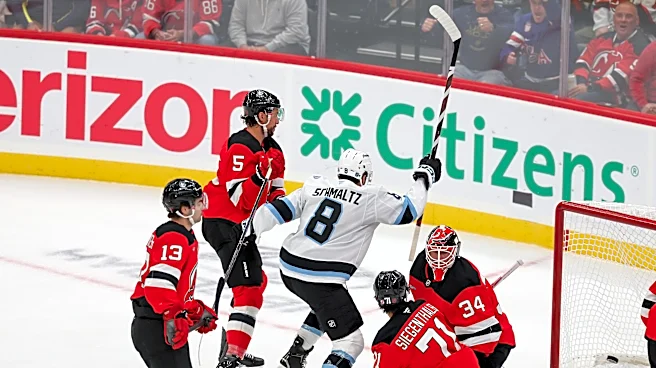
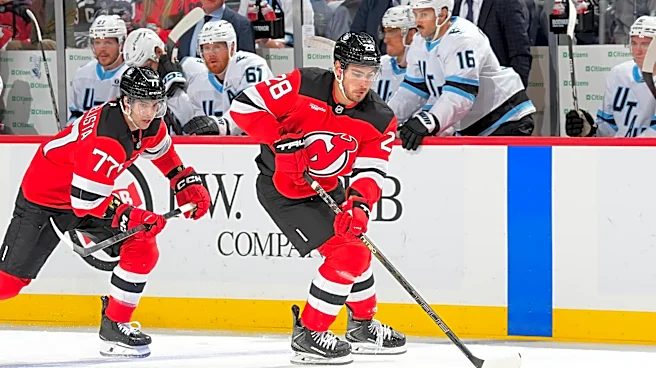
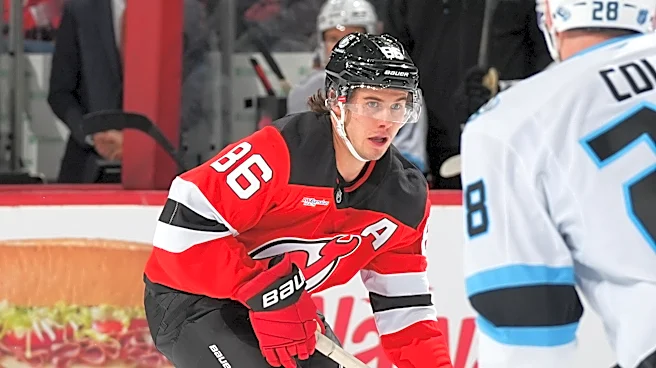
Tuesday’s game against Utah was just another example of either the ineptitude of the current crop of NHL referees, the ridiculousness of the rule, the lack of accountability from the league, or some combination of all more than one of those. In case you didn’t have a chance to see it for yourself, Luke Evangelista was inches, (maybe less) away from posting a hat trick in only his third game as a Devil, but his shot hit the post; Timo Meier shoveled the rebound back towards the net. The puck was never covered by Mammoth goalie Karel Vejmelka and eventually it went over the line and in. One of the refs, however, said that he had lost sight of the puck and intended to blow the play dead.
The biggest problem I have, and part of why the rule needs to go, is just how long it took the ref to blow the whistle. The broadcast showed clear footage of not only the delay between the puck going in and the whistle sounding, but also the fact that Meier had enough time to raise his arms, start celebrating, and I believe to even point at the puck in the net before the whistle blew, although that last part may have actually come after the whistle. If there was truly “intent” on the referee’s part, are we really to believe that his reaction time is THAT much slower than Meier’s? There’s THAT much delay between “hey, I lost the puck” and the whistle blowing that the player clearly sees it in the net over the line AND celebrates? I just don’t buy that.
So aside from this point of view on our team, why else does the rule need to end?
For a league that already tends to be inconsistent with rules, this one just feels as though it can be abused to help or hurt any team at any time depending upon who the ref is and how they feel about a coach/player/team. ESPN’s senior hockey analyst (and lifelong Devils fan) Greg Wyshynski might have said it best during this past Olympics:
The “intent to blow” rule in hockey is one of the stupidest things in the history of sports. The referee ends the play in his or her *mind* before the whistle blows, in a sport where every youth player is told to “play to the whistle.” Just awful. Might as well get rid of whistles all together and have the refs manage the game telepathically.
Despite the obvious hyperbole at the end, Wyshynski highlights the absurdity of the rule perfectly here. Intending to blow the whistle is ending the play in one person’s mind while the other referee/linesmen are left in the dark and the 12 players actively on the ice are still trying to play. Bias can impede actual officiating as well; if the ref in question has a history of issues with a coach or player or team, it becomes that much easier for them to deny a goal just because of their feelings and/or past problems.
I also saw another good point in an online Devils sphere the other night that I’m sure is being brought up elsewhere, but it really felt like the key idea that could get rid of this awful rule: sports betting. Over the last few years, sports betting has become more accessible to the point of it now being frequently advertised during games and some organizations as network sponsors. There’s been enough high profile cases/investigations of athletes/officials in many sports being involved in gambling and having it affect the results of contests. Having a rule that allows one human being on the ice to say, “Oh, but that doesn’t count because in my head the play was already over.” just allows for a laundry list of scenarios where contests can be rigged to the financial gain of either that person or someone that’s in on it with them.
Maybe seeing the Devils on the short end of the “intent” stick has swayed me a bit, but I think the potential for it to be misused as well as Wyshynski’s words have me convinced it’s time to go back to truly playing until a whistle is heard. There’s already a large amount of subjectivity and interpretations in the NHL rules and adding more ambiguity does no team any favors. Widespread telepathy, as Wyshynski quipped about, also does not seem to be a realistic possibility anytime soon, and so until that actually becomes an option, it’s time to stop worrying about when one human intended to blow the whistle and time to start determining what happened and what counts from before that whistle actually went.
What are your thoughts on the NHL’s “intent to blow the whistle” rule? Do you think it has disproportionately affected the Devils in a negative way? Do you feel there are some teams who always seem to get the benefit from it? Are you worried this allows referee bias to affect games? Are you concerned that it opens more doors related to sports betting and rigging games? Leave your thoughts and comments below and thanks as always for reading!