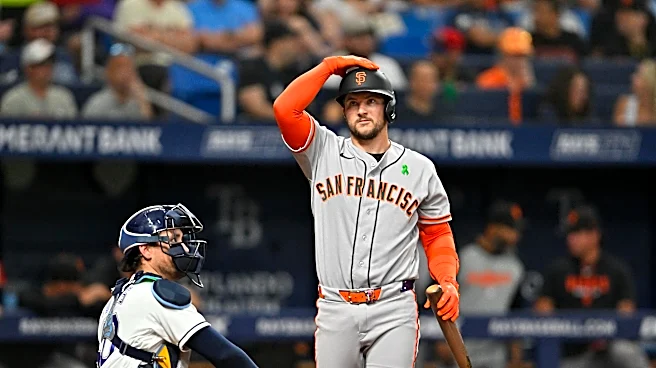



2026 stats: .146/ .213/ .183, 15 wRC+, -0.1 fWAR over 30 G, 89 PA w/ Giants

In game 4 of the division series against the White Sox, the Guardians turned a 2-0 deficit into a 9-4 lead, helping them claim the series in a winner-take-all game 5. You’d be forgiven if you did a double-take watching that game as a distantly familiar face launched a pinch-hit solo homer then later delivered a tie-breaking RBI single that sparked a game-defining rally.
Hey…wasn’t that the guy who was the worst offensive player
in the league when he was on the Giants?
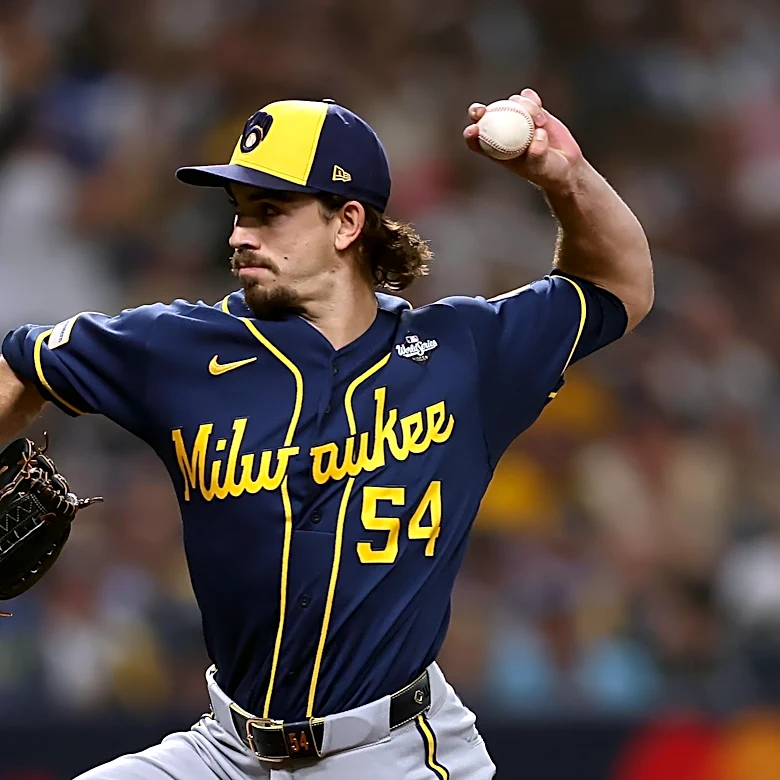
Yeah — that was Patrick Bailey. Same dude who played just 30 games for San Francisco before being traded on May 9th to the Guardians. The move surprised many. It was aggressive. It wasn’t universally panned either. The catcher was a man of extremes: a number-one glove and dead-last bat. His 89 plate appearances through April were excruciating to watch. He hit .146 with a .183 slugging percentage. A .396 OPS. A 15 wRC+. He had somehow accrued a -11 batting run value in a month. Those numbers are bad, and somehow they still don’t really do justice to how bad he was. Watching his at-bats was the sensory equivalent of blowing hot air into your eyeballs with a hair dryer. Trying to hit a baseball was a desperate, feckless act for Bailey, like an accountant, recently stranded on a desert island, rubbing two pencils together to start a fire. He’d leave the batter’s box as cold as it was when he arrived.
Was he really that bad? I mean I’m having fun tooting the hyperbole horn, but that 15 wRC+ ain’t a lie. Perhaps the better question is was he going to stay that bad? No he wasn’t, and no, he didn’t. Looking at the batted-ball metrics and expected stats, it was pretty clear Bailey wasn’t getting a fair shake (his BABIP with the Giants was .186). Things evened-out in Cleveland. Bailey batted .228 for the rest of the year as a Guardian with a .292 OBP (256 PA) and a respectable .390 slugging percentage — 30 points higher than his previous career best mark he posted as a rookie in 2023. His 90 wRC+, while still below average, is good for the highest of his young career. Over 33 at-bats in the postseason, Bailey slashed .273/ .333/ .455 with two homers and four runs batted-in — one less rib-eye than he had as a Giant.
Sift around in the muck and the mire of early 2026, and it’s pretty easy to track the logic of the trade. Everyone else was doing bad, and Bailey was the worst of the bunch. The catcher’s plate-appearances were a black hole that Buster Posey and pretty much everyone else was tired of getting sucked into. Something needed to be done, and Bailey gave Buster a decent-sized head to roll without causing mass clubhouse panic. It served as a hopeful wake-up call without looking completely rash or reactionary in the moment. While the move sacrificed defense, it was defensible. Back-up catcher Daniel Susac was off to a hot start, and Posey wanted to find ways to get players like Jesus Rodriguez and Eric Haase more at-bats. Bailey was relatively young, under team control, and had some serious value as a two-time Gold Glove winner. This was a person with elite skills in a particular area who knew how to shepherd a flock of pitchers over the hills and through the valleys of an at-bat, an inning, a game, and a season. While the institution of the ABS system limited some of his stand-out talents as a pitch-framer, there was still some room for the artistry with selling balls-and-strikes.
Bailey had value, and Posey turned him into a draft pick, a pitching prospect with a Major League nickname (who would end the year allowing just one earned run over 8 innings against LA, as well as a Shohei strikeout), and an immediate (though not sustained) offensive boost from catching reinforcements. Three days after Bailey’s trade, Eric Haase homered twice off Yoshinobu Yamamoto — a shellacking that heralded Yamamoto’s meltdown against Milwaukee in the National League pennant. You could see the shadows of past demons passing across his glazed over eyes in that 3rd inning. Brice Turang, Jake Bauers, and Christian Yelich were just descendents of one man: Haase.
Posey and Tony Vitello replaced Bailey with an aggregate of five names. Daniel Susac boasted the most staying power. He’s 6’ 4’’ with a cannon for an arm, but after a hot start, Susac produced nominally better (94 wRC+) at the plate than Bailey did for Cleveland and was limited by injuries to his elbow and back before being shut down by a season-ending knee cap fracture in early August.
Trading Bailey sacrificed clarity. Plans A, B, and C had to be scrapped due to injuries. The position became a Guess Who? Game. Andrew Knizner? Sounds familiar… Drew Cavanaugh, who started the year in Double-A Richmond, Virginia, ended up making the most appearances at catcher for San Francisco. Offensively, he ended up ranking about the same as Bailey. Defensively, he was nowhere close.

It’s hard to argue that the Giants “won” the trade based on how the year panned out. Bailey found level at the plate. He moved out, moved on, and served up postseason dramatics for Guardian fans while the Giants’ cohort watched from their couches wringing their hands about a move made in May.