


Well, that didn’t take long, did it?
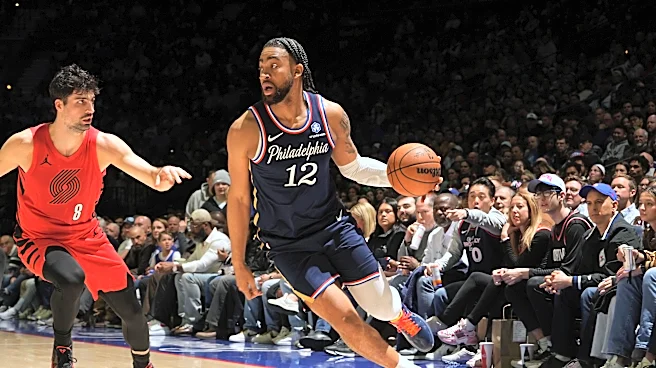
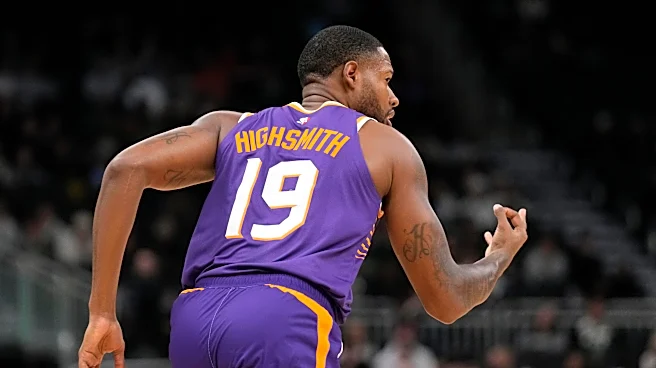
Less than a week after waiving Haywood Highsmith
, the Phoenix Suns have re-signed him, according to ESPN’s Shams Charania.Five days ago, Phoenix opted to waive the veteran defensive specialist, who was owed $1 million on a contract that was not set to become fully guaranteed until January 10, 2027. Had Highsmith
remained on the roster through that date, the deal would have become worth $3 million in total.
Now, less than a week later, he’s back.
So what’s the reasoning behind this? Why would the Suns waive Highsmith only to bring him back for roughly the same amount? Certainly there have to be some mechanics involved that benefit both sides, right? Because if not, the $1 million that was owed to Highsmith before he was waived would simply be added to the Suns’ dead cap, pushing that total to $24.2 million.
I haven’t seen an updated cap sheet yet or any official details on how the new contract is structured, but my assumption is that it will be fully non-guaranteed. If that’s the case, the $1 million previously owed to Highsmith would remain part of the dead cap, while his new deal would give Phoenix greater flexibility moving forward.
So why do it? For starters, the Suns gave Highsmith an opportunity to test the market and see whether another team would offer him a fully guaranteed contract. Given his recent injury history, including missing nearly all of last season after meniscus surgery, there were legitimate concerns. He cleared waivers, nobody brought him in, and ultimately he returned to Phoenix.
The Suns, meanwhile, may have created additional flexibility with the structure of the new deal. Had Highsmith remained on his previous contract, they already owed him $1 million, and that deal could have grown to $3 million if it had become fully guaranteed.
Under this new arrangement, Phoenix potentially avoids committing that additional money if Highsmith doesn’t make it to the guarantee date. If he does, the Suns have the room to keep him. That $3 million would hit the cap, but it wouldn’t necessarily create a major problem given where Phoenix already sits relative to the first and second aprons.
Another way to look at this is that Highsmith could potentially be on an Exhibit 9 contract, which would essentially make this a training camp invite and give the Suns an opportunity to see how he looks and responds physically. If he doesn’t make the regular-season roster, the deal wouldn’t count against the cap.
We could see something similar to what happened last season, when Jordan Goodwin and Jared Butler battled for a roster spot. This time around, that competition could involve Highsmith and Jamaree Bouyea, who also does not have a guaranteed contract. If that’s the case, Phoenix could still enter the season with an open roster spot, giving the organization another layer of flexibility.
For all the people who were devastated when the Suns waived Haywood Highsmith last week, you can settle down now. I found it funny how frustrated some people became, almost as if Phoenix were waiving a starter rather than a depth piece. In reality, Highsmith is someone who can step in when injuries occur or provide specific minutes against a point-of-attack threat. It’s a reminder that depth is fluid, and sometimes people become more emotionally invested in the idea of a player than what that player actually is in the present.
Highsmith still has a long road ahead of him to earn those minutes back. He needs to get himself back into complete NBA shape and rebuild that value. The fact that he cleared waivers also showed that his value around the league may not be as high as the local fan base believes.
That doesn’t mean he isn’t a worthwhile addition. He brings a defensive mentality, can shoot the three-ball, and fits with who and what the Phoenix Suns are trying to be from both an organizational and skill-set standpoint.
And the Suns? Kudos to them for remaining vigilant and finding ways to save wherever they can. For an organization that has been fiscally irresponsible in the past, this is further evidence that they are operating much more responsibly moving forward. You may look at saving $3 million as a risk when it meant potentially losing a player of Highsmith’s caliber, but it wasn’t necessarily much of a risk at all.
The Suns were already going to owe him $1 million guaranteed. My assumption is that this new deal is fully non-guaranteed, meaning they incur no additional financial loss if it doesn’t work out. Optionality. That’s what the Suns have given themselves.