
We’ve had a few quickfire revivals over the years, or magic carpet rides in modern terminology, but the one under Peter Reid came out of nowhere. The club was in a bad place – on and off the pitch.
We were heading towards the third tier for the second time, and Reid was appointed for an initial salvage job, and eighteen months later we sat mid-table in the Premier League after we’d just frightened Arsenal with nine men at Highbury.
We thought it was some ride at this point, but we still knew our place.
In the summer, that lot up the road had broken records all sorts of records by signing Alan Shearer for £15m, and we broke the £1m barrier for the first time when we brought in Alex Rae.
Niall Quinn was the main signing that followed when he arrived from Manchester City for £1.3m, and the hope was that he would score the goals to help us survive in the Premier League in the last season at Roker Park – but it wasn’t to be.
In the previous home league fixture, we’d beaten Coventry City to claim a vital three points, but it came at a cost. Quinn had gone down in an innocuous challenge, and it turned out to be a cruciate ligament injury that would keep him out long term.

The pressure was then on the manager to replace him, and almost every striker under a certain valuation was linked with a move to Roker. There was one, however, that got to the point where most people thought we’d got our man.
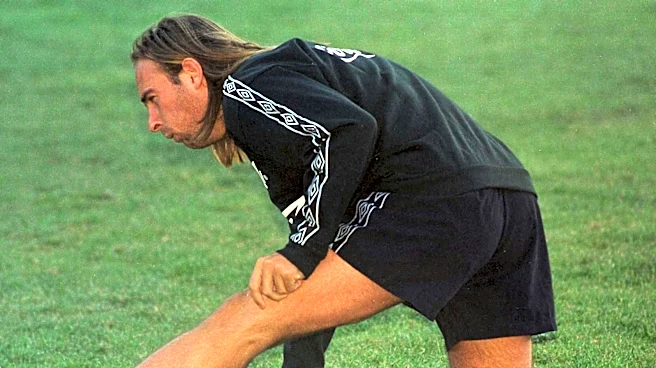
It had been reported that it was only a matter of time before Chilean 20-year-old striker Sebastian Rozental would be confirmed to be a Sunderland player, but on this day in 1996 it was confirmed the deal was off.
All seemed well until his club, Universidad Católica, changed the terms of the deal at the eleventh hour, and their demand for more cash did not go down too well with former Sunderland player David Hodgson, who was an agent involved in the deal:
Peter Reid wanted to check out the player, had agreed on certain things and it was looking good. But then Universidad came back with different terms and wanted more money. What they were trying to do was put a gun to Sunderland’s head over the move and you don’t do that with Peter. Once Universidad came back and insisted on changing the conditions, Peter said forget it, and I can’t blame him for that.
I’m very annoyed about the way Universidad have acted because it would have been a bit of a feather in my cap and done my old club a real favour too. I think it’s a shame that Sunderland fans won’t get the chance to see Rozental play. He’s a very exciting player and I think he would have done well for Sunderland.
His goals record is phenomenal. He’s scored 21 goals in 19 games and he is already a regular international at the age of 20, scoring goals for Chile. He’s young enough to have been involved at Sunderland for years to come. But unless there’s a complete change of heart then there’s no way he’ll be coming
A couple of months later, Rozental signed for Glasgow Rangers for £4m, where he picked up an injury in his second game, which set the tone for his five years north of the border.

Another possibility being looked at was Bologna striker Giorgio Bresciani, but it was being reported that he did very little to impress Reid in training during the week.
The former Torino and Atalanta player joined the squad on their mini-break to Cheshire, but Reid would not be pursuing any interest in the Italian, who has already missed out on moves to Southampton and West Ham after trials:
“He was not on trial. He joined us on Monday to train for a few days. He has now left and that is the end of the matter.
In Other News…
A leading member of the Roker Liaison Group resigned from his position on this day in 1996, urging it to be more positive and forward-thinking. Businessman Dave Cassie quit the RLG, saying it had become negative and unwieldy.
Too many people were too ready to moan about the club, why we weren’t spending millions on transfers for instance. I’m a positive person and we need to be totally positive about Sunderland. The club has got one of the best management teams in football and I think, in the long term, Sunderland have a marvellous future.
But I think there are certain people in the group who seem to be obsessed with our neighbours. Sunderland have put the building blocks of success in place and will be a much more successful club than Newcastle or Middlesbrough in the long term.
And by the time I left there were more than 20 members of the group. It’s very difficult to get a coherent argument out of 20 different points of view.We should have been consulted on the ban and I understand the club is unhappy about our views on the season ticket allocation,” he added.
The group must recognise that Sunderland is a multi-million pound business and should deal with the club in a professional way without tugging the forelock to football directors. But I think there is still a place for the Roker Liaison Group. It is quite unique in football to have supporters talking directly to the board and there are not many clubs that would allow it.

Off the pitch, Sunderland were on track to complete the new stadium for the start of next season, but they also announced that the capacity will be well in excess of the maximum 29,000 previously envisaged.
The original condition was that if initial parking was going to be less than 1,200 spaces, then the spectator capacity would be restricted to 29,000 until the car parking was increased or alternative and satisfactory provision is made off-site.
For the 34,000 all-seater stadium plans, it had to include 2,500 on-site car parking places served by two points of access, but a planning application to increase the capacity to 40,000 was subsequently approved, and very quickly, out of the blue, capacity was increased again to 41,500, making it the biggest all-seater ground ever to be built in Britain.
New developments on the site, however, have gathered pace quicker than anticipated, with chief executive John Fickling confident that the club will meet all criteria to open the doors to a maximum:
The Metro would solve all our problems, the icing on the cake if it comes to Sunderland as planned in 1999. Monkwearmouth Station is only 200 yards away but other projects on site are moving quicker than we expected. That is good news for us and we are confident we will satisfy the planning conditions.
Reid and his players were given an hour-long guided tour of the development before setting off on a four-day break in Cheshire, and it was also announced that Metro FM had signed the first big sponsorship deal, agreeing to a substantial ten-year deal.
The local radio station would sponsor the 5,000-capacity South Stand, with the package including advertising as well as an exclusive agreement to broadcast match commentaries. The club’s commercial director, Grahame McDonnell, said: “This is the first of many stadium-related sponsorship and marketing initiatives.”