


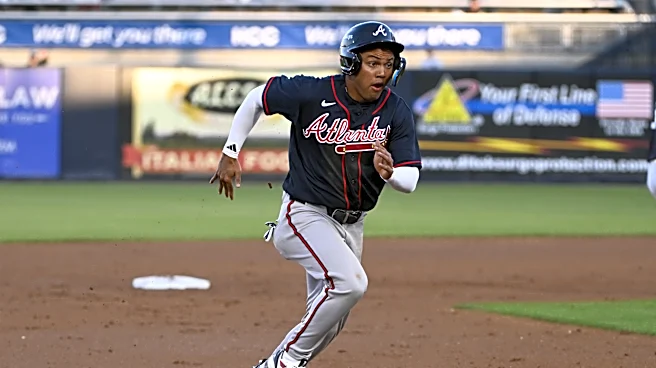
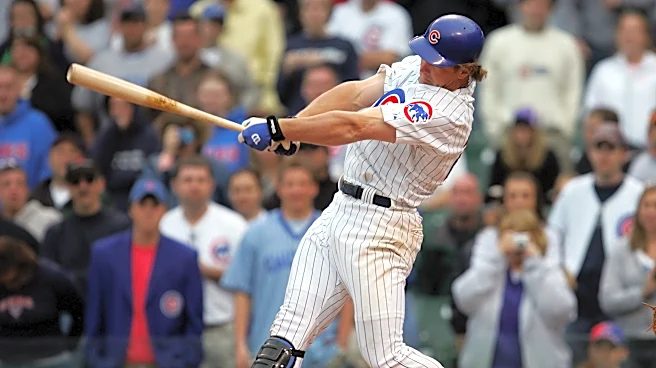
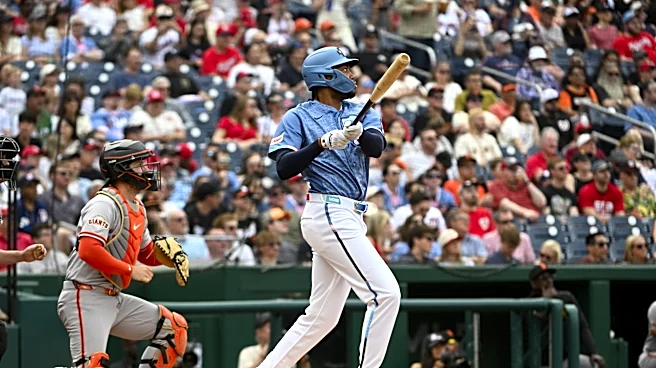
The Yankees were a powerhouse team of the late 1990’s and the early 2000s, powered by some of the game’s best players of all time. However, they weren’t the only team consistently vying for a World Series championship. The Atlanta Braves were the National League’s elite squad: from the 1991 season to the 2000 season, they finished with a win total under 90 only once and over 100 four times, including three straight seasons in 1997, ‘98, and ‘99.
New York and Atlanta continuously found themselves in the biggest
moments, including seven combined appearances in the World Series in the 1990s. And when the Yankees played them in 1996 and 1999, they would see a name on the roster that would not just end up as one in the Baseball Hall of Fame, but also one that would be familiar way down the road: Andruw Jones.
Andruw Rudolf Jones
Born: April 23, 1977 (Willemstad, Curacao)
Yankees Tenure: 2011-2012
Jones’ first taste of Major League baseball came at a young age. In 1993, at the age of 16, he signed as a free agent with the Braves organization, and in 1995, Jones was named the minor league player of the year. Following an outstanding year at the minor league level, Jones was called up to the major leagues and played 31 games in 1996.
In the postseason, though, Jones made his presence felt. He hit two home runs in his first two at-bats of the 1996 World Series. Jones became the youngest player ever to homer in the World Series at 19-years-old, breaking Mickey Mantle’s record of 20 years, 362 days. Jones joined Gene Tenace as the only other player to hit home runs in his first two World Series at-bats.
Jones finished the 1996 postseason with a slashline of .345/.486/.690 for a wRC+ of 210. And after that performance, he became an everyday outfielder for the club. In 153 games played during his rookie season, Jones posted just-below-average hitting numbers playing in right field, garnering a 3.7 fWAR with a slashline of .231/.329/.416. He ended up finishing fifth in the NL Rookie of the Year voting.
In 1997, Jones began his full-fledged tear. He finished his first of multiple 7.0+ fWAR seasons and played full-time in the demanding center field position. With some stellar defense (a major theme in Jones’ entire career), he won his first Gold Glove Award and also had his first season above the average mark of wRC+ and OPS+. And from then on, Jones’ career was truly off and running, establishing himself as one of the premier outfielders in the game for a long time to come.
For the rest of his time in Atlanta (1999-2007), Jones was a key piece in some excellent seasons. He posted a slashline of .265/.346/.502 for an OPS of .848, and he won 10 consecutive Gold Glove Awards for his work in the outfield. He finished in the top 15 of MVP voting in 2000, 2003, 2005, and 2006, with top-10 finishes in 2000 and 2005. That 2005 season was the best year of his tenured career — Jones walked away as the major league leader in home runs with 51, along with being the National League’s RBI leader. He won the Silver Slugger Award for his work at the plate (his only Silver Slugger of his career), and finished second in NL MVP voting, losing a narrow race to then-St. Louis Cardinal Albert Pujols, who finished the year batting .330 with an OPS over 1.000 and sending 41 baseballs over the outfield fences.
Before the 2008 season, the Braves announced that they would not be bringing the 30-year-old Jones back to the team. So, after the news broke, he signed a two-year deal with the Los Angeles Dodgers. But after Atlanta, the situation was dire, as Jones showed up to his first spring training with Los Angeles not in baseball shape. And in 75 games with the Dodgers, Jones hit .158 with only three home runs and 14 RBI. Jones also dealt with injuries throughout the year, which was a first for his career. And as a result, after the season, Jones, having voiced his opinion that Dodgers fans had not given him a fair chance from the get-go, said he did not want to return and reached an agreement with the club to be released.
Jones signed a one-year minor league deal with the Texas Rangers and was planning to be used sparingly, but an injury to Josh Hamilton put him in many more games than initially expected. In 82 games, he only hit .214, but he hit 17 home runs and registered 43 RBI for a perfectly average 100 OPS+.
After his single season in Texas in 2009, the Chicago White Sox came calling at Jones’ door before the 2010 season. He signed a one-year deal with them as well, and even though it wasn’t the same Andruw Jones everyone knew and loved, he showed up to training camp in shape and ready to roll. He played in the most games since 2007 (107) and smacked 19 home runs with 48 RBI with an OPS of .827 and an OPS+ of 120.
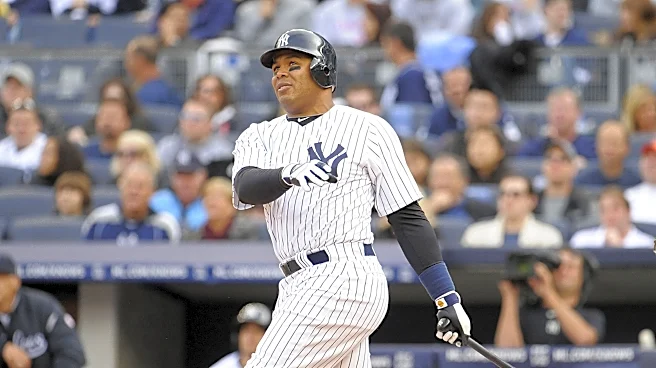
The final two seasons of Jones’ career were spent in The Bronx, signing a one-year deal initially and then re-signing for another season following the 2011 season. He was still a slightly above-average hitter for the Yankees (his most notable moment was likely smacking a home run over the left field wall in his first Yankees at-bat in 2011), and he played more than expected in 2012 due to an injury to then-center fielder Brett Gardner. His final single-season slashline of his major league career was .197/.294/.408 at 35-years-old.
Jones went and played baseball in Japan for two seasons before attempting to make a return to the majors in 2015 and 2016. However, after no team decided to take a flyer on the former elite center fielder, Jones retired from baseball. He has held a few high-profile positions in baseball, including, most recently, managing Team Netherlands for the 2026 World Baseball Classic. And after waiting for nine years on the ballot, Jones was finally elected into the National Baseball Hall of Fame in Cooperstown, receiving 78.4 percent of the vote.