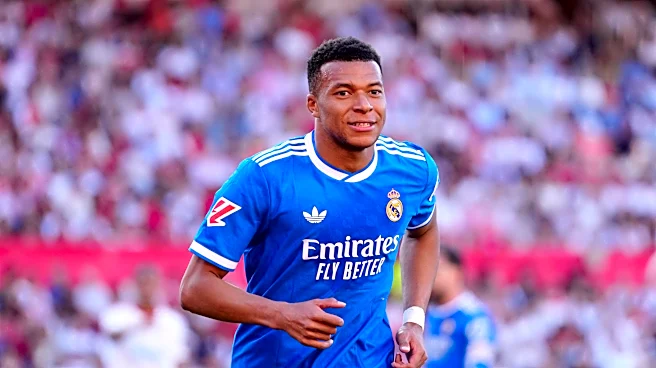




When Kylian Mbappe broke out with Monaco during the 2016-17 season, the footballing world quickly realized they were witnessing something different from that they’ve seen before.
Mbappe was not simply another promising winger with pace. He was a tactical nightmare for opposing teams—Mbappe had a certain gravity that could alter the emotional state of defenders. When he was 18, he helped Monaco reach the Champions League semifinals while tearing through elite defenses with frightening ease.
Then, one
year later, Mbappe—still a teenager—validated the hype by winning the 2018 World Cup, leading France in scoring and winning the tournament’s Best Young Player award. He scored three decisive knockout-stage goals—including one in the final itself.
Mbappe’e emergence in France changed the trajectory of every match involving him. Defenses stopped feeling comfortable pushing high; full-backs became more cautious about overlapping. Entire tactical plans began revolving around protecting space behind the back line. No one dared to put themselves into a situation where they had to have a foot race with Mbappe.
The Era of Defensive Survival
Mbappe’s rise changed how teams defended not only in Ligue 1, but across Europe whenever PSG played.
Open football against PSG became increasingly risky because Mbappe punished transitional mistakes more ruthlessly than anyone in the league. If opponents lost possession in bad areas or left too much space behind the defense, Mbappe could punish them in seconds.
Part of Mbappe’s unstoppable nature was down to his fluidity. He constantly drifted between the left wing, half-space and central zones. Mbappe floated, and was unpredictable. His dribbling and speed could get him anywhere, and, over the years, teams opposing teams could not trust having him isolated against defenders—multiple defenders had to be sent his way to cover.
Statistically, Mbappe dominated virtually every attacking category in Ligue 1 for years: Goals, key passes, dribbles, goal-creating actions and final-third entries. He became the complete offensive engine of PSG’s attack.
His influence also accelerated football’s obsession with verticality and transition speed. Clubs increasingly prioritized athletic defenders who could survive open-field situations because traditional positional defending alone was no longer enough against players like Mbappe—especially when he paired with someone like Neymar on the left.
Most tactical adjustments were moot. Mbappe still often felt inevitable.
The Pressure of the 2026 World Cup
Despite everything Mbappe has already accomplished, he enters the 2026 FIFA World Cup with something to prove. Individually, his numbers at Real Madrid have remained elite: Across his first two seasons at the club, he has scored 86 goals. Under normal circumstances, that level of production would silence criticism.
But Real Madrid failed to win a major trophy during that span, and there are major questions around Mbappe’s overall fit within the squad. His defensive effort has been abysmal for the majority of his time at Real, especially compared to former Real Madrid forwards like Karim Benzema or Raul, whose relentless pressing became part of the club’s identity.
He’s now also completed two full seasons alongside Vinicius Junior, and the pairing hasn’t worked. Mbappe, elite individually on the offensive end, needs to win more collective silverware, and to do, he’ll need to answer the aforementioned questions.
This summer, he has the opportunity to remind the football world why he has long been viewed as one of the defining players of his generation. France enter the tournament as favorites, armed with the deepest squad in international football. There should be no excuses not to go deep into the competition—ideally all the way.
The difference now is that Mbappe is no longer the young prodigy from 2018 playing without pressure. In 2026, he arrives as the superstar expected to carry France.