


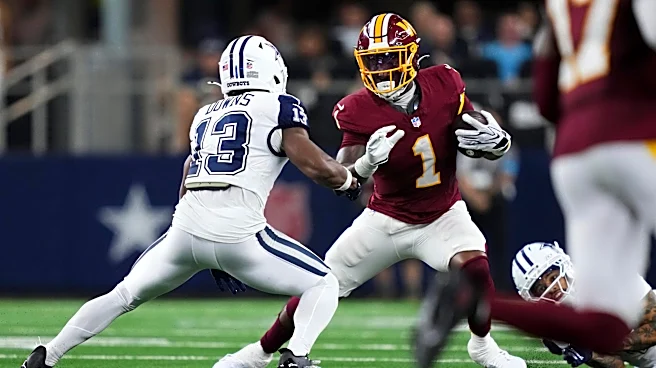
After an uneventful opening drive, Washington put the game squarely in quarterback Jayden Daniels’ hands. He immediately tied Sunday’s game against the Dallas Cowboys up with a masterclass in efficient passing and authoritative scrambling. He looked even better than his rookie self – decisive, sharp and smart enough to get down before taking big hits. This was the franchise savior Washington had been praying for over the last 10 years.
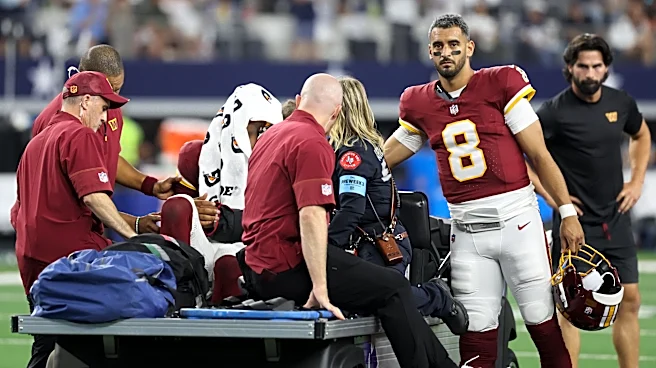
Then, seconds before halftime, everything crashed. Following an
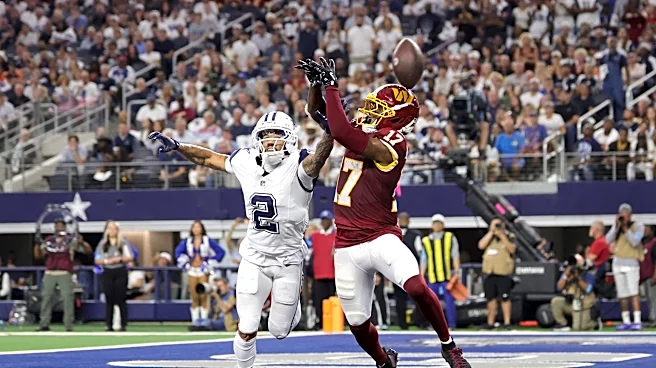
uncharacteristic drop by Terry McLaurin on first-and-goal and then a second-down throwaway, Dan Quinn had a choice with three seconds on the clock. With Washington set to receive the second-half kickoff, he chose to pass up the field goal attempt and go for it.
They paid for it dearly. Daniels took the snap under center, guard Chris Paul stepped on his foot and the play collapsed into a painful nightmare reminiscent of last season.
I turned the TV off right then and there. I couldn’t stomach watching an otherwise brilliant performance by JD end like that.
There are definitive moments where a season’s trajectory flashes before your eyes. Right then, I knew my high expectations were entirely divorced from reality.
I intentionally avoided making a record prediction in my season preview. The truth is, this team was always a wild-card capable of swinging in either direction. Between an uneven preseason and a devastating wave of training camp injuries, the Commanders had zero identity on either side of the ball. Losing Laremy Tunsil was a massive, foundational blow. Yet, part of me hoped the roster could rally together, survive his absence and come out stronger on the other side. Sunday’s game completely shattered that optimism.
The warning signs were there in Week 1 against Philly, but Week 2 in Dallas officially confirmed it: Washington’s defense still has massive issues.
Following a promising yet imperfect debut against Philadelphia, Washington’s defense laid bare its massive, lingering issues. Traveling to Dallas in Week 2 was always going to be a monumental task. Dak Prescott is virtually flawless at home, piloting a lethal offense that ruthlessly capitalizes on any opportunity. Historically, Washington has struggled with giving up big chunk plays against him, a fatal flaw that ultimately ruined a relatively solid opening week from coordinator Daronte Jones and company. Dallas watched the tape, identified the blood in the water, and ripped them to shreds.
Washington couldn’t stop a cold out there. Out of eight total drives, Dallas only punted once – the rest resulted in scoring drives. CeeDee Lamb saw absolute BBQ chicken looking across the line at Washington’s 5’9” cornerback crew, though Amik Robertson managed to hold his own relatively well. The pass rush disappeared for long stretches, the linebackers were consistently out of position to stop the bleeding, and the seams were left wide open all afternoon. Exposing these kinds of gaping holes by Week 2 is a massive red flag, echoing the defensive nightmares we all witnessed last season.
At its core, this is a deep personnel issue. Mike Sainristil has become the butt of every joke online, looking completely outmatched on the field and clearly losing favor with this coaching staff. It has reached a point where opposing offenses are actively hunting him down. Even if he flashes with an occasional turnover, it doesn’t balance out the damage of watching the kid get beat like a drum week in and week out. Defensive back is a position entirely dependent on confidence, and right now, his looks completely shot.
Sainristil isn’t an isolated incident either; the 2024 draft class as a whole is looking like a monumental flop for Washington right now, though that deserves its own multi-part article. What once looked like a promising young secondary core has turned into an easy target checklist. Players like Jartavius “Quan” Martin and Jeremy Reaves have become unplayable outside of special teams’ units. Martin’s performance completely sours the idea of drafting a high-round nickel/safety hybrid ever again, while Reaves, despite giving maximum effort, simply lacks the raw skill set required to take starting safety snaps.
This entire defensive back room needs a top-to-bottom overhaul. You cannot ask your front seven to consistently generate instant pressure just to mask structural deficiencies in the secondary without at least getting respectable coverage.
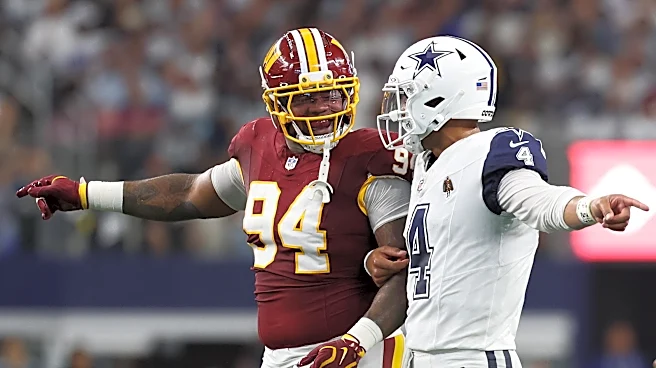
That said, the front seven needs to be put on notice as well. Daron Payne’s lack of effort is painfully visible on tape. He is being paid like an elite, upper-tier defensive tackle, yet he has failed to progress to that level on the field. As the last man standing from the highly drafted 2020s defensive line core, Payne has yet to find his true ceiling, and this should absolutely be his final year in Washington. Meanwhile, off-season additions Leo Chenal and Sonny Styles are still visibly trying to find their groove in this system. Linebackers play a massive role in this scheme, and both of them—alongside Frankie Luvu—need to get back on track immediately.
But It’s only a two-game sample size, and early personnel shifts or rapid player development could still rewrite the script. But if teams keep picking up massive chunks of yardage at will, the story of this season is already written.
While the defense struggles, the offense tells another story entirely – one defined by systemic growing pains and a staggering lack of depth. My biggest concern with offensive coordinator David Blough is the sheer amount of patience this team will have to exercise as he irons out his play design and sequencing. While the unit looked marginally better against Dallas than it did in the opener against Philly, the tape still reveals glaring spacing issues and offensive linemen literally tripping over themselves.
These are typical growing pains for a first-year play-caller, and these systems usually get progressively better as the season grinds on. But for an organization in a pivotal, high-stakes year, do they really have the luxury of time? This gamble at offensive coordinator will remain a central talking point for weeks if the unit doesn’t fully click soon.
Compounding Blough’s learning curve is a devastating rash of injuries. Losing your two best offensive linemen – Laremy Tunsil and Sam Cosmi (who is hopefully only out for a week with a concussion) – is a recipe for disaster. To make matters worse, Frankly, it was irresponsible of general manager Adam Peters to rely so heavily on Coleman given his well-documented injury history. Failing to bring in a dependable veteran left tackle to sit behind Tunsil or rotate into that slot is a front-office oversight that is costing them right now.
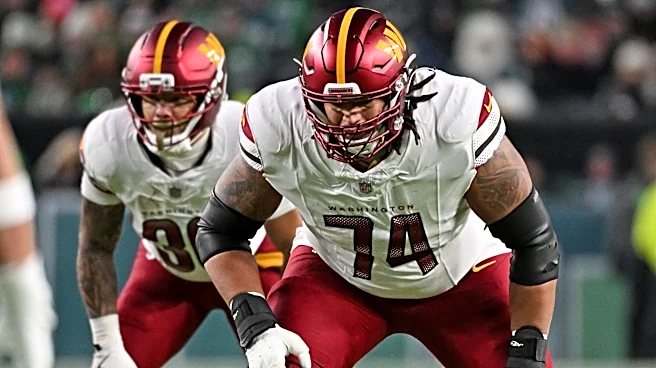
Without the starters, the drop-off in talent and scheme fit is painful. Chris Paul simply does not possess the athleticism required for this blocking scheme. If this were a gap-based, power-running system, he has the frame to thrive. But in a wide-zone scheme, he is too much of a “phone booth” blocker, lacking the lateral mobility to let plays connect. His limitations play a part in an uneven rushing attack. Nick Allegretti looked slightly better this past weekend, but severe reservations remain about his long-term viability in this lineup.
The silver lining is that the quarterbacks are processing quickly and getting the ball out faster than usual. However, the ground game must find traction to unlock this offense’s true potential. Striking that balance will make a world of difference, but so will getting dynamic playmaking from the wide receiver room.
We need to have a brutally honest conversation about Terry McLaurin. He is currently sitting on a dreadful 30% catch-on-target rate and has already dropped three heavily tracking touchdowns he absolutely should have secured. While it is too early to completely give up on a franchise staple, he looks much closer to the age cliff than anyone anticipated.
Simultaneously, the personnel deployment at receiver is baffling to me. Dyami Brown consistently out-snapping Stefon Diggs and Antonio Williams is a major problem. Diggs and Williams have been the team’s most efficient, productive route-runners in recent weeks, and they need to be on the field. Especially with Marcus Mariota now at the helm, having elite separators out there at all times is non-negotiable. Giving your quarterback targets who can consistently operate in space will extend drives, maximize time of possession, and finally give this offense an identity.
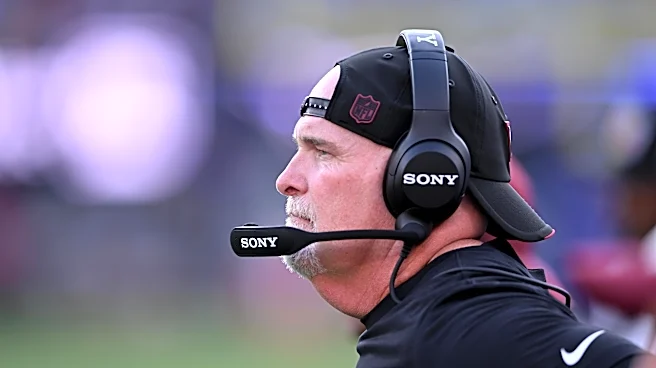
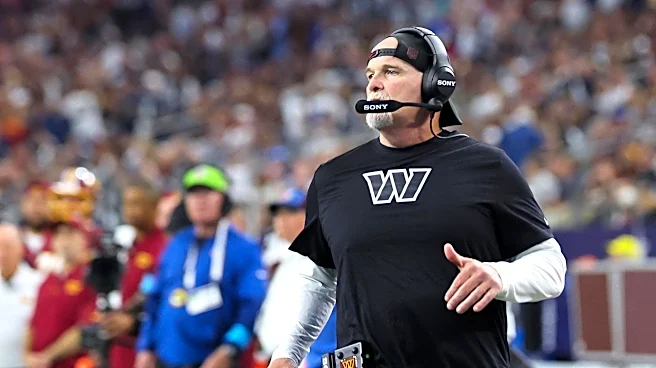
All of this leads to the massive, overriding question that Dan Quinn and Adam Peters must answer: Should Jayden Daniels play again this year? The answer is deeply complicated for everyone involved, and the stakes couldn’t be higher. Dan Quinn’s job is very much on the line. For his own survival, he needs Daniels on the field to give Washington its best chance to win. However, mismanaging this injury wouldn’t just derail Daniels’ career—it would instantly end any chance Quinn has of ever landing a head coaching job again. It is a maddening dilemma, made all the worse by the fact that we are forced to have this conversation in Week 2.
For Peters, shutting Daniels down for the season makes the most sense when prioritizing long-term health and future contract security. Yet, Peters’ own roster construction is rightfully beginning to take heat. The severe lack of depth on the offensive line post-Tunsil injury, combined with a defensive back room completely devoid of high-end talent, is proving costly. Furthermore, a dark cloud now hangs over the organization: Can Jayden Daniels ever truly survive a full, grueling NFL season? If the answer is no, it pushes the already-criticized 2024 draft class into even more dangerous territory. If not handled with absolute precision, this entire regime could collapse into a colossal failure.
Then there is Daniels himself, who is understandably eager to get back on the field. But the financial toll of this injury is heavy. This setback severely damages his leverage to break the bank on a second contract, as teams will openly question whether he can be trusted to stay healthy for a full 17-game slate.
It is honestly heartbreaking to see this become the defining narrative around him. The immense amount of work he put in this offseason was evident on every single snap, and his mindset to achieve greatness is undeniable. His body simply betrayed him at the worst imaginable moment. While every fan wants to remain confident that he can return and play at an elite level, it is impossible not to have massive, long-term reservations about his durability.
With this very dire diatribe out of the way, the ultimate question remains: Is there still hope for the season? Well, yeah. In the NFL, any given Sunday a team can surprise you and scratch out a win. But for Washington to pull that off right now, a staggering number of variables have to swing in their favor—both from a personnel standpoint and in terms of on-field execution. It is undeniably going to be a brutal, uphill climb. The one silver lining is that the schedule does ease up a bit after a brutal gauntlet that culminates in Week 6 against the San Francisco 49ers, a timeline that conveniently mirrors the absolute best-case scenario for a potential Jayden Daniels return.
As of this moment, the entire franchise is frozen in place, awaiting Daniels’ massive medical decision. He is consulting with top orthopedic specialists to choose between a lengthy rehabilitation or a season-ending surgery to fix the structural issue in his left elbow once and for all. That decision could be days or even weeks away.
But the guys in that locker room can’t afford to look at a calendar or wait on an MRI. Right now, this team desperately needs to tune out the noise and focus entirely on what they can control. Washington has massive, foundational concerns on both sides of the ball, but in this league, winning cures all. Can they actually rally around Marcus Mariota and execute well enough to keep this season alive? That remains to be seen.