

Imagine you are a last place Major League Baseball club, one devoid of both recent success or generational success. You also find yourself without a ready-made farm system that’s poised to step up immediately and begin to pick up the pieces strewn across the floor.
You’ve got a bona fide ace, albeit one whose elbow gave out for the second time already since you lucked into him in the draft. He’s going to miss the entire season after you just finished in last place, again.
You have the worst hitter
in the sport on your roster. You traded viable pieces to actively go get him just a year ago, and it has turned into one of the more egg/face deals in recent memory. You even bailed out your fellow divisional cellar-dwellar to facilitate it.
Your starting catcher walked into free agency. You’ve got a former 1st round pick at 2B in whom you continue to trust who is three full years removed from a shoulder surgery that rendered him a completely different player than he was before, yet you just can’t bring yourself to admit it.
You’ve got the worst hitting outfield in the sport.
It doesn’t take too much effort to look up and down what you possess to understand that it’s a walking, talking organizational failure. If a house has peeling paint, rotted sills, a leaky roof, toilets that run, squeaky floors, knob & tube wiring, and mice in the walls, it’s not the fault of the house itself – it’s the people tasked with taking care of the place who’ve simply let every single aspect of it fall by the wayside.
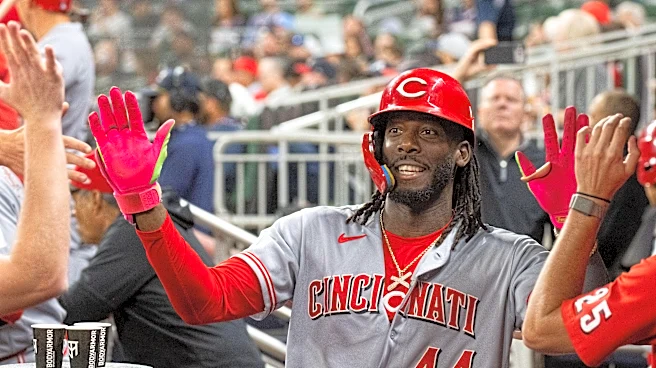
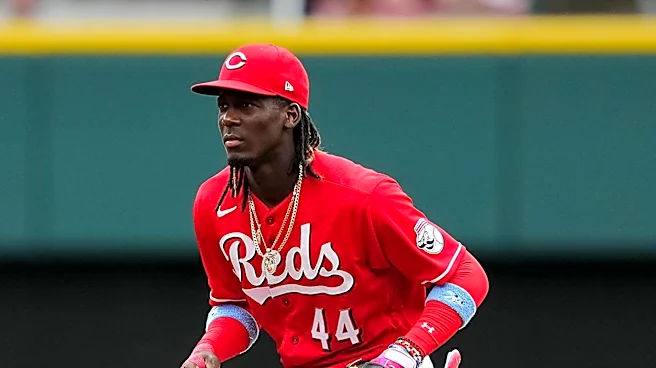
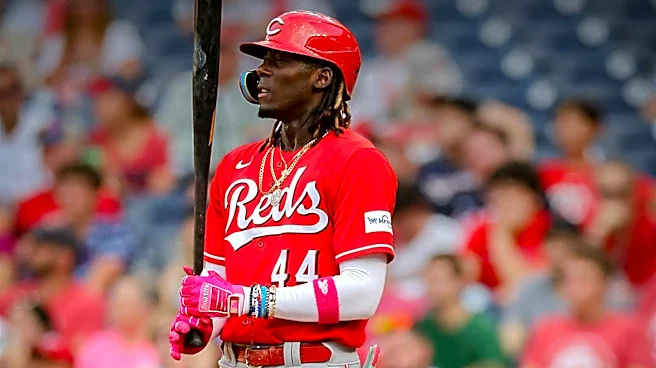
You have, though, perhaps the best shortstop in the game. A 30/30 player who oozes 40/70 upside, a guy who’s just 24 years old playing the premium position on the infield who has a full decade of sustainable promise ahead of him. How you lucked into getting him the baseball world may never figure out, but in him you have one of the most singular, most dynamic players in the sporting world right there on your roster.
Front offices often go entire careers without the chance to have such a player under their control. The nature of the baseball contract system means that star has even been cheap – cheap! – for three full years already, and will remain that way for another three relative to the prices of even the most average of free agents. Major League Baseball, both the sport itself and the salary system within it, has given you a literal gold mine of opportunity within this unicorn, a baked-in cheat code given that rosters fix at 26 players and funds, in your case, are finite elsewhere.
In theory, there should be no other player in the sport today around whom it is easier to build a competitive team than that. He plays the toughest position, hits in the most important part of the order day in, day out. He’s cheap. Still, you get to look at yourself sitting in last place in the standings from the most recently completed season while also seeing that the basement is right where you’re projected to be next year, too.
It’s the kind of environment that pushes free agents away. Who, in their right mind, would want to prioritize playing for such a club when given the option of playing for 29 other franchises? Not even a ‘hometown’ kid could be persuaded to ride in to the potential rescue. Your ballpark is so tiny no pitcher in their right mind would actively choose to pitch there in half their games, an unnecessary self-own you’ve handed yourself on top of all your other issues.
Yet there he is, your star shortstop – the one thing you somehow managed to get correct amid the rest of the shambles. He sticks out like a sore thumb within all this, so much so that it’s impossible for every other franchise in the sport not to notice. Not just notice, really – it’s impossible for the entire rest of the sport to do anything other than stare and gawk.
It had been the case for a series of years that it was impossible for them not to dream. At this juncture, though, it’s impossible for those other clubs to not stare reality in the face.
You have gone nowhere. You aren’t going anywhere. You’re not going to make it where you hoped before this one special player is eligible for free agency, and you’ve failed to sign him to a contract to further open than window. Your own organizational and tactical failures have now foisted themselves onto both of his shoulders, the weight of it all too much for even the most deserving and capable players out there.
You have failed to win with him. You have backed yourself into such a horrible corner that there’s zero chance you’ll win with him next year. It’s so obvious that every other team out there now realizes you’re cornered, the two lone moves being either thumb your nose and lose like an idiot out of spite or cave, the hope being in the latter scenario that someone gifts you the multiple pieces of coal out of which you can mold a few diamonds.
You are the Cincinnati Reds. You’ve gotten away with it to this juncture, but the gendarmes know right where you are. They’re circling, they’re barricading. They’re asking again for you to come out with your hands up, though their tone is getting a bit more focused.
Your gig, as they say, is up.
*************************************************************************
While concrete rumors surrounding Cincinnati Reds superstar shortstop aren’t there, that hasn’t stopped the immediate rumblings across the baseballverse. He’s entering arbitration and will command a salary of some $8 million in 2027, with two more seasons after that remaining before reaching free agency. He has reportedly turned down a contract offer from the Reds already, and the Reds – without Hunter Greene yet again – have a roster that scares few AAA clubs heading into 2027.
Trading a superstar for a blockbuster return must sound enticing to a Reds front office that has no other methods to build a team at this point. They have failed in so many other areas – the draft, in development, in free agency, internationally – that One Big Patch™ must be appealing to them at this point even if making that call would be just about the only other way in which they could disappoint those who’ve trusted in them all these years.
Those who’ve worked within the industry know it. Those who’ve never seen a baseball before know it, too, since why in the world is there a player this good still on a team that’s consistently this bad?
Leatherpants is getting a lot of credit for being the person breaking the concept that Elly could ‘absolutely’ be traded this winter, but let’s be real here – the consistent and thorough failings of the Reds front office and ownership group for the better part of two decades are what is ‘breaking’ this news as a reality. Absolutely nothing they have done whilst being in charge for 20 years has suggested they should, would, or could have any idea what to do with a player of his caliber, let alone one who is finally about to get paid what he deserves.
But they’re precisely the kind of front office and ownership group who knows they need not one, not two, not three lottery tickets to even attempt to replicate such a gold-mine find. They need four, five, six, and the longer they hold on to Elly the lesser the chances of asking for that much become. They are running steadfast into the tipping point of not getting peak value for the most talented player they’ve ever come across, as well as the realization that going beyond that point would be the latest, greatest failure on top of all the others.
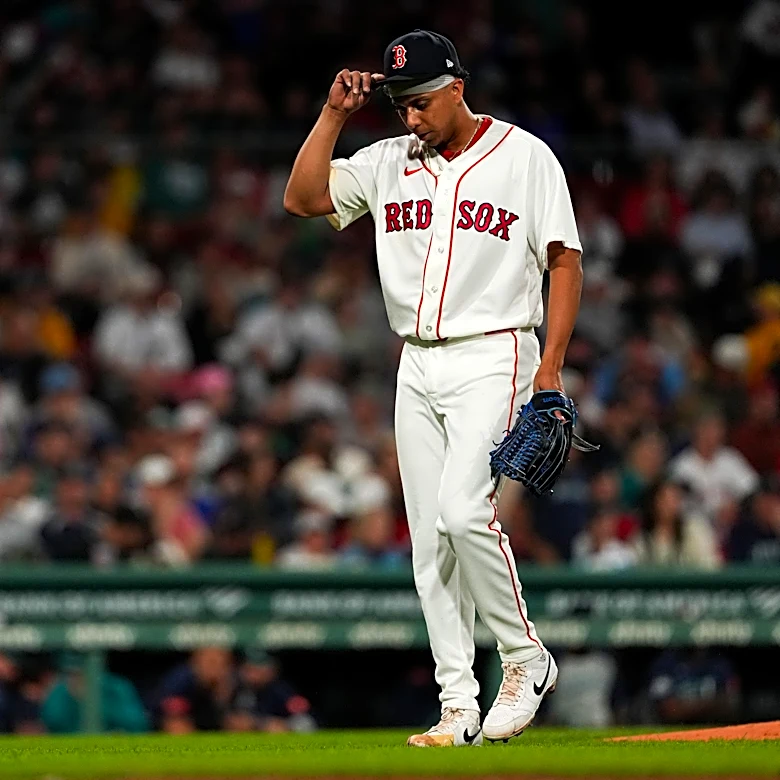
I don’t know how they’ll rectify that. I don’t know if the spite will be so embedded that they’ll simply shrug it off, keep Elly around for another year of 90+ losses, and show the baseball world they still have the upper hand they think they hold. I don’t know if the Los Angeles Dodgers, or the Boston Red Sox can woo them with a toolsy prospect package big enough to make them flinch this winter.
What I do know, though, is this – the Cincinnati Reds never had any clue how to manage what they had in Elly De La Cruz, and they aren’t going to going forward. And giving him away for anything – anything – is as much an admission that they should be giving control of this franchise to someone else who knows how.