





Last month, I was given the opportunity to introduce a new series that I have been super excited to explore alongside all of you. It regards a trend we had noticed developing in the Yankees pitching room toward the end of the 2024 season. At that point, the league was still very much in the midst of the four-seamer craze that arose to counter the launch angle revolution. However, something was brewing inside the Yankees pitching lab, and bit by bit we started to see the return of a pitch many thought
was made obsolete by this new era of steep swings and high spin — the sinker.
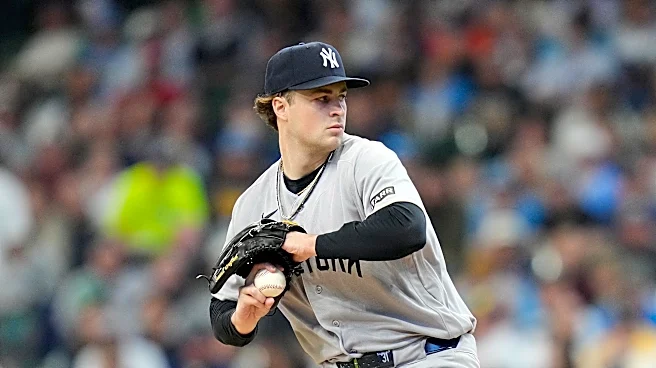
Now, I am thrilled to introduce the first installment in this series about the Yankees’ role in the return of the sinker, and who better to kick things off than perhaps the best pitcher in baseball right now, Cam Schlittler. In analyzing the underpinnings of Schlittler’s meteoric rise, a lot of the focus this season centers on a conversation he had with Gerrit Cole about how to get the most out of his cutter — namely to throw it at max effort. As much as I certainly agree that Schlittler’s newly elite cutter is the principal driver of his success, I also feel that not enough attention gets paid to the adjustments Matt Blake and the rest of the pitching coaches have helped him make on the sinker.
First, let’s start with the physical characteristics of the pitch. In his debut season of 2025, Schlittler’s sinker averaged 97.6 mph, 16.8 inches of vertical drop, and 12.5 inches of arm-side run. This year, it is averaging 97.3 mph, 18.2 inches of vertical drop, and 14.2 inches of arm-side run. There is no appreciable difference in spin rate, spin axis, or active spin from one year to the next, so this extra movement is likely down to a subtle shift in seam orientation at release, taking advantage of seam-shifted wake — turbulence in the laminar air flow across a baseball as it travels through the air caused by a seam’s position independent of the axis of spin — to create more sink and more lateral movement toward the right-handed hitter’s batter’s box.
Next, let’s look at the changes to the pitch’s usage. Schlittler threw the sinker just 6.1-percent of the time in 2025 — that’s up to a 19.1-percent usage rate through ten starts, Schlittler more than tripling the frequency with which he uses the pitch. In 2025, he threw the pitch almost exclusively to righties, only eight of the 76 he threw coming against lefties. The pitch doesn’t have anywhere near as pronounced of a platoon split, Schlittler throwing exactly one-third of his 171 sinkers to lefties. Last season he pretty much only targeted the arm-side edge of the zone with the sinker, burying it in on the hands of right-handed batters. He still tries to jam righties inside with the pitch, but he has also learned to throw it to the glove-side edge of the plate looking to steal a back-door called strike against righties or a front-door called strike against lefties. In this manner, he is able to induce chases and whiffs against sinkers in off the plate against righties and also earn the punch out looking when he starts the sinker in the left-handed batter’s box and allows the arm-side run to carry it into the zone.
Schlittler’s sinker got hit pretty hard in 2025 which perhaps explains his reluctance to use it. Batters were hitting .357 with a 15 degree average launch angle leading to more line drives and fly balls than you would expect against a sinker. This year, they are batting .185 with a zero degree average launch angle, taking the pitch from a 36.4-percent ground ball rate in 2025 to a 67.5-percent ground ball rate in 2026. This is likely down to a combination of factors including Schlittler’s improved command of the pitch, the greater variety of situations and locations he’s willing to throw it, and the improved movement on the pitch.
The most important development with Schlittler’s sinker is the way that it interacts with the other two fastballs in his arsenal, the four-seamer and cutter. A central topic in current pitching research is the importance for pitchers, especially starters, to throw multiple types of fastballs. Schlittler is perhaps the most extreme example of this paradigm, throwing his four-seamer, cutter, and sinker a combined 90.9-percent of the time. It is much harder for the hitter to distinguish one fastball from another than it is to distinguish a fastball from a slider or curveball, meaning that three different pitches that look exactly the same out of the pitcher’s hand can land in very different locations once they get to home plate.
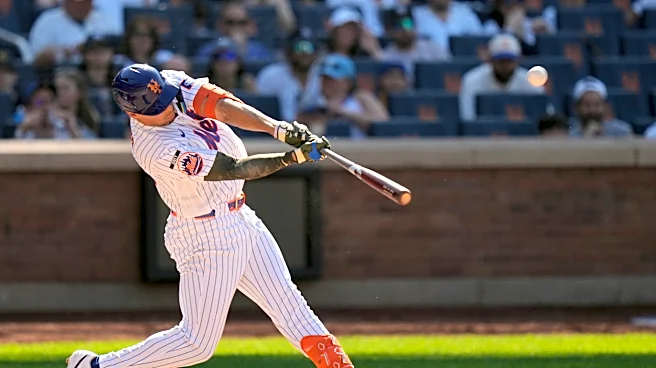
I’ve found that Schlittler has become quite adept at tunneling his sinker with his four-seamer. Check out this example below, a two-pitch sequence against Pete Alonso in the beginning of May:
Schlitter throws a four-seamer pretty much down the middle, the velocity taking it right by Alonso. He then aims a sinker at the exact same starting point, yet the pitch ends up almost a foot inside off the plate, leading to a very awkward check-swing strike from Alonso. It’s no wonder Schlittler throws so many fastballs when he can make the hitter look silly like this throwing just gas.
We all know about the massive jump in velocity that earned Schlittler his call-up in 2025. We also have learned about how instrumental Cole’s advice was in turning Schlittler’s cutter into an almost untouchable pitch. But I truly feel that Schlittler’s gains with the sinker are just as important in transforming him into an ace who looks like he can take the league by storm for years to come.