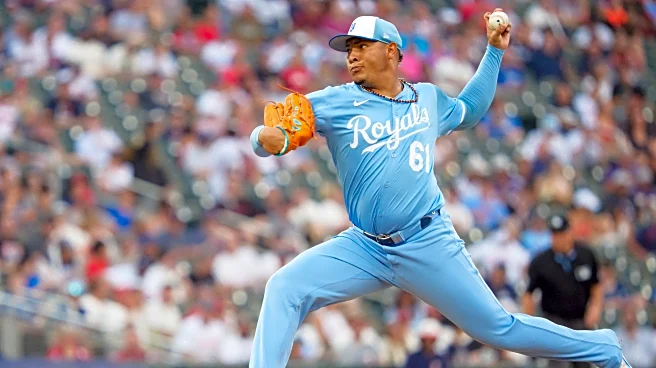

The Milwaukee Brewers bolstered their pitching staff on Saturday afternoon, acquiring left-handed pitcher Ángel Zerpa from the Kansas City Royals for outfielder Isaac Collins and right-hander Nick Mears.
Zerpa, 26, joins a Milwaukee club looking to build on the best record season in franchise history under a coaching staff that has capitalized on pitching potential over the last several seasons.
Before I jump into an analysis of Zerpa, I’ll just say that from an “on paper” standpoint, one of the biggest wins for the Brewers in the deal is team control. Zerpa won’t reach free agency until after the 2028 season, and he also comes with one minor league option. They also cut a little bit of salary, about $1 million. Both of those things are valuable for a team like Milwaukee looking to balance contention with cost control, especially after recent reports that the front office was looking to clear some cap space this offseason.
It should also be noted that while Zerpa has made 140 starts in his MLB career, he’s also made eight starts, and the Brewers are reportedly interested in using him as a starter.
Now, onto some analysis.
On the surface, Zerpa’s numbers — a 4.18 ERA, 3.86 FIP, and 58 strikeouts across 64 2/3 innings in 2025 — don’t jump off the page, but Matt Arnold and Co. clearly see a deeper profile to work with. As Paul mentioned yesterday, Zerpa ranked in the 99th percentile in ground-ball rate last year, something that cannot be ignored when you consider Milwaukee’s strong defense, especially on the infield.
Zerpa’s FIP and other peripherals suggest his pitching performance wasn’t as bleak as his ERA alone might imply, pointing to luck or sequencing as contributors to some of the batted-ball results he surrendered. His fastball velocity also ranks well relative to peers, and his arsenal, anchored by a sinker/slider combo, aligns with a Brewer-friendly approach emphasizing weak contact and ground balls over strikeouts.
That said, Zerpa isn’t without analytic caveats. His whiff rates and strikeout rates have been below average, indicating that he hasn’t consistently missed bats at the level many clubs prefer for late-inning relievers. Those limitations could cap his upside if he remains a pure reliever without the development of swing-and-miss stuff.
On the whole, Zerpa’s career has shown durability and a serviceable MLB track record, carrying a career sub-4.00 ERA over 177 innings. His ability to handle a heavy workload and minimize opposing offenses made him a reliable presence in Kansas City’s bullpen.
If Milwaukee opts to stretch Zerpa out as a starter, his arsenal and ground-ball profile could translate well to the Brewers’ defense-first approach. Think of him as another Aaron Ashby with a lower strikeout rate, which isn’t a bad thing when you have Brice Turang anchoring one of the best defenses in the league behind you.
This creative flexibility fits Milwaukee’s broader pitching philosophy: identify pitchers with intriguing traits and refine them into more impactful roles, whether in high-leverage relief or, potentially, long relief and spot starts.
If there’s one thing I’ve learned in nearly four years with BCB, it’s that the Brewer front office usually knows what it’s doing. I have faith that Zerpa could be the next big thing in Milwaukee next summer.