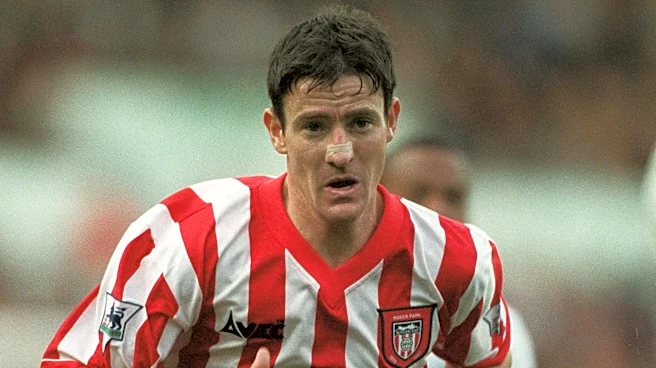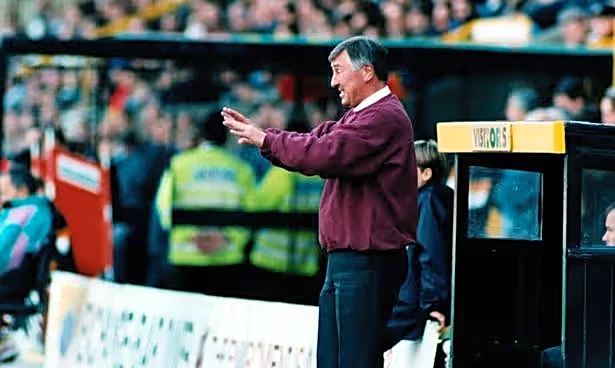





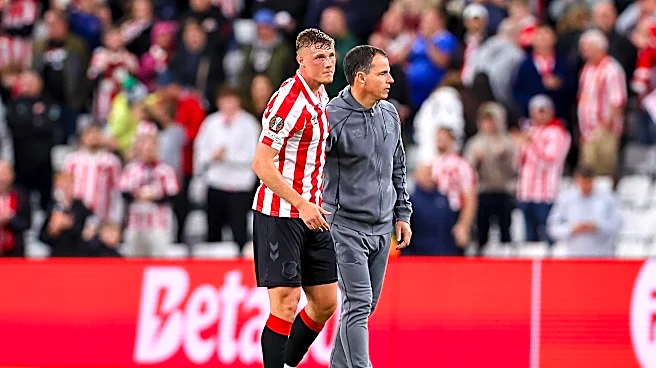
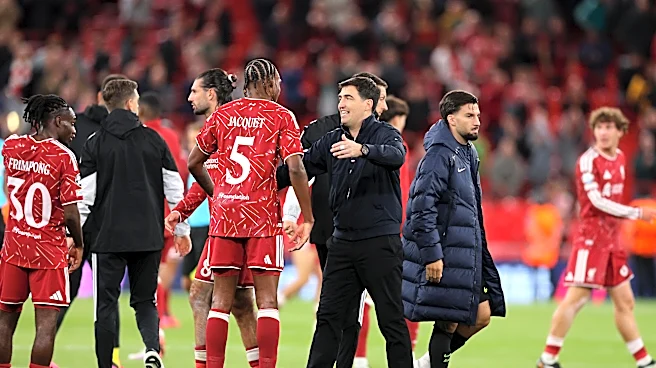
The Lads were due to play Huddersfield Town at the end of September 1985 and that meant a sentimental return to Roker Park for the Terriers’ boss Mick Buxton, who had been Sunderland mad as a youngster and a regular attendee at the ground.
The Journal previewed the game the day before and featured an interview with Buxton, who was looking forward to his first visit since becoming a manager. He had taken over at Leeds Road in 1978 and since then guided the club to two promotions, and now wanted to show
what he could do back at his spiritual home:
It’ll mean a lot to me, just going back there. I was a great Sunderland fan – still am – and when I walk out there on Saturday I will be having a look at the spot on the terracing where I used to stand in all weathers.
In fact, the bridge over the Wear would have to collapse to stop me getting to Sunderland games. I was a regular there, a fanatic. I knew nothing about rugby and hardly anything about cricket in those days. It was all Sunderland Football Club.
I think the dictates in the area are the same now as they ever were. There is the church, football, and the working men’s clubs. You either go to the clubs and watch football, or else you go to church… but you are still a football fan. I have stood there in crowds of 50,000 and 60,000. The place has always had a magical atmosphere for me.
It may have shocked Buxton then to find upon his return a crowd of less than 20,000 rattling around inside the stadium.

Since his days watching big name players chasing for honours in the 1950s the club had suffered a series of damaging slides and embarrassments.
This was being borne out in recent attendances, but there was brief respite as the side were able to force a rare win over the visitors (which you can read all about here… On This Day (28th Sept 1985): McMenemy gets a brief tune out of his players | Roker Report) to end an otherwise turbulent week.
Yet the prevailing sense amongst the remaining fanbase was one of anxiousness as opposed to excitement, with 1985 lurching from one messy situation to the next.
Buxton’s counterpart Lawrie McMenemy, brought in over the summer, was struggling to banish the memories of a painful relegation, and the problems on the pitch were being made worse by continued struggles behind the scenes also.
Owner Tom Cowie OBE’s chairmanship had come under close scrutiny with rival shareholders reportedly trying to oust him, and in the days leading up to Buxton’s visit there had been alterations to the board in an attempt to calm the waters, with Jack Ditchburn giving up his position as vice-chairman to become club President instead.
Earlier in the month, long serving director Ted Evans had been moved on following an extraordinary general meeting, despite having the backing apparently of both Ditchburn and fellow director Barry Batey, who oversaw finances at the club but was a huge adversary of Cowie.

There was an assumption therefore that Ditchburn was also having his wings clipped by this latest move, although his own quotes on the matter, as he recovered from a bypass operation, seemed on the face of it to be aimed at dispelling that theory:
I am quite happy to accept the invitation as President. I am not getting any younger and sitting in exposed areas is not going to do me any good. The time has come to start protecting myself. I must admit I am not in love with football at the moment – the game has changed so much – but I have my own ideas of the role I want to play. Recent events triggered off the new role but there are no squabbles going on that I know of and there is no spite at all.
It is possible of course that Ditchburn was simply trying to keep the peace with his statement. He certainly had the club’s best interests at heart, just like his father Edward William (Bill) had when he was chairman during the 1950s.
At that point Sunderland were one of the most glamorous, and richest, clubs in the game but come the 1980s money was scarce on Wearside. Alongside news of Jack’s job switch there was the announcement that due to financial reasons the Roker End and Clock Stand were going to be closed for an upcoming cup tie– a far cry from the spending sprees authorised by Ditchburn Snr back in the day.
With the board now consisting of just himself, Batey, managing director McMenemy plus Bob Murray and Gordon Hodgson, Cowie knew that investment was unlikely any time soon, and that it would be prudent to acknowledge Jack’s continued support.
He too spoke to Geoff Storey, who was told there was to be no immediate successor “We will discuss that at a future board meeting,” but that the owner was “delighted that Jack has accepted the position of President as he has been a loyal servant to the club. He is keeping his seats in the director’s box, and it is very good of him to retain his guarantees with the bank.”

Retaining that security was a huge benefit and whilst he would no longer be involved in the day to day running maintaining a connection with an experienced and well-respected figure allowed some sense of stability. A solicitor and former elected town councillor, Ditchburn had been appointed to the board in August 1970 and in May 1971 began his first stint as vice chair when he joined forces with newly named chairman Keith Collings.
Collings replaced Ditchburn as vice-chairman when Cowie took over in June 1980 and remained in situ until September 1983 before Iain Fraser then had a short spell in early 1984. Ditchburn remained steadfast throughout this period and when Fraser quit, he left the spot open for this most obvious of candidates to replace him.
Infighting and intrigue at Sunderland board level was nothing new for the Ditchburn family. A few weeks before Jack agreed to become President a book called ‘Soccer in the Dock’ had been released by Simon Inglis and brought the story of the famous Mr Smith scandal suffered during Bill’s tenure back to the fore.
The Echo printed edited extracts recounting the investigation into financial matters at Roker Park and Ditchburn Snr’s subsequent ban – Laurie Evans, father of Ted Evans, was also suspended as a result of the 1957 findings, although both men later had their rulings quashed.
The two families obviously went back some time, which was presumably why Jack was thought to have sympathised with Ted when he was effectively sacked in 1985. One of the rumoured reasons for his departure was that he had strongly opposed the unexpected appointment of Lawrie McMenemy to the board, and was extremely vocal about it even when Bill Martin, another 1950s director implicated and then subsequently cleared during the Mr Smith episode, tried to act as a mediator.
Fans young and old were becoming increasingly frustrated with the squabbling and instability and yearned for a steady guiding hand, or a manager even that remembered the good old days and would be able to bring them back. A certain Bob Murray agreed on that point, and when he got his opportunity to run things hoped that Mick Buxton himself would fit the bill.
*Jack Ditchburn was Sunderland AFC’s first post-war President. He died in May 2001 aged 82 and was described by his family afterwards as a ‘great Sunderland man’.
A former pupil at Bede, he reached the rank of captain in the Border Regiment during World War II before being captured in 1942. He took his law exams whilst still a prisoner of war and in the 1970s became the President of Sunderland Incorporated Law Society.
He held several other posts, including chairman of Sunderland Round Table, president of the Wearside Table, president of the Sunderland Table, founder chairman of the Empire Theatre Society, founder president of Sunderland Lions Club, and was a member of Seaburn Rotary Club.