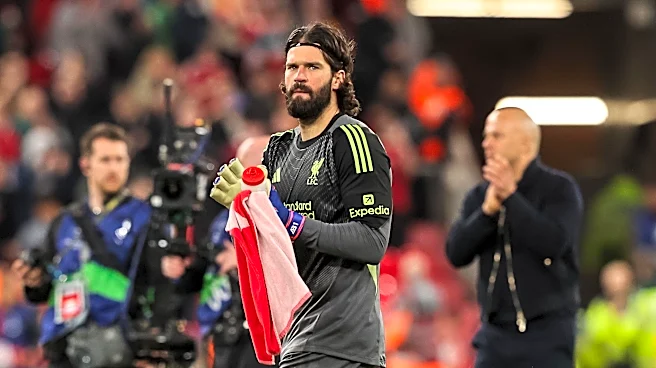







Early in the week we were given a wave of stories linking Liverpool and Brazil goalkeeping star Alisson Becker with Juventus, with multiple outlets including Sky claiming the Serie A club had made the 33-year-old their top goalkeeping target and would commit “significant resources” to signing him.
That always seemed more likely to revolve around wages than a transfer fee, with Alisson’s age, injury issues, and contract status—Liverpool triggered a one-year extension to prevent him being out of contract in the
summer but many speculated at the time it could be more about getting any fee at all for him rather than about keeping him—expecgted to keep any fee reasonable.
Now, according to Italian transfer expert Nicolò Schira, a wage offer has been offered and accepted by Alisson amounting to €5M per season. Even taking into account that the Italian press often reports wages after tax rather than before, it hardly seems significant for a player believed to be earning around £250k per week after bonuses.
Accounting for the vagaries of wage reporting in different leagues and countries, though, could mean Alisson is being offered an effective wage similar to his reported £150k per week (£7.8M or €9M annually) Liverpool base salary. A move to Juventus, though, assuming that is in fact the offer on the table, would still see him make less.
However, with Liverpool having decided to sign Giorgi Mamardashvili two summers ago now, agreeing his transfer in 2024 with a delayed 2025 arrival and then having the Georgian number one backing up Alisson this season, it’s fair to say the Reds’ goalkeeping situation is messy. At best.
There has been speculation Mamardashvili was promised the starting job as of this summer in order to get the deal done, and with veterans Mohamed Salah and Andy Robertson leaving—and plenty of chatter around other long-serving Jürgen Klopp era players like Curtis Jones and Joe Gomez—there will be few connections next season to the sides Alisson played for down the years.
With Liverpool in the midst of a massive rebuild—or chaos and uncertainty, depending on how one chooses to look at it—heading into the summer and a large portion of the fanbase having gone from believers to doubters watching Arne Slot’s side stumble through 2025-26, it’s easy to imagine a scenario where Alisson has decided it’s time to move on.
Watching yet more uncertainty unfold, we can only hope those tasked with running the club—and that would mean sporting director level execs Michael Edwards and Richard Hughes far more than head coach Slot—know what they’re doing, which from the outside increasingly feels a question with an unclear answer.