

The only good thing about the Arizona Cardinals finishing their season with 14 losses this year is that the franchise will pick very high in each round of this year’s NFL draft.
In the first round, it is the #3 overall selection. In the second round, it’s the second pick (#34), in Round 3, the Cardinals have the first pick (#65), and so on. They rotate each round with the Las Vegas Raiders and Tennessee Titans.
And with high slots in each round, this means that the Cardinals
will have better options to select a blue-chip prospect that should help out the roster as we advance.
But there is an issue this year. And the problem seems to be amplified from past drafts: fewer and fewer underclassmen are declaring for the draft. This means a smaller number of options, despite seven picks, in the 2026 NFL draft.

This year, 63 underclassmen have officially declared for the 2026 NFL Draft, including 42 players with special eligibility. In past draft classes, as many as 126 have declared.
The biggest name to stay in school was Oregon QB Dante Moore, who was ranked in the Top-5. Many draft pick sites had him going to the New York Jets with the second overall pick.
LINK: QB DANTE MOORE RETURNING TO OREGON
The Cardinals can improve their areas of need during the free agency period that begins in mid-March, but the very core of any NFL club is to build through the draft.
And every prospect is a valuable asset. That is why players who come out early are important because they are usually some of the better athletes who can change a roster almost overnight.
Part of the reason behind this is NIL money. It used to be that the way to a bigger bank account was to become drafted and sign an NFL contract. But now, a lot of players have the ability to make good money and stay in school. And sometimes, the NIL funds can go beyond what his pro contract is worth, depending on where he is drafted.
That is what Ole Miss QB Trinidad Chambliss is going through. He has used up all of his college eligibility and is set to be included in the 2026 draft. He really shone in his final year, which was just a single season at Ole Miss.
Chambliss has filed a lawsuit asking for another college season and claims too seasons while at Ferris State University should not have counted as eligible years due to various ailments. He and his agent believe that if he remained in school, his NIL would become the largest ever. Currently, he is ranked as a third-round pick. So, he will miss out on a substantial amount of coin just by being drafted.

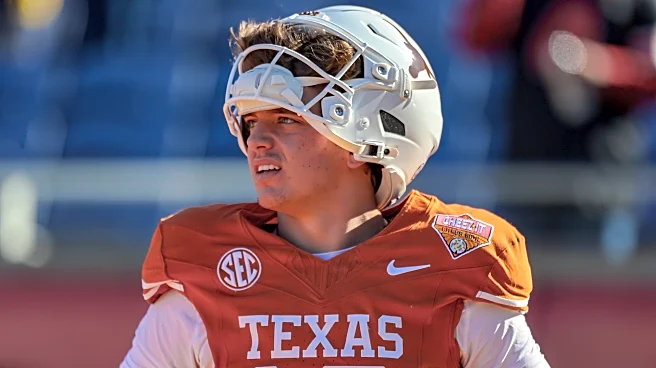
Other big names that have decided to remain in school include OT Jordan Seaton of Colorado, QB LaNorris Sellers from South Carolina, Ohio State WR Jermiah Smith, Arch Manning of Texas, and Ole Miss EDGE rusher Princewill Umanmielen.
It used to be that a player had instant income and job security once he entered the NFL draft. But now, NIL money is cash in hand for a college guy, less stress in practices, he can remain the “big man on campus,” and there is always a party to go to.
Plus, if the college player’s team is good, like these Ole Miss guys, he will have a great season and have some fun. A lot of blue-chip athletes end up on bad teams and have to endure years of futility and losses.
Then again, the NFL money has a short shelf life. By age 30, an athlete better have made his money because those second and third contracts aren’t guaranteed.
For many years, college football’s best underclassmen rushed to the front of the line in order to declare for the NFL draft. Now, some are saying “no, thanks” and will ride one more season where they are most comfortable.