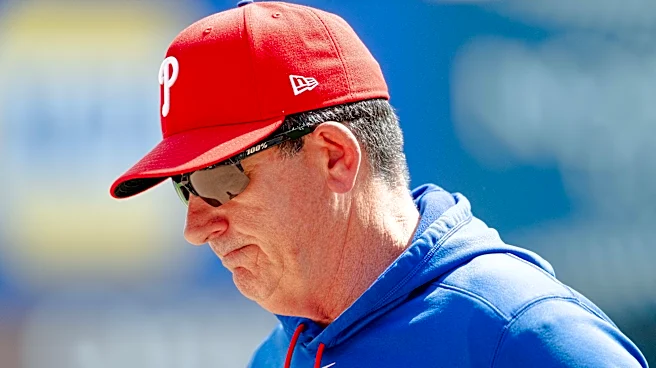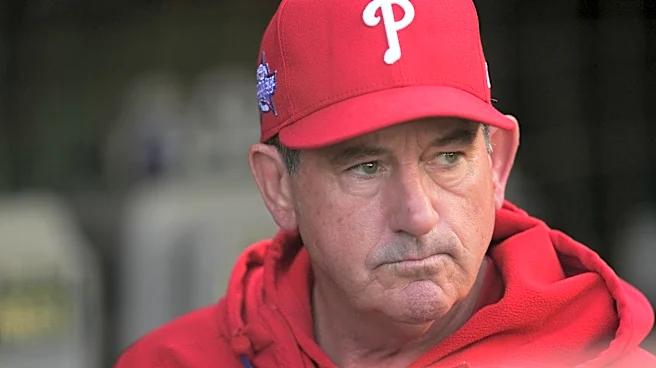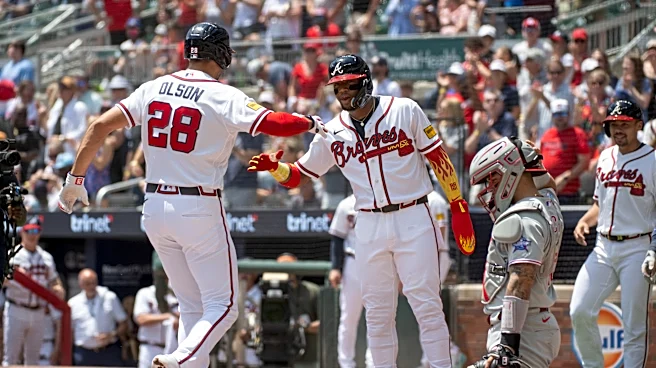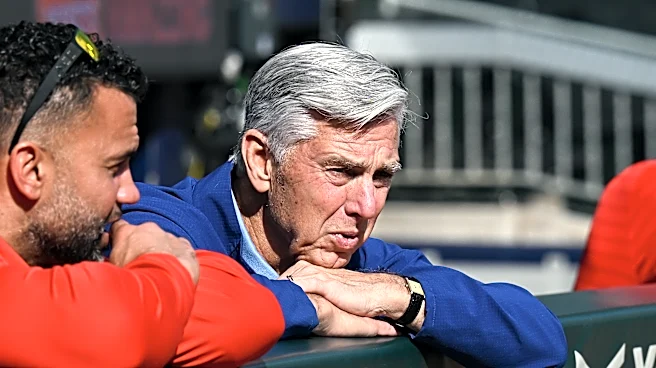



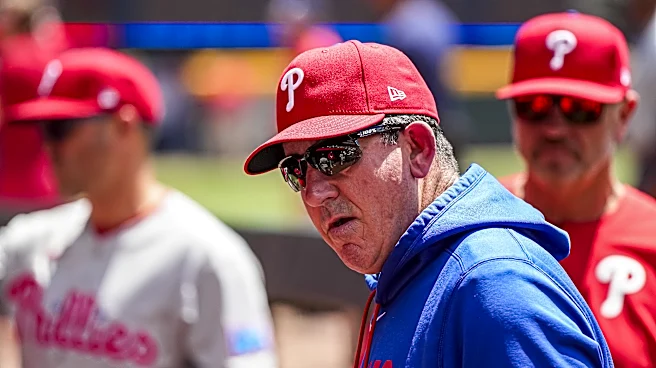
If you have a nagging feeling of unease in the pit of your stomach in the wake of Dave Dombrowski’s decision to fire Rob Thomson after parts of five seasons as the team’s skipper, it’s understandable.
There is a part of you that understands why this happened. With a 9-19 record and an MLB-worst run differential through the team’s first 28 games, the manager of a team with the highest of expectations and the victims of numerous devastating postseason losses over the last three seasons, is going to
take the fall. The Phillies, at times, have looked lifeless, listless, sloppy, and just flat out bad.
Something needed to change. The players didn’t seem to have any answers for their early-season malaise, and neither did Thomson. They didn’t look prepared for the start of the regular season, and you have to wonder if, although the veterans all liked Thomson and respected him, they stopped listening to him. But you can’t fire/trade away all the players, and it’s extremely difficult to imagine a scenario where John Middleton fires Dombrowski.
Dombrowski was not prepared to wait for another two weeks or a month to see if the team would pull out of its tailspin. Even in the era of three wild cards per league, another two weeks of losing series after series would almost certainly kill the season in its infancy.
And yet, the firing of Thomson, which I agree was probably the right thing to do, feels unjust.
But even more unjust than firing Topper was the ham-fisted way in which it was done.
Last week, Dombrowski asked three of his top scouts to watch the team play in Atlanta and report back with what they saw. This was a highly unusual move, one that signaled Dombrowski was considering making serious changes sooner rather than later. Then, on Saturday night, the Boston Red Sox shockingly fired their entire coaching staff, including former World Series champion manager Alex Cora.
Speculation began immediately connecting Cora and the Phillies. Even though Thomson was still the manager, baseball insiders were using pushpins and string to configure a way for Cora to come to Philadelphia now.
I ignored it. After all, it is rare for someone to manage two different teams in the same season (17 times), and although Thomson was on the hot seat, it seemed unlikely Dombrowski was going to rush a decision on Topper just because his protege, Cora, was suddenly available.
But as Gelb reported on Tuesday, that was an incorrect assumption. Dombrowski and Cora reportedly spoke by phone the very evening he was fired, and again on Sunday.
Sunday morning, after the Phillies snapped a 10-game losing streak, Dombrowski and Cora spoke again about the job. The Phillies were aggressive in their pursuit of a hiring that would have been almost unprecedented. There have been men who managed two big-league teams in one season, but perhaps none had ever done it in less than a week.
Bear in mind, Thomson had not yet been fired. And so while Thomson worked to try and get his team a series victory in Atlanta that Sunday, Dombrowski was courting someone else to manage in his place.
To his credit, Thomson voiced understanding for what Dombrowski was doing.
“I don’t really think too much of it,” Thomson said. “I think Dave’s just doing his due diligence. He had made up his mind and he was going to move forward. This guy’s a Hall of Fame executive. So I think people need to trust him. He is going to do the right thing for the organization. Dave and I have a close relationship, but that doesn’t stand in the way of him doing the right thing for the organization. I respect that.”
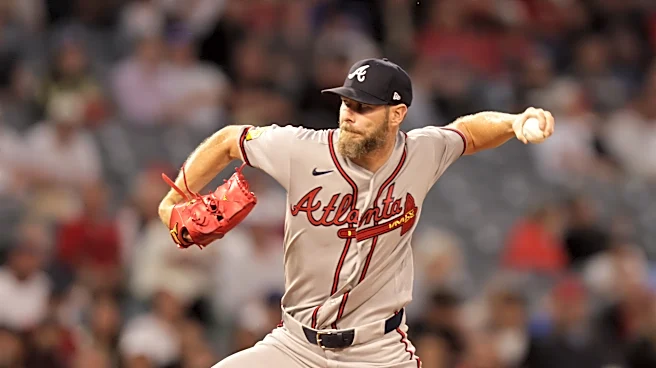
Thomson was very clearly a good man and a good, but imperfect, manager. His platoon-heavy lineups were often infuriating (Sunday’s lineup featuring an outfield of Felix Reyes, Dylan Moore in center and Adolis Garcia in right against Chris Sale to try and win the series in Atlanta was particularly galling), and he made a number of questionable postseason decisions, from last year’s sacrifice bunt in Game 2, to using a broken-down Craig Kimbrel against Arizona, to all the way back to Game 6 of the 2022 World Series when he pulled Zack Wheeler too early. But he also managed a clubhouse full of very strong personalities well, and piled up back-to-back NL East championships along the way.
It’s understandable if you feel like the winningest regular season manager in Phillies history since the 20th century deserved better.
This process just doesn’t sit well. The time to have made this change, and many others, was in the off-season. To wait and do it now feels like panic. But, sometimes, panicking is the correct instinct.
Dombrowski’s press conference on Tuesday also seemed a bit tone deaf. Reporter Tim Kelly asked him a question regarding Dombrowski’s off-season decisions and overall roster construction. His unwillingness to take the question seriously is telling.
Dombrowski is the one who could not pull off a single creative move over the last few seasons. He is the one who has had to jettison multiple high priced free agents with money left on their deals, and another one in Aaron Nola hanging around their necks. The farm system has also only improved marginally since Dombrowski revamped the scouting and coaching throughout the minors.
At the very least, some introspection and honest commentary on his recent performance would have been appropriate, especially as he was busy escorting Thomson out the door.
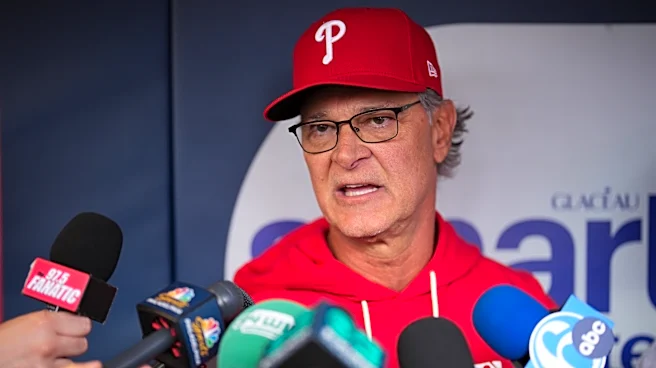
So Don Mattingly, the team’s brand new bench coach who told multiple reporters this spring he had no interest in managing, will be the manager for the remainder of this season. It will be a short-term hire. The Phils will almost certainly make every effort to sign Cora once the labor dispute is settled this off-season. He will likely be the guy in 2027 and beyond.
As for the Rob Thomson Era, it will always be bittersweet. The ‘22 run to the Series was breathtaking and some of the most fun Phillies fans have had in their lives. Their aborted runs from ‘23-25 are among the most difficult to accept, but they were filled with amazing regular season moments, too.
You can believe that it was time for Rob Thomson to be fired and also recognize he was not ultimately responsible for the team’s awful play. You can accept the team may play harder and with more focus now that Thomson has been replaced, and also accept this team may be turning into the 2012 Phillies before our very eyes.
But what’s clear is Dombrowski is the one most responsible for what ultimately happens with the 2026 Phillies, and Thomson was the necessary sacrificial lamb.
Make sure to listen to an EMERGENCY episode of the Phillies’ podcast Hittin’ Season, where we detailed the Thomson firing and what comes next. Powered by WHYY!