






The NBA Draft is right around the corner (finally!) and conventional wisdom would have you believe the Bucks should draft a guard. After all, most big boards are stacked with them, especially between the five and 10 spots. In fact, our very own Brew Hoop Community Draft Board saw eight guards taken within the first 14 picks: Darryn Peterson (2), Keaton Wagler (5), Darius Acuff Jr. (6), Kingston Flemings (7), Mikel Brown Jr. (8), Brayden Burries (9), Cameron Carr (13), and Labaron Philon Jr. (14).
Exclude the top four picks, who are widely considered head and shoulders above the rest, and the sum becomes 7 out of ten. And while it’s true that these are all very talented players, following conventional wisdom and taking one—or more, should the Bucks end up with multiple selections—would be a mistake. That’s right, it’s time for the Bucks to go against the grain and think—and move—forward with forwards.
A dime a dozen guards
While guards are imperative to NBA success, especially through ball handling and shot creation, they’re seldom the catalyst (more on that later). More significantly, there are just so many of them. And in a game that only features five on the floor for a team at any given time, this leads to positional dilution. We rightly rave about Ryan Rollins’ ascension this year and ponder his All-Star potential, but just last season, he was on a two-way contract. And while Rollins was great for the Bucks, putting up 17.3 PPG and 5.6 APG this season, those numbers ranked him 40th and 30th in the league among guards, a testament to the sheer volume of productive backcourt players.
Rollins’ teammate, the maligned Kevin Porter Jr., offers another prime example. He actually bested Rollins’ production, putting up 17.4 PPG and 7.4 APG, ranking him 38th and ninth in the league among guards. Yet the Bucks acquired him in a straight swap for MarJon Beauchamp, who was waived by the Los Angeles Clippers less than a month later.
None of this is meant to diminish Rollins’ or Porter’s contributions. Far from it; they were arguably the Bucks’ best players this season. But they didn’t require the Bucks to use a single draft pick—let alone a premium one. The question thus becomes: would any guard the Bucks select in the coming NBA Draft offer more than them? And if they did so statistically, would it really impact winning?
Winning time—size and defence matters
If you’ve read it once, you’ve read it 1000 times: the draft is where you swing for the stars, especially with a top 10 pick. And there’s no bigger star than the one who steps up on the game’s biggest stage, the NBA Finals. But of the 57 Finals MVP awards handed out since the award’s inception, only 10 have ever gone to guards in the true point-or-combo guard sense (i.e., not wings)—and only six of those recipients were shorter than 6’4”. Narrow it further to those who weren’t plus defenders, and you’re left with just two: the revolutionary Stephen Curry and the lightning-quick, live-in-the-paint Tony Parker. And both played on elite defensive teams.
Of course, despite what the pundits say, you don’t have to swing for the stars. In this case, size and defence matter even more; the role-playing forward will typically have more of a two-way impact than the role-playing guard. Besides, you’re far more likely to have a role-playing forward come up big to win FMVP (see Curry’s teammate Andre Iguodala, Parker’s teammate Kawhi Leonard, and the Boston Celtics’ Cedric Maxwell, whose own Hall of Fame point guard was described by his coach as someone who “could give up 32 points on offense but give away 36 on defense, so you were [behind] even before the game began.”).
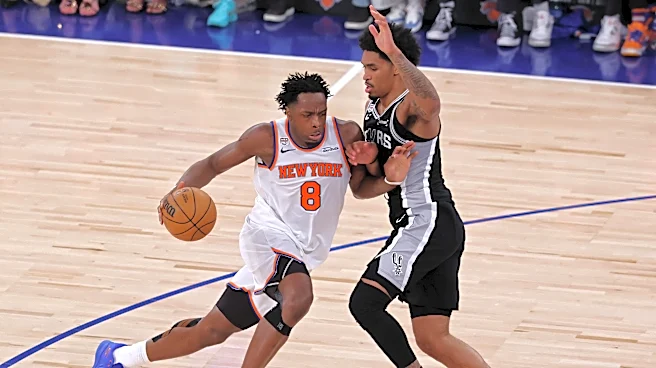
Heck, OG Anunoby has arguably been the best player in this year’s Finals, outplaying his own—you guessed it—smaller lead guard. Even then, Jalen Brunson has at least one standout defensive quality, leading the league in charges drawn this year (and routinely finishing in the top five). In a league that values possessions more than ever, this makes a tangible difference. Still, like Curry and Parker and Tiny Archibald before him, Brunson is reliant on the coverage of his elite defensive running mates, Mikal Bridges, Josh Hart, and the aforementioned Anunoby, who can check a variety of offensive types.
Positional versatility and the modern game
Contemporary NBA basketball is less and less about defined positions. Instead, a premium is placed on versatility. Guards, for all their ball handling and shot creation, are often constrained in this respect—what can they offer when the ball isn’t in their hands and isn’t going through the hoop? They better have a whole lot of off-ball gravity, because they aren’t snatching a contested rebound (let alone making a game-winning tip-in) or switching onto an opposing big and getting a stop. They’re not creating the equivalent space as a big when screening. And they’re certainly not rotating or recovering to stifle a shot at the rim. No, versatile forwards do these things. And they also unlock lineup flexibility.
With modern offences as potent as they are—this year’s league-wide average of 115.6 PPG is the sixth-highest average ever and the most since the 1960s—teams need defensive optionality, the ability to present different looks. Versatile forwards are imperative to this. Need to prevent penetration? They let you switch. Want to shrink the court? Length lets you do that. Doubling, blitzing, zone? Yes, yes, and yes. But it doesn’t stop there. Forwards also unlock small-ball lineups.
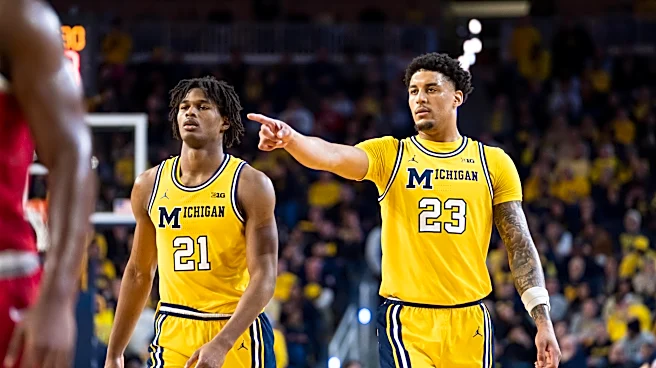
Just imagine what the Bucks could do with Morez Johnson Jr., who our very own Finn Kuehl projects as being one of the “few players in the NBA [who] can genuinely cover every position effectively on defense,” while being “about as good as it gets” when it comes to switching. Now imagine what that could look like if he were paired with Giannis—or his Michigan teammate Yaxel Lendeborg. For a Bucks team that finished bottom five in both defensive rating (26th, 118.3) and rebound percentage (26th, 48.2%), this is far more important than an offensive guard—Milwaukee already finished third in effective field goal percentage (56.5%). It would certainly help address their worst-in-the-league offensive rebounding percentage (26.3%) too, an area new head coach Taylor Jenkins has historically prioritised.
Milwaukee’s roster construction
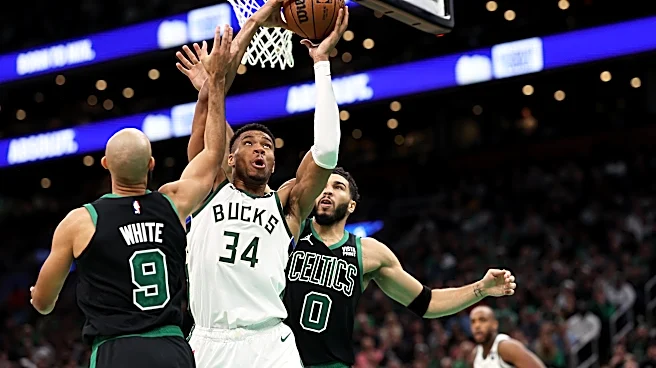
All of this brings us to the most pressing point, the Bucks’ roster construction. And while the team could look any number of ways by the time the 2026–27 season rolls around, there seem to be two prominent paths for now. In the first, Giannis remains a Buck, and the team looks to reload once again in the hopes that medical malpractice (Doc, not the medical staff) held it back. In this scenario, Milwaukee remains very much in “win now” mode and thus must address its glaring need at small forward. Lendeborg is likely the best fit in that case. After all, he’s just won a national championship, is well-rounded offensively, and is a defensive ace. Adding a young guard doesn’t solve this, and young guards are seldom win-now options; the Spurs’ Stephon Castle and Dylan Harper are exceptions, not the rule.
In the second scenario, Giannis is traded, and the Bucks begin their rebuild. While the Celtics, Portland Trail Blazers, Minnesota Timberwolves, and a bevy of other teams are all allegedly interested, the writing on the wall points to the Miami Heat as the Bucks’ most likely trade partner. According to The Athletic’s Sam Amick and Eric Nehm, a deal is “likely to include Tyler Herro, Kel’el Ware, Jaime Jaquez Jr., either Pelle Larsson or Kasparas Jakučionis, and draft capital (they can offer up to three first-round picks).” Should this happen, the Bucks could have both their frontcourt and backcourt of the future.
Ware, Johnson, and Lendeborg would make a sizeable and versatile frontcourt trio, capable of controlling the boards, defending with versatility, and spacing the court (Lendeborg hit 37% on 4.5 3PA for Michigan, while Ware hit 40% on 3.0 3PA for Miami). Jaquez, runner-up in this year’s Sixth Man of the Year voting, adds depth and playmaking, as does last year’s trade deadline darling, Ousmane Dieng (assuming the Bucks bring him back). Jericho Sims, assuming he’s retained, adds another lob threat on a similar timeline, while Pete Nance would look even better as a third stringer. Of course, the Bucks also have Myles Turner, Bobby Portis, and Kyle Kuzma, who could start, come off the bench, or be moved for future assets.
In the backcourt, Rollins would likely pair with Tyler Herro, who—for all his criticism—is still a 26-year-old All-Star guard who will give you 20, five, and five a night (on career .450/.382/.878 shooting). He can also play both on and off the ball. For all their hype, this is a level many of the guard prospects would be lucky to reach.
In the longer term, the Bucks would hope Jakučionis will take over as Rollins’ running mate, with Herro moving to a sixth man role he’s already mastered—he was the NBA’s Sixth Man of the Year in 2021–22—or being traded for capital. Jakučionis, the 20th pick in last year’s draft, has just turned 20, has size at 6’5”, plays both backcourt positions, and shot 42% from three in his rookie season. On the other hand, Larson could just as easily develop into Rollins’ sidekick. He already started 54 of 70 games for the Heat this season, averaging 11.4 PPG, 3.5 RPG, and 3.4 APG. These are more than bit players, and if you’re trading away the franchise’s best ever player, you don’t want to immediately stunt the development of the prospects you do get by drafting at their position, not when taking into consideration everything else.
Lost in all of this are some of the Bucks’ current guards. Milwaukee could easily bring back KPJ. Having just turned 26, he’s still young with upside to tap into. In turn, AJ Green would be much better served in a reserve role, where he’s not forced to defend out of position—and give up size—at small forward. A sharp-shooter on a controlled contract, he’d surely draw trade interest too. If that eventuates, there’s still Cormac Ryan, the Bucks’ two-way guard who came on strong to end last season, scoring 20 or more points in four of his 11 games (on .520/.458/.923 splits). Suffice to say, Milwaukee won’t be short on guard stocks.
Ultimately, whether Giannis stays or goes, Milwaukee’s roster construction points in the same direction. If the Bucks are attempting to contend, they need size, defense, and versatility around their superstar. If they’re rebuilding, they’re likely to acquire young guards and future backcourt pieces through any Giannis trade. In either scenario, the organisation’s biggest need remains the same. The best path forward is forwards.