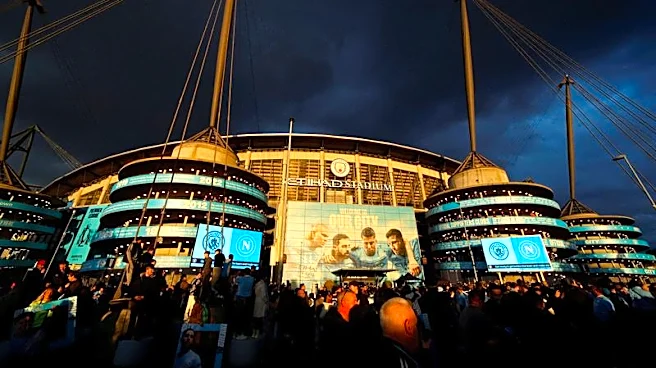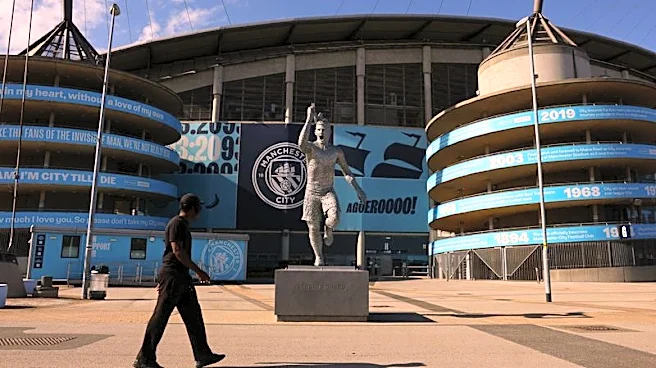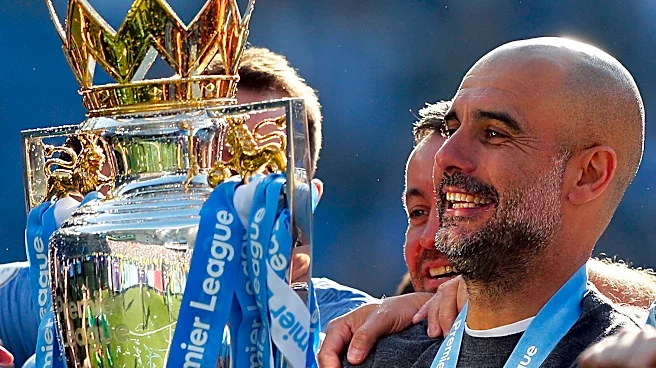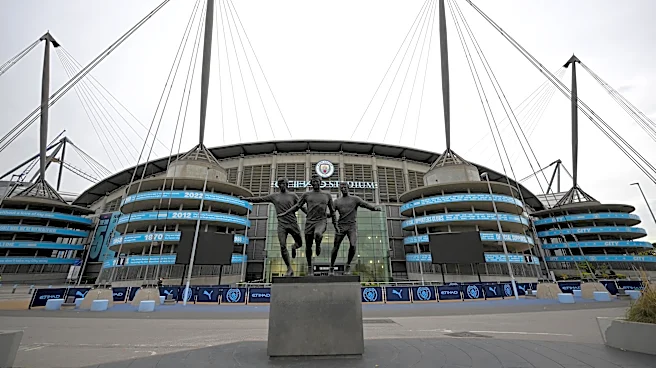





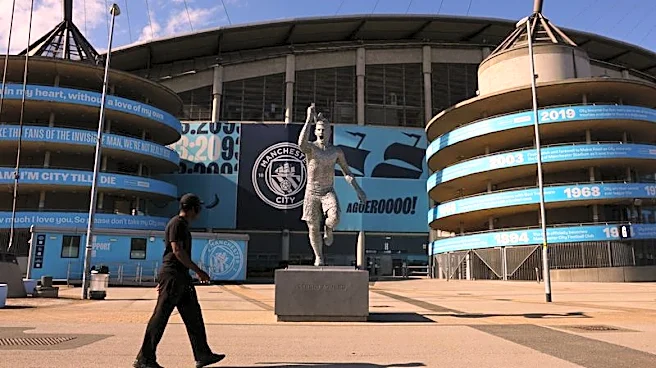
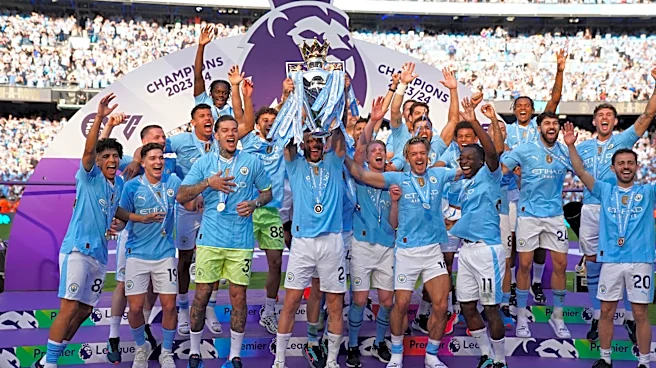
Manchester City is currently facing the reckoning of a century. A grand total of 114 regulatory charges — a staggering rap sheet of alleged financial fraud, falsified sponsorship contracts designed to artificially inflate revenues, under-the-table shadow payments to double-underwrite wages off the books, and years of systematic non-cooperation with league investigators.
Let’s not mince words or dress this up in partisan football tribalism: what City did was wrong. It was calculated financial doping
designed to circumvent the rules everyone else agreed to play by, and it resulted in a direct distortion of competitive reality. Trophies were lifted, Champions League spots were taken, and prize money was pocketed on the back of an accounting fiction. If the Premier League’s independent panel hands down severe penalties — title strippings, massive points deductions, or expulsion — City will have earned every single bit of it.
City broke the law of the land, and they should pay for it. But as the football world eagerly gathers around the executioner’s block, we need to be very careful about what — and who — we are actually defending. In our rush to burn down the cheat, we have stopped asking who built the house.
Because if our anger is genuinely about financial fairness, competitive equity, and the health of European football, concentrating all our fury on Etihad Airways misses the forest for the trees. Manchester City subverted a flawed rulebook. But the cartel of clubs that designed that rulebook — with UEFA acting as their enforcer — has done far more lasting damage to the fabric of the sport than one rogue state project ever could.
To understand how we got here, we have to acknowledge the real problem Financial Fair Play claimed to solve. In the mid-2000s, European football had a genuine crisis on its hands: clubs were destroying themselves. The explosive growth of Champions League broadcasting rights created a dangerous incentive structure, where smaller clubs in lower-ranked leagues were overleveraging their futures — signing aging stars on unpayable wages just to survive two qualifying legs in July. When the gamble failed, clubs went bankrupt. That was a real illness in the sport, and curbing those insolvencies was a necessary goal.
The mistake, however, is believing that saving lower-tier clubs was the driving force behind the rules UEFA actually built.
Fixing insolvency didn’t require capping spending against revenue; it required basic debt controls and liquidity requirements. The crisis in the lower leagues simply provided a convenient moral shield — a public-health pretense — for UEFA to introduce a system whose real architecture was designed by, and for, the continental elite.

When Michel Platini unveiled the framework, he didn’t hide what the biggest clubs were actually lobbying for. Dressed up as concern for club survival, the mandate was explicitly built around private corporate profitability:
Fifty percent of clubs are losing money and this is an increasing trend. We needed to stop this downward spiral… The owners are asking for rules because they can’t implement them themselves — many of them have had it with shoveling money into clubs and the more money you put into clubs, the harder it is to sell at a profit.
Read that last sentence again. The owners of Europe’s top clubs didn’t go to UEFA out of a noble duty to protect Maltese or Eastern European clubs from going bust. They asked for a regulatory cartel because they were tired of competing with each other’s wealth and wanted to guarantee their own profit margins and exit valuations.
This wasn’t a new impulse — it was simply the modern legalization of an old instinct. Decades earlier, former Manchester United chairman Martin Edwards explicitly declared that smaller clubs were “bleeding the game dry” and should “be put to sleep.” FFP didn’t invent that elitist philosophy; it simply gave it a presentable regulatory framework.
Solving lower-tier insolvencies was a welcome side effect that gave the project moral legitimacy. But designing rules around corporate profitability within a system of wildly unequal revenue streams meant the outcome was never an accident: UEFA used a genuine crisis at the bottom to build a moat at the top.
The most damning feature of this moat isn’t that it prevents new money from entering; it’s that it completely insulates the established elite from their own sporting incompetence.
Sports economists and legal scholars have long pointed out that when you outlaw external investment and tie spending capacity strictly to existing turnover, you inevitably fossilize the market structure into an “oligopoleague.” Under this framework, organic upward mobility is mathematically suppressed, and high revenue becomes a permanent competitive shield.

There is no cleaner illustration of this than Manchester United. Over the last decade, United has been a masterclass in operational dysfunction — spending over a billion pounds, burning through managers, and consistently mismanaging their squad. In a truly open market, 15 years of sustained sporting failure on that scale would ruin a football club. If Brentford or Atalanta suffered United’s last decade, they would be fighting off administration in the lower divisions.
Instead, because United’s massive commercial revenue base was grandfathered in before the moat was built, they can make catastrophically bad decisions year after year, finish eighth in the Premier League, and still show up every summer with £200 million to burn. The system guarantees that the established cartel can repeatedly spend its way out of trouble, while everyone outside it has to operate with surgical perfection just to survive.
Expand the lens beyond the Premier League, and the systemic devastation becomes even clearer.
For clubs outside the top-five leagues — and increasingly for historic giants in Serie A — the FFP era has turned European competition into a rigged game. Historic powerhouses like Ajax, Benfica, Sporting, and Celtic have been systematically relegated to farm teams. They exist in a state of perpetual rebuild: build a brilliant team, achieve momentary success, get immediately pillaged by the financial elite, and start from scratch. Success on the pitch no longer translates to structural growth; it just triggers a clearance sale.
Take the Ajax squad that reached the semifinals of the Champions League in the 2018/19 season, for example. Toppling over giants like Real Madrid and Juventus en route to the semifinals, they were built on a core of young Dutch players like 19-year-old center back Matthijs de Ligt and 22-year-old midfielder Frenkie de Jong. Both of them were gone the following summer, off to Juventus and Barcelona, respectively. The following year, Manchester United came for another midfielder that was integral to that team, Donny van de Beek. A few months after what should have been a dynasty-starting campaign — in which they won a domestic double and reached the Champions League semifinals with a corps of young 20-somethings — Ajax had been pillaged by bigger, richer clubs, just as the system was designed to ensure. Rather than going out and fortifying their elite squad — building a more competitive squad that would continue to challenge the financial elites for years to come — they netted over €150 million in the transfer market and were forced to restart.

Even in Italy, the economic divide has become an existential weight. Serie A clubs operate in a reality where missing out on Champions League football for a single season creates a financial crater that requires immediate balance-sheet acrobatics to fix — the exact structural desperation that drove the plusvalenza capital gains saga and constant regulatory friction. Meanwhile, an average, mid-table Premier League club can mismanage its way to 14th place and comfortably outspend the Italian champion solely off the back of domestic TV distributions.
Which brings us to the core illusion of the entire enterprise: the belief that the system can be redeemed simply by prosecuting its most brazen violators.
When league executives and UEFA officials point to regulatory trials and point deductions as proof that the framework works, they are performing a magician’s trick. They want you to focus on the rogue actor in the dock so you don’t notice that the rules themselves were constructed to render genuine, organic competition impossible.
By defining “fairness” strictly through the lens of revenue generation, governing bodies created a binary choice for any club attempting to challenge the top tier: either accept permanent status as a feeder team, or take existential financial risks to breach the moat.
When an entity like Manchester City comes along, systematically flouts regulations, and uses shadow contracts to inflate their numbers, it isn’t a random glitch in an otherwise sound system. It is the grim, inevitable result of the cartel’s own design. In their greed to pull up the drawbridge, UEFA and the domestic leagues created an environment where playing by the rules meant accepting perpetual subservience — making a mockery of the regulatory framework for anyone willing to break it.
Punishing Manchester City may offer a brief, satisfying sense of moral retribution. It may clean up the record books and reassure fans that rules still exist. But unless that punishment is accompanied by a complete ground-up redesign of how football revenue is distributed and capped, it changes nothing. It simply restores the quiet, comfortable tyranny of the original legacy elite — a world where the same handful of clubs are guaranteed dominance not because they are better run, but because they happened to be rich when the drawbridge was pulled up.
City cheated at a rigged game. By all means, punish the cheat. But until we stop treating the rig as a sacred institution worth defending, European football will remain exactly what the cartel designed it to be: an oligarchy with a regulatory arm.