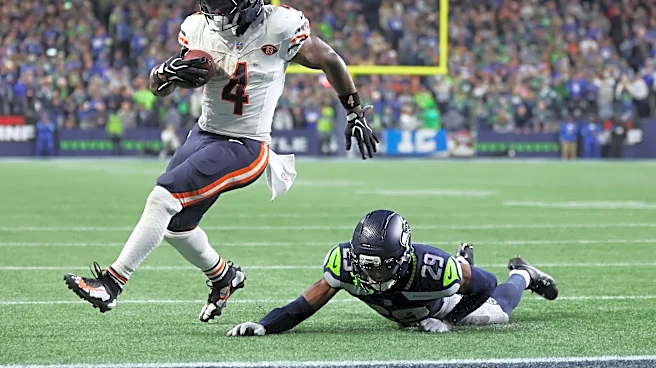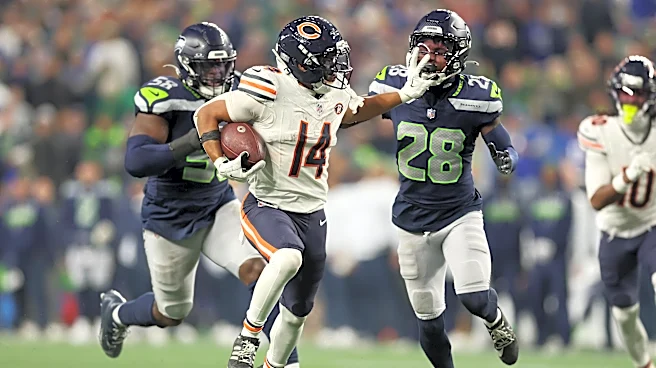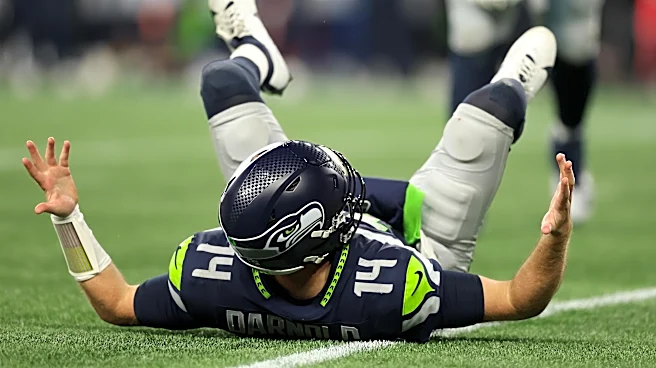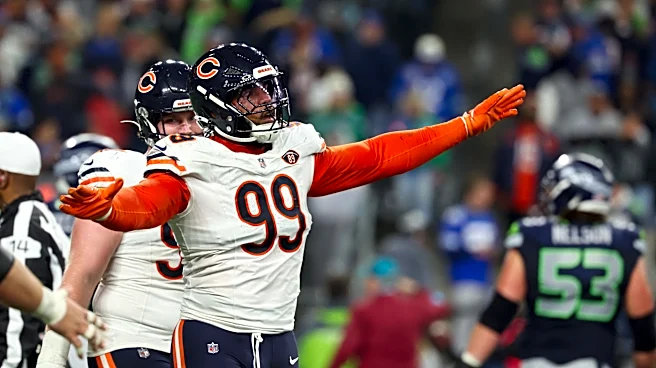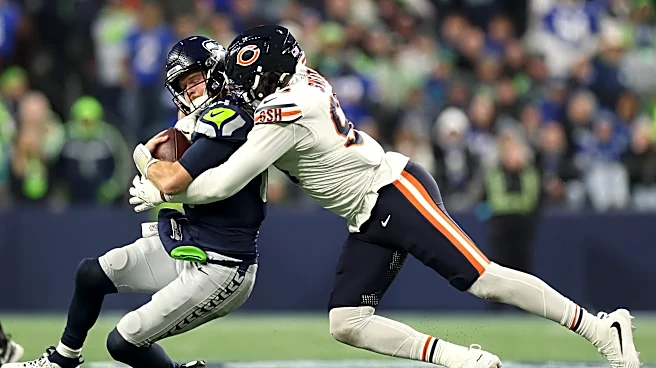


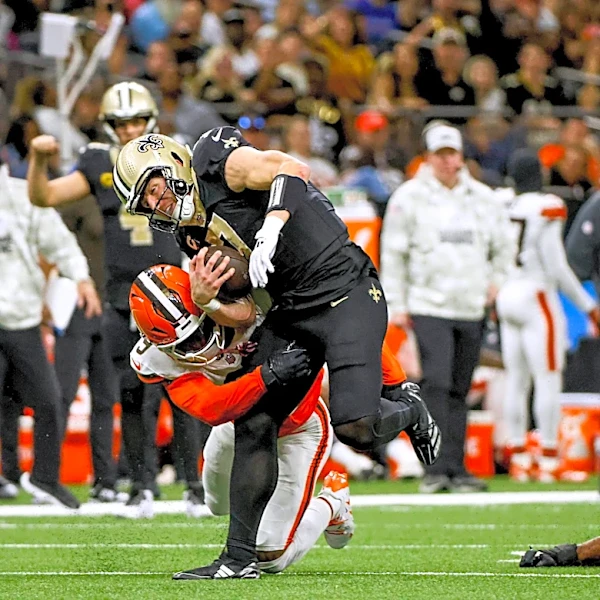
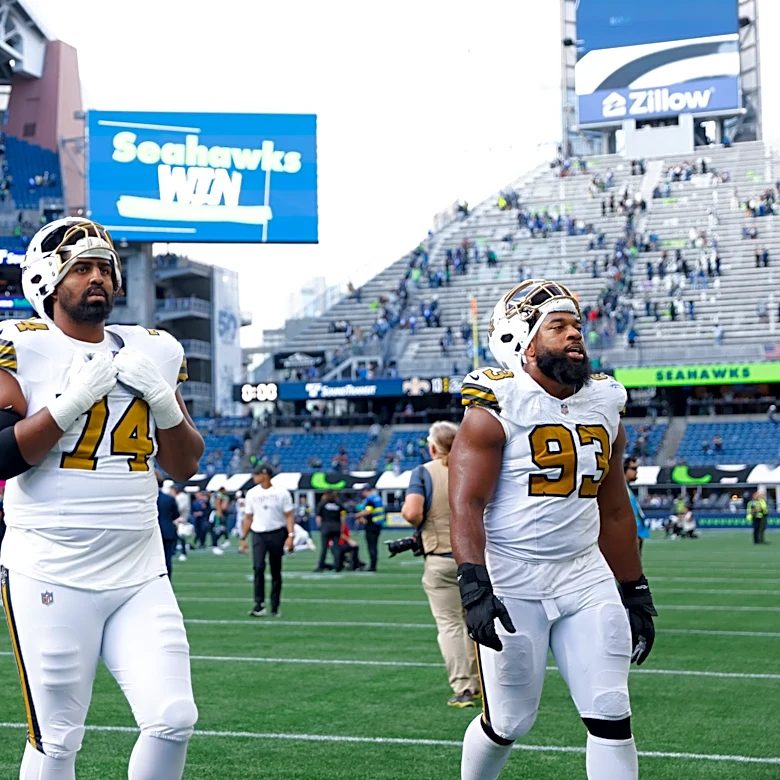
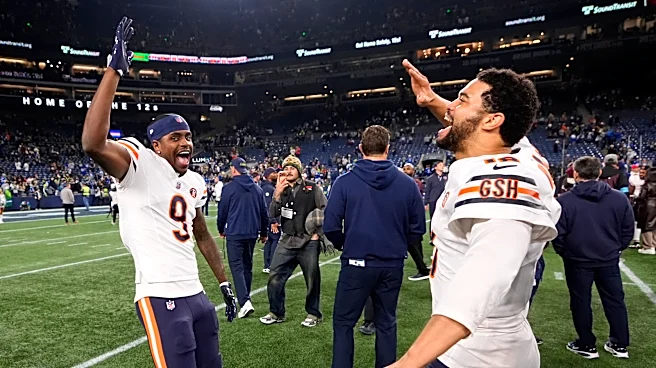
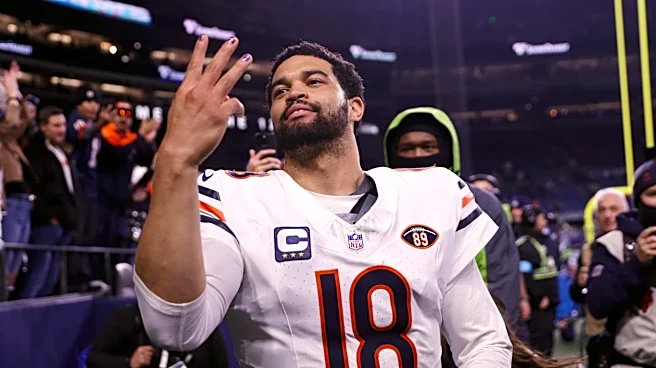
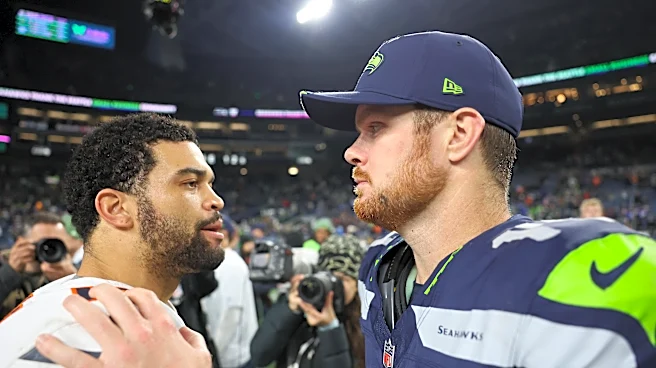

Losing to the Chicago Bears isn’t exactly a shocking outcome. Ben Johnson has built a competitive team, and Chicago has shown it can hang with anyone. But the way the Seattle Seahawks lost is what should frustrate Seattle fans.
The offense struggled to sustain drives, the defense failed to make enough plays, and several issues that have followed this team throughout the season resurfaced at the worst possible time. Seattle had opportunities to make this a competitive game, but too many mistakes on both
sides of the ball made that difficult.
The loss also carries significant weight in the standings. The Seahawks are now further behind the 49ers and have dropped an important head-to-head matchup against a team that could be competing with them for a Wild Card spot down the stretch. These are the kinds of games Seattle needed to win.
The Bad
Third-down struggles come back to haunt the Seahawks
Seattle’s third-down problems returned in a big way against Chicago. The Seahawks converted just 1 of 11 attempts, a dismal 9.1% conversion rate.
That’s particularly frustrating considering how well the offense had handled some difficult third-down situations against the Chiefs. Seattle had been finding ways to convert third-and-long situations at an impressive rate, but there’s a difference between being good at converting those situations and constantly putting yourself in them.
Converting third-and-long is a valuable skill, but it shouldn’t be mistaken for a sustainable offensive strategy. When an offense consistently finds itself facing long third downs, it usually means something has already gone wrong on first and second down. Whether it’s ineffective runs, poor play sequencing, or a lack of answers against the defensive front, the offense is making life harder for itself.
Eventually, a good defense is going to make you pay for that.
Chicago did exactly that. The Bears consistently put Seattle in difficult situations, and the Seahawks had no answers when it mattered.
Brian Fleury and Sam Darnold share the blame
There’s been plenty of debate among Seahawks fans about who’s more responsible for the offensive struggles. Is it Brian Fleury and his play-calling, or is it Sam Darnold and his decision-making?
The answer is pretty simple: both are to blame.
Fleury has struggled to put together a consistent offensive plan. The route concepts don’t always complement each other, the play sequencing can feel disconnected, and there are too many situations in which the offense appears to have no answer for what the defense is doing.
One example is how defenses have been sending blitzes on early downs, anticipating an under-center play-action pass. Fleury hasn’t found a way to counter those looks, repeatedly leaving Darnold under pressure.
It’s not just about individual play calls. Good offensive design should create opportunities from one play to the next, manipulate defensive reactions, and give the quarterback answers against different coverages. Too often, Seattle’s offense looks like a collection of unrelated plays rather than a cohesive system. In other words, even some creative play designs struggle to work because they aren’t connected to a larger plan.
The red zone offered another example. In this play, Darnold finishes the play without a dropback, and the routes essentially just run toward the defenders. There’s no real attempt to create space or take advantage of the double coverage on JSN. It’s discouraging to watch.
Having him call two running plays with ten minutes left in the fourth quarter, while trailing by more than one possession, was one of the strangest decisions I’ve seen in a long time. Even if it looks like Darnold changed the play the second time around, the decision itself was bizarre.
Darnold’s performance is concerning, too.
He held onto the ball too long on several occasions, missed throws he should have made, and made questionable decisions throughout the game. There were also instances in which he abandoned progressions that appeared to offer better options.
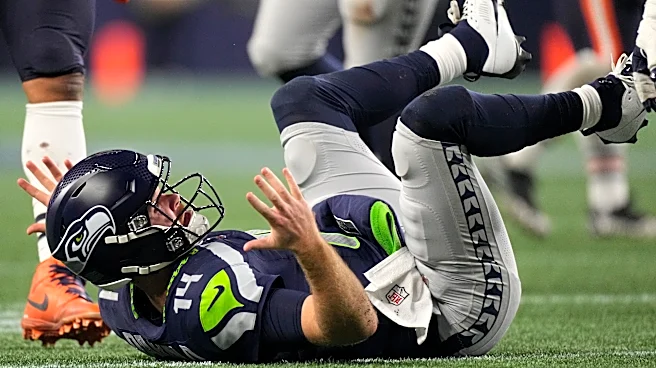
His pre-snap recognition was particularly concerning on the play that resulted in his rib injury. On the second snap of the game, Kyler Gordon lined up in an obvious blitz position. Yet Darnold didn’t appear to make any meaningful adjustment to the protection or prepare for the pressure coming from that side.
Gordon wasn’t exactly hiding his intentions. The alignment itself should have been enough to trigger an adjustment, whether that meant changing the protection or preparing to get the ball out quickly. Instead, Darnold appeared caught off guard by a pressure that should have been anticipated.
Darnold hesitates too much and abandons his reads. It’s not necessarily that he’s missing throws to completely uncovered receivers; he’s failing to hit windows that an NFL quarterback should be able to recognize and attack. Here, at the end of his dropback, he has JSN, who has confused the defensive back. With better anticipation and timing, the ball should already be on its way. On several occasions, Darnold failed to anticipate his receivers’ routes.
Here, he tries to read JSN’s release, but Kyler Gordon does a good job covering him. Darnold moves to his next read and finds Horton. However, he hesitates for a moment and puts the receiver directly in harm’s way, throwing toward the safety. It’s an exact example of what a hospital ball looks like.
Here’s a rare good play call from Fleury. Horton’s route creates separation with the cut in JSN’s route. Darnold sees it, but once again hesitates, doesn’t throw the ball, and decides to run. I’m not saying this is an easy throw, but it’s an NFL throw.
Darnold was intercepted for the ninth time, but that’s not the play I want to focus on. Instead, there’s an interception that was wiped out by a penalty. Darnold recognizes that JSN has drawn the safety’s double coverage and, once again, just as he did on his second interception against the Broncos, puts the ball where it shouldn’t go. The throw to Kupp should have been placed toward the back of the end zone, away from the defender and out of harm’s way. Instead, it goes right into the defender’s hands.
The defense wasn’t the reason Seattle lost, but it certainly didn’t help
The Bears finished with 34 points, and Caleb Williams became the first quarterback to in awhile against this Seattle defense to surpass 200 passing yards. Chicago found success through the air and on the ground, while also creating problems for the Seahawks in the red zone.
The Seahawks defense had been excellent against Kenneth Walker in its previous outing, particularly when it came to tackling. Against Chicago, that discipline disappeared.
Missed tackles repeatedly turned what should have been negative plays into significant gains. There were also opportunities to bring down the quarterback or finish plays behind the line of scrimmage that Seattle couldn’t capitalize on.
The edges remain a problem
Seattle continues to be relatively solid against the run between the tackles, but the edges have become a concerning weakness.
The defensive ends haven’t consistently generated pressure, and their run fits have also created opportunities for opposing offenses.
Take DeMarcus Lawrence, for example. At times, he attacks an interior gap that is already occupied by Ernest Jones, leaving the outside vulnerable and forcing someone like Julian Love or a cornerback to make the replacement. That alignment issue led to two touchdowns in this game alone.
Derrick Hall has also had situations in which he crashes inside and leaves the edge open for Caleb Williams to escape.
These are the kinds of mistakes that can turn an otherwise well-defended play into a significant gain. The defensive front needs to maintain its assignments, especially when facing a quarterback capable of creating plays outside the pocket.
The pass rush as a whole is another concern. Mike Macdonald’s defensive scheme is designed to create pressure through different combinations and often relies heavily on interior disruption. That means the edge defenders won’t always be the ones finishing plays with sacks. Sometimes their job is to occupy space, control the pocket, and allow other defenders to get home.
But there’s a difference between not recording sacks and failing to generate pressure altogether.
Opponents continue to attack the linebackers’ second-level coverage responsibilities
This has become a recurring issue for Seattle, and Chicago found ways to exploit it throughout the game.
The Bears repeatedly attacked the space behind the linebackers, particularly by putting Ernest Jones in difficult coverage situations. Jones has a lot of responsibilities in this defense, and opposing offenses are finding ways to make him choose between multiple threats.
The trick play here is designed to hold Jones and move him out of position, opening a window behind him. Spoon’s coverage doesn’t come off perfectly, and that creates the space needed for the pass to work.
The Bears executed this concept repeatedly, and Seattle struggled to find an answer. There were at least four instances in which Dig routes found space behind the second level of the defense.
Things get difficult when your best players aren’t playing well
There’s an old saying: when your best players have a bad night, it’s going to be a long night.
That’s exactly what happened to Seattle’s defense.
Nick Emmanwori read the route and initially took a good angle, but then struggled to adjust. What could have been an interception turned into a touchdown. He was also beaten several times throughout the night, including in man coverage against Loveland.
Leonard Williams also had a chance to make a tackle behind the line of scrimmage, potentially turning the play into a sack or a significant loss of yardage. Instead, he couldn’t finish the play, allowing the offense to gain ground.
Julian Love was late on a few plays, got lost in coverage, and dropped an interception. It wasn’t an easy catch, but it’s one he would normally come down with.
These are players Seattle expects to make a difference. They’re among the most important pieces of the defense, and the team needs them to deliver when opportunities arise.
Of course, nobody expects perfection. But when your best defenders fail to capitalize on the opportunities that could change the game, it becomes increasingly difficult to overcome the mistakes elsewhere.
The Good
Quenton Nelson makes a promising Seahawks debut
There weren’t many positives to take away from this game, but Quenton Nelson’s debut was certainly one of them.
The veteran guard had a strong performance in his first outing with Seattle, showing exactly why his addition could be so important to the offensive line.
That technique is absolutely outstanding against Grady Jarrett. This could have resulted in a huge gain if Price hadn’t hesitated.
Unfortunately, Nelson isn’t going to fix the offensive line’s problems by himself. The Bears show simulated pressure here. Nelson and Josh Jones are on one side, where there’s only one defender. Nelson looks to see what’s happening on the other side, and it’s a mess. The Bears’ linebackers run a stunt, and George Holani — who struggled in pass protection throughout the game — and Sundell fail to communicate and execute their assignments. They end up leaving a defender free to get to the quarterback. Nelson manages to slow the pressure down just enough to give Darnold a chance to make the throw.
Maybe Nelson was thinking, “Do I have to do everything myself?” On this snap, he takes down Jarrett with a double-team block and then works his way to the second level, opening up space for the running back alongside an excellent block from Jones.
Nelson played around 60 snaps and allowed just one pressure. He also had one false start and one poor run-blocking rep. Overall, it was a very encouraging debut.
Seattle should have run the ball behind him more often.
Josh Jones could make the offensive line situation interesting
Josh Jones was another pleasant surprise.
Despite a couple of mistakes, including the pressure that resulted in Seattle’s blocked field goal and two pressures allowed on the final drive, Jones had a very solid performance overall.
His hand usage stood out, as did his strength and ability to maintain his blocks. He looked technically sound for most of the game and showed that he can be a reliable option when given the opportunity.
Good work in pass protection, along with his ability to get downfield and take good angles in the running game, particularly at the second level.
His technique wasn’t just on display in a supporting role. He had an incredible snap-and-trap block against none other than Jeffery Simmons, who basically destroyed Seattle’s offensive line for most of the game.
It’s only one game, but Jones could make a case for the starting right tackle job once Cross returns, especially with Lucas playing so far below the level we’ve come to expect from him.
Final Thoughts
As mentioned earlier, the loss itself isn’t surprising. The way it happened is another story. Seattle is now essentially in must-win territory. In theory, the games against the Cardinals and Raiders, along with the bye week, give the Seahawks an opportunity to make adjustments before the final stretch of the season.
The most important thing is making sure these mistakes don’t keep happening. This team has talented coaches and players who are capable of turning things around, but every week and every loss makes the road ahead more difficult.
Go Hawks!