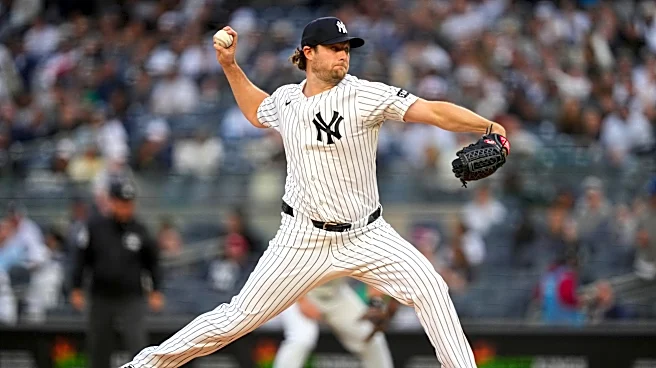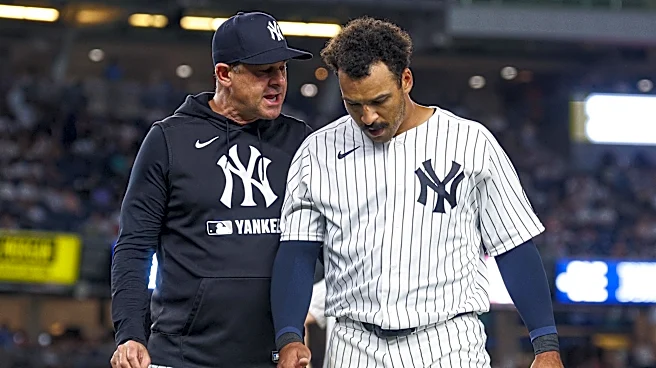




One of the curses of such a long season, and this is true for all levels of teams, is the incessant tinkering one might be prone to do, trying to optimize a team’s performance. As we comb through the Yankees’ offense and potential avenues of improvement, one that inevitably stands out is the improved production at the top of the order. Trent Grisham hasn’t yet been able to match his performance of last season, and his outstanding walk rate while befitting the role is mostly keeping his head above
water as a worthwhile regular thanks to how he’s struggled with his batted balls.
Part of why Grisham ended up entrenched in the leadoff role the moment he found success as a Yankee last season is that this team doesn’t really have a traditional leadoff bat. What that term means exactly has changed a great deal over the years, but when we say they lack this option, it’s both in terms of what we consider an ideal name for the role and of any player who has had consistent success there. Ronald Acuña Jr., Brandon Nimmo, and Kyle Schwarber are all unique hitters, but they share the similarity of having filled this role consistently and successfully over a long period in recent campaigns. The Yankees’ hitters can’t say the same.
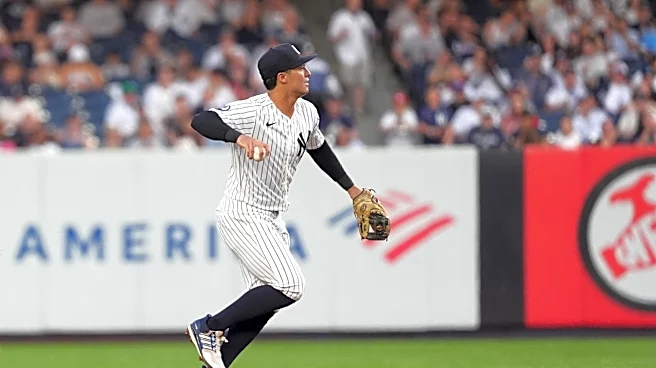
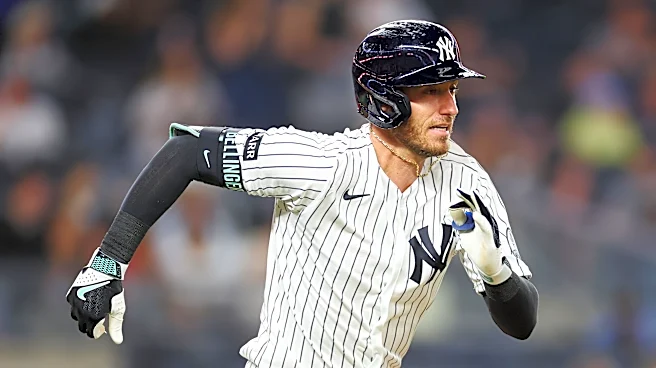
If Grisham is unable to improve his numbers, there will come a time when a new option is required, and while he may not represent the easiest of fits, Cody Bellinger could be that player. First things first, the cons of this decision are all pretty transparent, and chief among them is the fear of disrupting the routine of a veteran. Bellinger has built himself an outstanding career without featuring in conversations such as these — in fact, he’s only started a game in the leadoff spot three times. It could very well be the case that moving to the leadoff spot disrupts him. While potentially real, this is just a speculative point.
Forget for a second all of our preconceived notions of what Bellinger is, the profile he’s built over the years, and everything that comes with it — who is Bellinger right now?
While there is real pop in that bat (.202 ISO), one of the key factors in making Bellinger the great hitter he has been since joining the Yankees is an outstanding plate discipline that sees him walk (34) more times than he strikes out (27) in 2026. Bellinger’s .382 OBP is neck-and-neck with Ben Rice’s .383 for the team lead. While he doesn’t have the stolen base numbers of Jose Caballero or Jazz Chisholm Jr., he has enough speed to be a threat at the top of the order, certainly more than Grisham does.
One benefit of having Bellinger lead off would be to split the two most dangerous lefties of this team on either side of Aaron Judge. Suddenly, especially without Giancarlo Stanton’s presence as he’s currently sidelined with an injury, opposing managers would think a bit more before bringing on a southpaw to handle these two. Yes, this hasn’t been a problem because Rice and Bellinger are both mashing lefties, but in the long run, you’d naturally expect those numbers to regress some. The idea of having a righty splitting the two is quite appealing — and not just any righty, but the two-time reigning AL MVP.
Sure, Bellinger’s walk rate is miles off his career and recent norm, but even if you account for a more reasonable figure, he’s a player who has hit .270 over the last three years with a low standard deviation. Bellinger’s ability to get on base at a fine clip has been well established. Overall, it doesn’t require a lot of squinting for one to see why it could make sense to move Bellinger to the top of the order.