



This is the second part of a series about the notable baseball milestones that happened in our city. You can read part one here.
The Royals moved into state-of-the-art Royals Stadium for the 1973 season. It didn’t take long for the highlights to happen. On May 15, 1973, Nolan Ryan threw his first career no-hitter for the California Angels against the Royals at the stadium. By 1973, Ryan—just 26 years old—was already in his seventh big league season, having appeared in 144 games.
He established himself
as an ace in 1972, going 19–16 and leading all of baseball with 329 strikeouts. On this unseasonably warm night, the Angels got all the runs Ryan would need in the first inning on a run-scoring single by former Royal Bob Oliver. Oliver added a solo home run in the sixth for the final margin. Ryan was masterful, striking out 12 while throwing 132 pitches. He did walk three, including Steve Hovley, who stole second, giving the Royals their only real scoring opportunity of the evening.
The Royals had a couple of chances to break through. In the eighth, Gail Hopkins hit a two-out blooper into short left-center field. Shortstop Rudy Meoli made a terrific over-the-shoulder catch to save the no-hitter and end the inning. With two outs in the ninth, Amos Otis hit a ball that looked like it might carry to the right-field wall. Angels right fielder Ken Berry turned the wrong way, righted himself, then made the catch on the warning track to end the game.
Jeff Torborg, who had caught Sandy Koufax’s perfect game in 1965, was Ryan’s catcher. After the game, Ryan said, “In the bullpen warming up, I was terrible.” The no-hitter was the first of Ryan’s career. Two months later, he would throw his second. He would eventually throw a major league record seven no-hitters. How dominant was Ryan? He holds the record for the most career one-hitters (12) and the most two-hitters (18). He beat the Royals 24 times in his career, the most wins he had against any team. It could have been worse, but Ryan played 14 of his 27 seasons in the National League.
A little more than two months later, on July 24, 1973, Royals Stadium hosted the 44th annual Major League All-Star Game. Amos Otis, John Mayberry, and Cookie Rojas made the American League squad, with Otis and Mayberry getting the start. Otis put the Americans on the board in the second with an RBI single.
The highlight of the game came in the fourth when Johnny Bench hit a massive solo home run off Bill Singer. The blast, which landed in the upper reaches of the left-field stands, remains one of the longest ever hit in the stadium. The game itself was pretty boring, as the National League pummeled seven different AL pitchers on its way to an easy 7–1 victory.
The win was part of an amazing streak of National League dominance. Between 1963 and 1985, the NL won 21 of 23 All-Star Games. Bobby Bonds of the San Francisco Giants was named MVP of the game, which featured 18 future Hall of Famers.
Steve Busby threw the first two no-hitters in team history, but both came on the road. On the evening of May 14, 1977, Jim Colborn took the mound behind an eclectic lineup. Hal McRae started in left, Tom Poquette in right, and Al Cowens manned center (Amos Otis was out with an injury). John Mayberry had the night off, which put Pete LaCock at first. George Brett was also injured, so 38-year-old Cookie Rojas played third.
Colborn retired the first 14 Texas Rangers before hitting Toby Harrah with a pitch. Poquette made two sparkling plays in right field, robbing Mike Hargrove and Willie Horton of potential hits. Cowens also made two fine plays, taking hits away from Bert Campaneris and Tom Grieve.
Colborn got stronger as the game progressed, retiring the last 11 Rangers he faced. When the final out was recorded, Colborn had thrown the first no-hitter by a Royals pitcher in Royals Stadium. He was terrific in 1977, going 18–14 while throwing 239 innings. Whitey Herzog didn’t pitch him in the 1977 ALCS for reasons still unknown, instead watching Larry Gura and Andy Hassler get lacerated by the Yankees (eight runs on 12 hits in just 7⅔ combined innings). After eight early-season appearances in 1978, the Royals traded Colborn to Seattle for Steve Braun.
Game 7 of the 1985 World Series, played at Royals Stadium on October 27, 1985, clinched the team’s first World Championship. It was a historic game, but not the one everyone talks about. That would be Game 6—the Denkinger game—the one Cardinals fans still complain about. Game 6 remains one of the most exciting games in team history, while Game 7 felt like a foregone conclusion.
After Daryl Motley cranked a two-run home run in the second inning, it was over. Sure, there were still seven innings to play, but we knew it was over. The Cardinals were still steaming about the previous night. St. Louis finally came unglued in the bottom of the fifth, when former skipper Whitey Herzog burned through five pitchers as the Royals sent 12 batters to the plate, scoring six runs to go up 11–0. Joaquin Andújar and Herzog both earned ejections from Don Denkinger in the inning.
It was a shame to see the Series end that way. I loved Whitey when he managed the Royals and felt bad for the guy, but man, that game was a celebration. New father Bret Saberhagen was masterful, scattering five hits over nine innings to give the Royals their first title.
Saberhagen delivered the next signature moment in stadium history. On August 26, 1991, he had it going. His fastball was popping and his breaking pitches were biting. Sabes cruised through the first four innings, issuing just one walk.
The wheels almost came off in the fifth. With one out, Dan Pasqua hit a line drive deep to left. Kirk Gibson gave chase, and the ball ticked off his glove and off the wall. It was initially ruled a hit, but after the official scorer reviewed the replay, it was changed to an error. Looking at it again, was it a hit or an error? I’d probably have ruled it a hit. Pasqua smoked that ball, and at that stage of his career, Gibson’s defensive limitations showed.
Saberhagen retired 14 of the next 15 batters, the lone hiccup an eighth-inning walk to Pasqua. He got Frank Thomas on a grounder to second to complete the last no-hitter in Royals history.
It’s hard to believe it’s been 35 years since the Royals have thrown a no-hitter. Saberhagen needed 114 pitches that night, striking out eight.
The only player to collect his 3,000th career hit in Kansas City was Paul Molitor, who did it on September 16, 1996. Facing José Rosado, the 40-year-old Molitor stroked a fifth-inning triple into the right-center gap. The ball landed between center fielder Rod Myers and right fielder Jon Nunnally, neither of whom seemed too anxious to retrieve it.
As the outfielders took their time, Molitor motored to third. His family celebrated in the stands, and the crowd gave him a prolonged standing ovation. Fireworks went off behind the scoreboard, and the game was delayed for several minutes while a montage of Molitor’s career played on the video board.
Molitor did it with flair. He singled in his first at-bat for hit No. 2,999. His triple in the fifth gave him No. 3,000. He added another single in the seventh for hit No. 3,001. He remains the only player to reach 3,000 hits with a triple and finished his Hall of Fame career with 3,319 hits.
Kansas City hosted its third All-Star Game on July 10, 2012. The stadium had just undergone a $250 million renovation and looked spiffy. It had cost only $70 million to build the original park, which opened in 1973. Inflation’s a bitch.
The game itself was forgettable—an 8–0 National League win. The MVP was Melky Cabrera, whom the Royals had traded to San Francisco over the winter for pitcher Jonathan Sánchez. The deal was one of the worst of Dayton Moore’s career, which is saying something. Sánchez wasn’t just a stiff; he was a Franky Carbone stiff.
Melky hit .346 for the Giants in 2012, adding to Royals fans’ angst. Moore gained some redemption by flipping Sánchez to the Rockies for Jeremy Guthrie in one of his better deals. Mike Trout and Bryce Harper both made their All-Star debuts in this game, but the real action happened the night before.
Everyone loves the Home Run Derby, right? It’s baseball’s version of the slam dunk contest. American League captain Robinson Canó said he’d include a Royal, which seemed to point to Billy Butler, who had 16 homers at the break. It made sense—keep the home crowd happy. Instead, Canó stiffed the Royals and left Country Breakfast off the roster.
Kansas City fans may not be known as “the best fans in baseball,” like our neighbors to the east, but we take pride in our city, our team, and our players. Canó basically gave the city the middle finger, and when the contest started, fans let him know exactly how they felt.
When Canó stepped to the plate—with his father pitching—the boos were deafening. I’ve never heard that kind of anger from Kansas City fans before or since. It visibly rattled both Canó and his dad. He didn’t hit a single home run, and with every ball that fell short, the jeering grew louder and meaner. It was a shame, really—the Derby is usually a love fest.
But Canó earned it. He was tone-deaf to the long, strained history between Kansas City and New York. Don’t promise to include a hometown player and then change your mind. That’s just stupid.
The onslaught continued the next night. When Canó came to the plate, the chanting resumed: Rob-bie Can-o. Rob-bie Can-o. Rob-bie Can-o. It was wonderful to see Royals fans show some passion.
Canó fouled out to third in his first plate appearance, and it was ugly. He later dribbled a single up the middle off Stephen Strasburg before being removed from the game, tail between his legs.
Kansas City had found a new villain. Canó joined a long line of Yankee heels—Billy Martin, Goose Gossage, Graig Nettles, Reggie Jackson. I’ve long since moved past my feelings about those guys, but Canó? I’ll never forgive that.
Before you decide Royals fans are cretins, consider Miguel Cabrera. In 2012, Cabrera was in the midst of a glorious career. Always a great hitter, he put everything together in his age-29 season. He hit .330 to lead the league, clubbed 44 home runs, and drove in 139.
Entering the final series, Cabrera was locked in a tight battle with Josh Hamilton and Curtis Granderson for the home run lead, and neck and neck with Mike Trout for the batting title. In the first game, he went 4-for-5 with a home run off Bruce Chen. In the second, he went 2-for-3 with two RBIs.
On October 3, the finale, Cabrera went hitless in two at-bats but clinched the Triple Crown—the first in the American League since Carl Yastrzemski in 1967. When he was removed after the fourth inning, the 30,383 fans in attendance gave him one of the most touching standing ovations I’ve ever witnessed.
Cabrera was visibly moved, emerging from the dugout multiple times to tip his cap. Even though the Royals finished 72–90, it was a moment that made me proud to be a Royals fan. Miggy will be eligible for the Hall of Fame in 2028 and will be a slam-dunk first-ballot choice.
Mention September 30, 2014, and any Royals fan worth their salt knows what happened. Some of you were there and will remember it forever. For the rest of us watching on television, it was near the top of the list of most exciting games we’ve ever seen.
A sellout crowd of 40,502 packed Kauffman Stadium for a winner-take-all showdown. People who were there swear they’ve never heard the place louder. The Royals hadn’t made the playoffs in 29 years—an entire generation had known nothing but losing.
When the Royals trailed 7–3 in the eighth, their odds couldn’t have been much higher than 10 percent. Future Royal Brandon Moss had nearly carried Oakland to victory with two towering home runs.
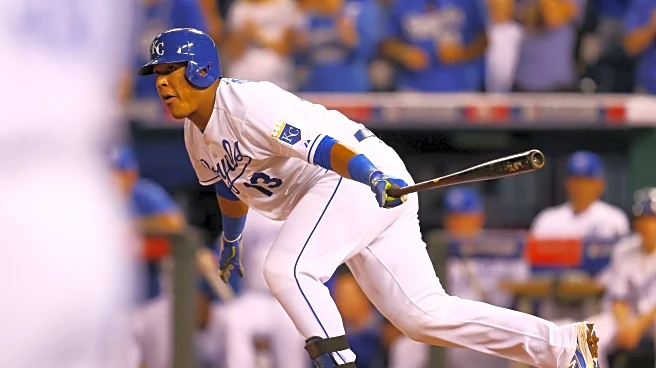
You know the rest. The Royals chipped away in the eighth, tied it in the ninth, fell behind again in the 12th, then finally rallied with two decisive runs. Everyone contributed—Nori Aoki, Eric Hosmer, Alcides Escobar, Billy Butler, Christian Colón, Jarrod Dyson, Lorenzo Cain, Brandon Finnegan. Salvador Perez delivered the winner, reaching across the plate and pulling an outside pitch down the left-field line. He isn’t always pretty, but he gets the job done. The Royals stole a record seven bases, every one of them enormous.
That win ignited something. The Royals swept the Angels, then the Orioles, and took the Giants to the final out of Game 7 before running out of gas.
They laid the groundwork for the 2015 team—a team that played like it knew it would win the World Series from the very first pitch. It was beautiful to watch.