
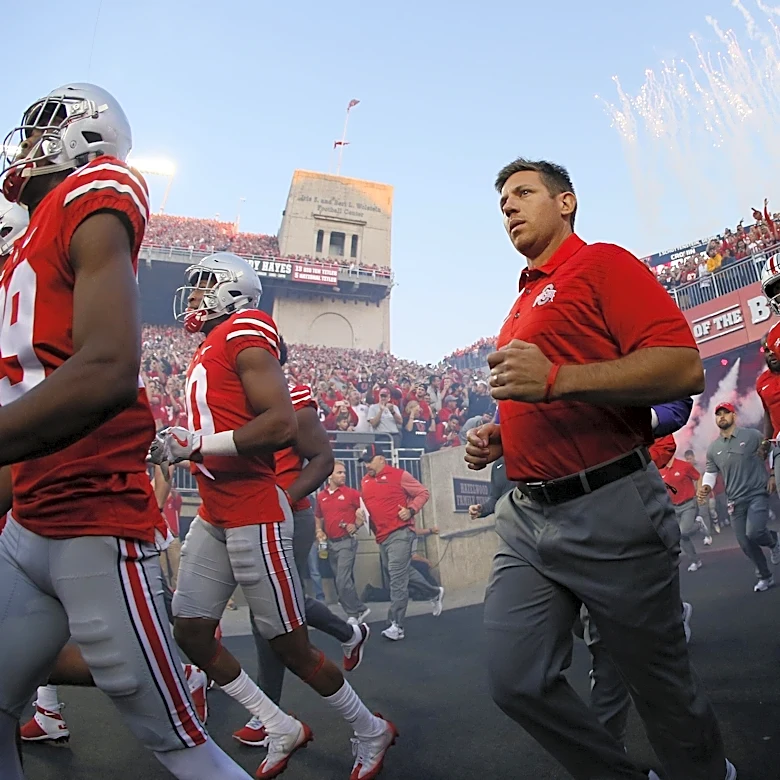
I love Ohio State football, I love Ohio State basketball, I love Buckeye Donuts, I love Mirror Lake, I love Orton Hall, I love “Carmen Ohio,” I love the Skull Session, I love TBDBITL, I love The Ohio State University. Being a Buckeye is not something I chose; it is who I am. My parents met as students at Ohio State, I grew up in Central Ohio, and I am a damn proud Ohio State alum. Even though I have now lived outside of Ohio for more of my life than I have inside the Buckeye State, I still bleed
scarlet and gray with every bit of the passion that I did as a freshman looking out my dorm room window on the 21st floor of Lincoln Tower as The Best Damn Band in the Land practiced in the field below.
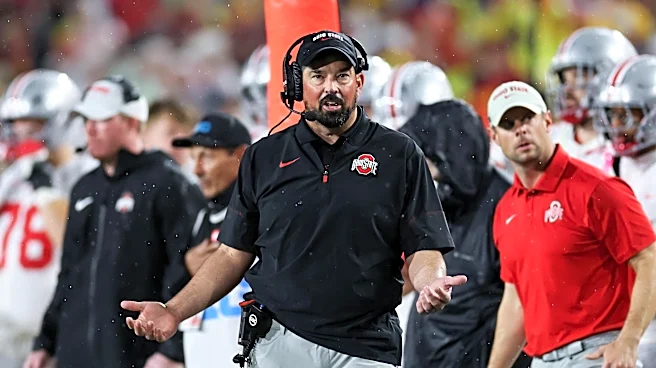
So, I take absolutely no joy in writing about the decline of Ohio State’s football program or the years of squandered opportunities that preceded it. But, just as you would with someone you love, I feel compelled to offer the tough love that, at least from where I sit, Ryan Day, Ross Bjork, and everyone else in positions of power at the Woody Hayes Athletic Center desperately need to hear.
The entire Ohio State football program needs a reset, and regardless of what happens against That Team Up North tomorrow, that process needs to begin on Sunday morning, if not Saturday night.
I have no idea who will be Ohio State’s head football coach in 2027. I suppose that since I don’t foresee a scenario in which Bjork fires Day, the only way that someone new is leading the program next season is if Day decides to leave of his own volition. Given the immense pressures and personal strains that come with coaching at Ohio State, that wouldn’t completely shock me, but I am operating under the assumption that both Day and Bjork will be back next year.
Unfortunately, I have increasingly little faith in either man’s ability to recognize the magnitude of the changes that need to be made. Both seem to be operating under the assumption that the principles and practices that got Ohio State to the mountaintop in a previous era of college football will keep them there in today’s wildly different one. They simply will not.
Day has accomplished things at Ohio State that the overwhelming majority of college football coaches will never come close to achieving. He has won a national championship, competed for another, recruited and developed exceptional talent, and overseen some of the most explosive offenses in program history. Those accomplishments deserve both recognition and appreciation, but they do not invalidate the markedly diminishing returns that we have seen throughout his tenure.
Certainly, not everything that has gone wrong this season can be blamed on coaching, and I am sympathetic to the challenges presented by talent lost to the NFL and injuries at the most important positions on the field. But this season did not create my concerns about the direction of the program out of whole cloth; it crystallized them.
College football has undergone a fundamental transformation over the past five years, and the advantages that once virtually guaranteed Ohio State a place amongst the sport’s elite no longer do. The transfer portal has changed how rosters are constructed, NIL and revenue sharing have changed how players are acquired and retained, and the expanded playoff has changed how championship contenders need to manage an entire season. Ohio State has certainly participated in — and even benefited from — those changes, but participating in them and adapting to them are two very different things.
The first order of business this offseason needs to be establishing a coherent football identity, because for years, the way that Day has constructed his roster has seemed to be at odds with how he has coached it.
Ever since then-TTUN offensive coordinator Josh Gattis dismissed Ohio State as a finesse team that lacked toughness following the 2021 edition of The Game, it feels as though Day has been preoccupied with proving otherwise, often at the expense of the very things that made his teams so successful early in his tenure.
What the hell is wrong with being a finesse football team when you are exceptionally good at it? Speed, precision, creativity, and athleticism are not liabilities, and none of them is incompatible with physical toughness. There is nothing inherently tough about repeatedly running the ball into the strength of an opponent’s defense, just as there is nothing inherently soft about getting the ball to a wide receiver whom nobody in the country can cover.
Rather than maximizing the advantages afforded to him by Ohio State’s recruiting prowess, Day has too often asked his players to conform to an offensive philosophy that minimizes them. If you are going to devote considerable resources to assembling one of the most talented wide receiver rooms in the country, why are you so determined to run as few offensive plays as possible and to pull your best players off the field in favor of tight ends who seem incapable of blocking or catching?
The same disconnect has become increasingly apparent on defense. Matt Patricia did a tremendous job with last year’s unit, but without that extraordinary collection of NFL-ready talent at his disposal, he has increasingly defaulted to passivity. I understand the schematic value of rushing three, disguising coverages, and limiting explosive plays, but when your defense cannot consistently generate pressure, there is nothing particularly safe about giving opposing quarterbacks all day to throw. No matter how good your secondary is — and I do think it is one of the strengths of OSU’s team — you cannot consistently expect defensive backs to maintain coverage when opposing quarterbacks have that much time to throw.
Ohio State has surrendered at least 30 points in three of its last four games. At some point, the potential consequences of being more aggressive should become less concerning than the actual consequences of being conservative.
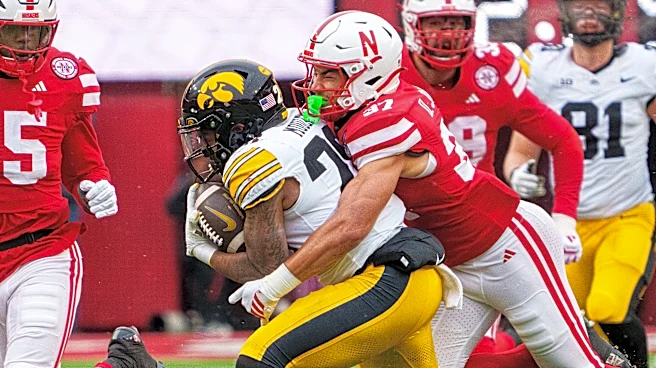
If Ohio State wants to play a more methodical, possession-oriented brand of football, then take a page out of Kirk Ferentz’s book at Iowa and build a roster specifically designed to excel at it. Personally, I would much rather see the Buckeyes embrace the exceptional athletic talent that they are uniquely positioned to attract and force opposing coaches to spend their weeks figuring out how to account for Ohio State’s strengths, rather than the other way around.
Establishing that identity will require a substantial overhaul of the coaching staff. As Day nears the end of his eighth full season as Ohio State’s head coach, it increasingly feels as though complacency and stubbornness have replaced the creativity and tenacity that marked the early years of his tenure.
If he returns, retain the three or four position coaches who have consistently demonstrated an ability to develop talent and get the most out of their players, and replace the rest. But more important than simply bringing in new coaches is bringing in coaches with new ideas, people who will challenge Day’s thinking rather than kowtow to it. Hiring someone because he fits comfortably into an operation that is no longer producing acceptable results seems entirely counterproductive. This staff desperately needs a squeaky wheel, someone who will push back on the standard operating procedure that has led to a team seemingly in freefall.
I generally don’t believe in judging a coordinator on a single season, especially when he had little involvement in constructing the roster that he inherited. So, if I had to retain one of Ohio State’s coordinators, I would probably give Arthur Smith another opportunity, although I am hardly passionate about that proposition. Despite the offense’s shortcomings and the difficult circumstances at quarterback, I at least saw efforts to adapt throughout the season. Conversely, over the past month, Patricia has continued to do the same things over and over again with increasingly frustrating results.
There also needs to be a fundamental reassessment of how Ohio State evaluates, acquires, develops, and retains talent.
On Thanksgiving, five-star defensive end DJ Jacobs, the No. 1 player in the 2027 recruiting class according to Rivals, flipped his commitment from Ohio State to Miami, joining Mark Fletcher Jr., Justin Scott, and Jordan Lyle as prominent prospects to have decommitted from the Buckeyes in favor of the Hurricanes in the past five recruiting cycles alone. Fletcher, of course, went on to be named the offensive MVP of the Cotton Bowl last season, in which Miami ended Ohio State’s national title defense.
And those are just the guys that OSU has lost to the Canes, to say nothing of Oregon’s Na’eem Offord and Jeremiah McClellan, USC’s Kayden Dixon-Wyatt, Maryland’s Zahir Mathis, Auburn’s Blake Woodby, and Georgia’s Jontae Gilbert.
Recruiting losses are inevitable, especially in this era of college football, but when you continue to lose top players in the same fashion, at what point do you determine that there is something deficient in your process? Day, Mark Pantoni, and the entire personnel operation need to figure out why they are struggling to close on some of their most coveted prospects and, perhaps more concerningly, why they are struggling to hold onto some of the ones they already landed.
As is true with all things in college football these days, money undoubtedly plays a role. But it cannot simply be hand-waved away as “Miami offered more money.” This is Ohio State we’re talking about, an athletic department that generated a record $336.1 million in revenue fiscal year 2025, including more than $68 million in donor-funded contributions. If Ohio State cannot consistently translate its considerable financial advantages into recruiting success, that itself warrants a reassessment of how the program operates.
However, Day has made retaining established talent a priority, and philosophically, I don’t disagree with him. I would much rather root for a team built primarily around players who have spent several years in Columbus than one that is reconstructed through the transfer portal every January. There is considerably less financial risk in investing in a proven college football player than there is in investing in a high school prospect.
But when you miss on players like David Gabriel Georges and lose commitments from players like Jacobs, who exactly are you setting aside all of that money to retain? This isn’t necessarily about how much Ohio State is spending, but how effectively it is allocating its resources. You cannot sustain a roster retention strategy without continuing to acquire and develop players worth retaining, and every recruiting shortcoming potentially becomes a more expensive problem to solve in the transfer portal.
Beyond the personnel decisions, I want an exhaustive examination of how this program prepares to play football games. How are practices structured? How are game plans developed? How are backups prepared to contribute? Who is responsible for identifying schematic problems during games, and who has the authority to correct them? How does the program evaluate whether a player’s lack of development is a failure of recruiting, coaching, or effort?
The fact that we have been having many of the same conversations about Ohio State football for the better part of five years suggests that the program’s greatest deficiency might be its inability to diagnose and correct its own deficiencies.
That is where Bjork needs to assert himself as the athletic director. If he believes that Day is the right person to lead Ohio State football into its next era, then it is incumbent upon him to establish the expectations, demand the organizational changes, and enforce the accountability necessary to ensure that Day actually does so. Unfortunately, nothing in this man’s résumé gives me any confidence that putting him in charge of a football program will lead to anything good. After all, he helped orchestrate the contract extension that ultimately saddled Texas A&M with Jimbo Fisher’s $77 million buyout, and he oversaw Ole Miss during the Hugh Freeze recruiting scandal and the subsequent legal battle that ended with the university having to formally apologize to Houston Nutt.
The irony, of course, is that we have already seen what Day’s program is capable of when it is willing to challenge its own assumptions. Following the disastrous loss to Michigan in 2024, the Buckeyes had some difficult, emotionally charged conversations that preceded one of the most spectacular stretches of football that any of us have ever had the privilege of watching.
That national championship run should have provided the roadmap for how Ohio State could become the preeminent program in college football for the next decade. Instead, we are less than two years removed from the title, and the Buckeyes are 5-6 against their last 11 Power Four opponents. Somehow, the lessons that Ohio State learned during the most successful month of Day’s coaching career have failed to become part of how he handles his business on a daily basis. The championship run should have been a reminder that creativity, aggression, and tenacity are how you make the most of an uber-talented team. Instead, he has reverted to the frustratingly conservative practices that made a near-mutiny necessary in the first place.
Moreover, Ohio State cannot continue to require a crisis in order to summon the best version of itself. The willingness to challenge established practices, confront uncomfortable truths, and change course when necessary needs to be a foundational component of the program’s culture, not a last-ditch emergency measure.
I fully recognize that we live a charmed existence as Ohio State football fans, and I understand how obnoxious it must sound to fans of practically any other program to hear us complain less than two years removed from winning a national championship. But there is a difference between expecting Ohio State to win every game and expecting Ohio State to consistently give itself the best possible opportunity to win every game. It is the latter expectation that I believe this program has failed to meet far too often under Day.
And despite my waning confidence in Day and Bjork, I am willing to grant them both the time and the grace necessary to get this thing right. I would willingly endure a rebuilding season in 2027 if it meant that Ohio State was purging the program of its outdated habits and philosophies, empowering new people with new ideas, and establishing a culture built around a fresh vision for how to win championships in modern college football.
I would be far more encouraged by a young, imperfect team that improves throughout the season, establishes a clear identity, and demonstrates a discernible upward trajectory than I would be by a more experienced team that wins 10 games in spite of the same coaching and organizational issues that have torpedoed the last two seasons.
I can stomach losing games as part of a deliberate effort to build something better; what I cannot stomach is continuing to lose games because the people in charge are unwilling or unable to recognize that something needs to change. There is no shame in acknowledging that approaches that once made you successful are no longer doing so, but there is considerable shame in clinging to remnants of bygone eras as the program deteriorates around you.
Tomorrow, I want nothing more than to watch the Buckeyes beat the hell out of the Corn and Blue. I want the players to experience the joy of winning The Game at home, and I want every scarlet and gray-clad person in Ohio Stadium to celebrate a victory that is woefully overdue. But a win cannot be allowed to absolve the program of its shortcomings, just as another loss should not be necessary to convince its leadership that substantive changes are required.
Get new ideas and new people into the Woody. Establish new processes for recruiting, development, preparation, and evaluation. Build a new identity that capitalizes on Ohio State’s extraordinary advantages rather than one that assumes those advantages will perpetually insulate the program from the consequences of its own mistakes.
Ohio State does not need to lower its expectations to accommodate the changing realities of college football; it needs to change the way that it operates in order to continue meeting — and, Woody forbid, exceeding — those expectations.
Go beat your rival on Saturday afternoon, celebrate the hell out of it on Saturday night, and get to work building the next era of Ohio State football dominance on Sunday morning.
Go Bucks. Beat Michigan.