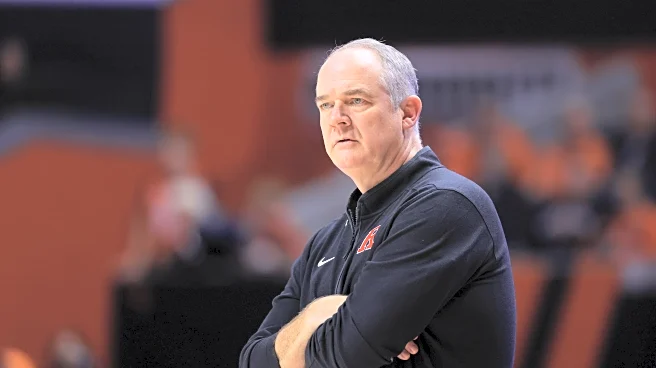

Remember when Rutgers basketball was relevant? When Geo Baker and Ron Harper Jr. were leading the Scarlet Knights to consecutive NCAA Tournament appearances for the first time since 1976? When Steve Pikiell
looked like a genius who’d finally cracked the code at a program where basketball coaches go to have their careers questioned?
That was three years ago. It feels like a decade.
The 2025-26 season is currently underway, and Rutgers sits at 8-7 overall with a 1-3 conference record, tied for 12th place in the Big Ten. They’ve been blown out by Michigan 101-60, demolished by Seton Hall 81-59 in their own state rivalry, and beaten handily by Ohio State 80-73. This follows a 2024-25 season that ended 15-17 with an 11th-place finish and the team declining a postseason invitation. Before that, the 2023-24 campaign also finished 15-17. Three consecutive losing seasons and counting.
But here’s the part that should make every Rutgers fan scream into a pillow: the 2023-24 team had Dylan Harper and Ace Bailey. Two NBA lottery picks. Harper went second overall to the Spurs. Bailey went fifth to the Jazz. These were the highest-ranked recruits in school history, and Pikiell somehow steered that ship directly into the iceberg.
The 2024-25 team with Harper and Bailey ranked 346th nationally in offensive efficiency. That’s not a typo. With two future top-five NBA draft picks, Rutgers had one of the worst offenses in Division I basketball. The defense wasn’t much better, finishing as the second-worst Pikiell has ever coached going back to his Stony Brook days. CBS Sports called his 2025 transfer portal haul “the worst of any high-major team,” which is the kind of distinction you don’t put on the resumé.
This year hasn’t been better. Rutgers ranks 353rd nationally in points per game at 70.3. The 41-point loss to Michigan was one of the most embarrassing performances in recent program history. The 22-point loss to in-state rival Seton Hall hurt even more. There’s no identity, no consistent defensive edge, no offensive flow. Just mediocrity punctuated by occasional humiliation.
The fall has been steep. Pikiell built something special with Baker and Harper Jr., reaching the 2021 and 2022 NCAA Tournaments on the strength of suffocating defense and gritty toughness. Those teams weren’t pretty, but they were effective. They had an identity. Now? Rutgers is just another mediocre Big Ten team with a rapidly closing championship window.
Naturally, speculation about Pikiell’s job security has intensified. The problem is his contract, which runs through 2030-31 with a buyout north of $20 million. That’s a staggering number for a program that’s historically operated in the red. New Athletic Director Keli Zinn, who arrived in August with a mandate to modernize Rutgers athletics and build a competitive NIL infrastructure, faces her first major decision. Does she eat the buyout cost to make a statement, or does she give Pikiell more time with better NIL resources?
Zinn has been aggressive about NIL, launching the RNIL initiative and making it clear that Rutgers intends to compete financially in the new college basketball landscape. The resources are being assembled. Whether Pikiell is still the right person to deploy them is increasingly up for debate.
If a change does happen, realistic replacements would likely include Shaheen Holloway from Seton Hall, who’s proven he can win big in New Jersey and recruits the area effectively. Bashir Mason at Wagner has built a strong program and understands tri-state recruiting. Pat Kelsey at Charleston has shown he can develop talent and coach fundamentals. Each would bring a fresh approach to a program desperately in need of one.
The Geo and Ron era now feels impossibly distant. Pikiell built that. He deserves credit for dragging Rutgers out of the basement and making the RAC a tough place to play again. But he’s also presiding over its decline, one frustrating loss at a time.
The question isn’t whether Rutgers can be good again. With Zinn’s leadership and NIL commitment, the infrastructure is improving. The question is whether Pikiell can recapture whatever magic made those 2021-2022 teams work, or if that chapter of Rutgers basketball has simply closed for good.
2
The Slow-Motion Collapse: How Rutgers
Basketball Went From Tournament Team to
Cautionary Tale
Remember when Rutgers basketball was relevant? When Geo Baker and Ron Harper Jr. were
leading the Scarlet Knights to consecutive NCAA Tournament appearances for the first time
since 1976? When Steve Pikiell looked like a genius who’d finally cracked the code at a program
where basketball coaches go to have their careers questioned?
That was three years ago. It feels like a decade.
The 2025-26 season is currently underway, and Rutgers sits at 8-7 overall with a 1-3 conference
record, tied for 12th place in the Big Ten. They’ve been blown out by Michigan 101-60,
demolished by Seton Hall 81-59 in their own state rivalry, and beaten handily by Ohio State 80-
73. This follows a 2024-25 season that ended 15-17 with an 11th-place finish and the team
declining a postseason invitation. Before that, the 2023-24 campaign also finished 15-17. Three
consecutive losing seasons and counting.
But here’s the part that should make every Rutgers fan scream into a pillow: the 2023-24 team
had Dylan Harper and Ace Bailey. Two NBA lottery picks. Harper went second overall to the
Spurs. Bailey went fifth to the Jazz. These were the highest-ranked recruits in school history, and
Pikiell somehow steered that ship directly into the iceberg.
The 2024-25 team with Harper and Bailey ranked 346th nationally in offensive efficiency. That’s
not a typo. With two future top-five NBA draft picks, Rutgers had one of the worst offenses in
Division I basketball. The defense wasn’t much better, finishing as the second-worst Pikiell has
ever coached going back to his Stony Brook days. CBS Sports called his 2025 transfer portal
haul “the worst of any high-major team,” which is the kind of distinction you don’t put on the
resumé.
This year hasn’t been better. Rutgers ranks 353rd nationally in points per game at 70.3. The 41-
point loss to Michigan was one of the most embarrassing performances in recent program
history. The 22-point loss to in-state rival Seton Hall hurt even more. There’s no identity, no
consistent defensive edge, no offensive flow. Just mediocrity punctuated by occasional
humiliation.
The fall has been steep. Pikiell built something special with Baker and Harper Jr., reaching the
2021 and 2022 NCAA Tournaments on the strength of suffocating defense and gritty toughness.
Those teams weren’t pretty, but they were effective. They had an identity. Now? Rutgers is just
another mediocre Big Ten team with a rapidly closing championship window.
Naturally, speculation about Pikiell’s job security has intensified. The problem is his contract,
which runs through 2030-31 with a buyout north of $20 million. That’s a staggering number for a
program that’s historically operated in the red. New Athletic Director Keli Zinn, who arrived in
August with a mandate to modernize Rutgers athletics and build a competitive NIL
infrastructure, faces her first major decision. Does she eat the buyout cost to make a statement, or
does she give Pikiell more time with better NIL resources?
Zinn has been aggressive about NIL, launching the RNIL initiative and making it clear that
Rutgers intends to compete financially in the new college basketball landscape. The resources
are being assembled. Whether Pikiell is still the right person to deploy them is increasingly up
for debate.
If a change does happen, realistic replacements would likely include Shaheen Holloway from
Seton Hall, who’s proven he can win big in New Jersey and recruits the area effectively. Bashir
Mason at Wagner has built a strong program and understands tri-state recruiting. Pat Kelsey at
Charleston has shown he can develop talent and coach fundamentals. Each would bring a fresh
approach to a program desperately in need of one.
The Geo and Ron era now feels impossibly distant. Pikiell built that. He deserves credit for
dragging Rutgers out of the basement and making the RAC a tough place to play again. But he’s
also presiding over its decline, one frustrating loss at a time.
The question isn’t whether Rutgers can be good again. With Zinn’s leadership and NIL
commitment, the infrastructure is improving. The question is whether Pikiell can recapture
whatever magic made those 2021-2022 teams work, or if that chapter of Rutgers basketball has
simply closed for good.
2
The Slow-Motion Collapse: How Rutgers
Basketball Went From Tournament Team to
Cautionary Tale
Remember when Rutgers basketball was relevant? When Geo Baker and Ron Harper Jr. were
leading the Scarlet Knights to consecutive NCAA Tournament appearances for the first time
since 1976? When Steve Pikiell looked like a genius who’d finally cracked the code at a program
where basketball coaches go to have their careers questioned?
That was three years ago. It feels like a decade.
The 2025-26 season is currently underway, and Rutgers sits at 8-7 overall with a 1-3 conference
record, tied for 12th place in the Big Ten. They’ve been blown out by Michigan 101-60,
demolished by Seton Hall 81-59 in their own state rivalry, and beaten handily by Ohio State 80-
73. This follows a 2024-25 season that ended 15-17 with an 11th-place finish and the team
declining a postseason invitation. Before that, the 2023-24 campaign also finished 15-17. Three
consecutive losing seasons and counting.
But here’s the part that should make every Rutgers fan scream into a pillow: the 2023-24 team
had Dylan Harper and Ace Bailey. Two NBA lottery picks. Harper went second overall to the
Spurs. Bailey went fifth to the Jazz. These were the highest-ranked recruits in school history, and
Pikiell somehow steered that ship directly into the iceberg.
The 2024-25 team with Harper and Bailey ranked 346th nationally in offensive efficiency. That’s
not a typo. With two future top-five NBA draft picks, Rutgers had one of the worst offenses in
Division I basketball. The defense wasn’t much better, finishing as the second-worst Pikiell has
ever coached going back to his Stony Brook days. CBS Sports called his 2025 transfer portal
haul “the worst of any high-major team,” which is the kind of distinction you don’t put on the
resumé.
This year hasn’t been better. Rutgers ranks 353rd nationally in points per game at 70.3. The 41-
point loss to Michigan was one of the most embarrassing performances in recent program
history. The 22-point loss to in-state rival Seton Hall hurt even more. There’s no identity, no
consistent defensive edge, no offensive flow. Just mediocrity punctuated by occasional
humiliation.
The fall has been steep. Pikiell built something special with Baker and Harper Jr., reaching the
2021 and 2022 NCAA Tournaments on the strength of suffocating defense and gritty toughness.
Those teams weren’t pretty, but they were effective. They had an identity. Now? Rutgers is just
another mediocre Big Ten team with a rapidly closing championship window.
Naturally, speculation about Pikiell’s job security has intensified. The problem is his contract,
which runs through 2030-31 with a buyout north of $20 million. That’s a staggering number for a
program that’s historically operated in the red. New Athletic Director Keli Zinn, who arrived in
August with a mandate to modernize Rutgers athletics and build a competitive NIL
infrastructure, faces her first major decision. Does she eat the buyout cost to make a statement, or
does she give Pikiell more time with better NIL resources?
Zinn has been aggressive about NIL, launching the RNIL initiative and making it clear that
Rutgers intends to compete financially in the new college basketball landscape. The resources
are being assembled. Whether Pikiell is still the right person to deploy them is increasingly up
for debate.
If a change does happen, realistic replacements would likely include Shaheen Holloway from
Seton Hall, who’s proven he can win big in New Jersey and recruits the area effectively. Bashir
Mason at Wagner has built a strong program and understands tri-state recruiting. Pat Kelsey at
Charleston has shown he can develop talent and coach fundamentals. Each would bring a fresh
approach to a program desperately in need of one.
The Geo and Ron era now feels impossibly distant. Pikiell built that. He deserves credit for
dragging Rutgers out of the basement and making the RAC a tough place to play again. But he’s
also presiding over its decline, one frustrating loss at a time.
The question isn’t whether Rutgers can be good again. With Zinn’s leadership and NIL
commitment, the infrastructure is improving. The question is whether Pikiell can recapture
whatever magic made those 2021-2022 teams work, or if that chapter of Rutgers basketball has
simply closed for good.