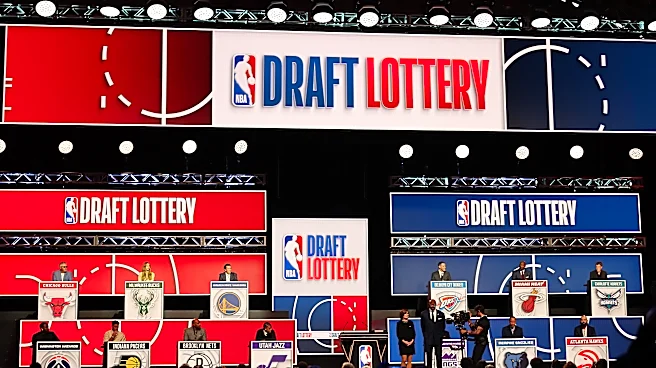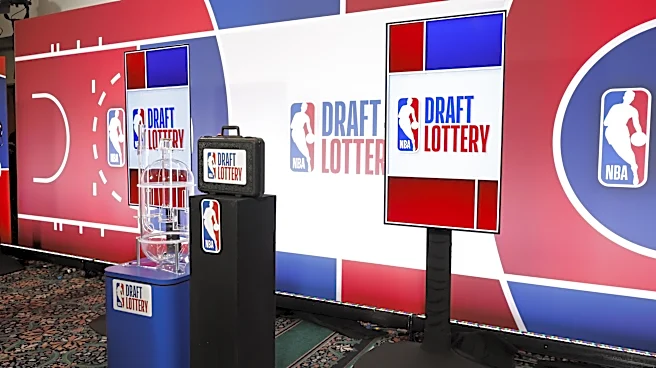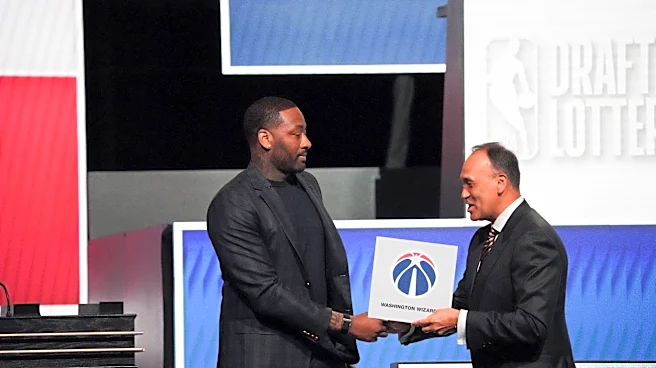







Well, after years of faffing about, the NBA has finally implemented a major overhaul of the draft designed to discourage tanking.
It is quite complex, and yet, in some ways, quite simple-minded.
The gist is that the highest odds for the number one pick will no longer be held by the team with the worst record.
Instead, the teams with the fourth through tenth worst records in the draft will have the highest odds of getting the first pick.
Teams will not be allowed to land the number one pick in back-to-back
years (this has happened twice in NBA history, not counting the 2017 draft in which the C’s traded their number one pick to the Sixers, giving them back-to-back number one picks).
Teams will not be allowed to have top five picks in three consecutive years.
The odds have also been significantly flattened overall.
Finally, the bottom three teams will have two lottery balls, the fourth through tenth teams will have three lottery balls, and the eleventh through sixteenth teams will have one ball each.
I am not a fan of making the lottery this complex, but if the league is going to go into this, I think they need to actually make it more complex.
I don’t like flat odds for the number one pick running from positions four to ten. I don’t like that drop off from tenth to eleventh. This is an area where the league certainly has the ability to add a gradient rather than a drop off.
Now, I’ll grant you, this reform package had to be sold to team owners, who are, I suspect, short of attention span for a lot of these things, so adding a smoother gradient by increasing the number of lottery balls was possibly a non-starter because it would take too long to explain (in fact, I think the lottery rules already take too long to explain, but, hey, in for a penny, in for a pound).
In my scheme, you wouldn’t have a setup with 21 balls for 4-10, 6 balls for 1-3, and 6 balls for 11-16 (total 33 balls). You’d do the setup the same way it’s done now, with balls numbered 1-14 and four number combinations that are mapped out to percentages that scale more smoothly.
I think it’s rather problematic that the tenth worst team has a better chance of landing the top pick than the third worst team.
That brings us to the oddly named ‘relegation zone.’
Frankly, it’s unnecessary.
If the three worst teams are given equal odds of getting the top pick as the teams that finish fourth through tenth in the lottery ranking, there is already no incentive to tank!
Mind you, I don’t think that the lottery odds should be flat from one to ten, but if that’s how the NBA is going to play it, then it makes no sense to pretend that teams are still going to try to be awful in search of more lottery balls.
All you’re doing now is punishing extremely bad teams.
Now granted, extremely bad teams tend to squander their picks, so maybe this isn’t such a big deal, but it seems rather silly that a bad team with the third worst record in the league is going to get robbed of a lottery ball because they weren’t good enough to finish fourth.
The NBA is basically just running an experiment at this point, though. The new lottery rules are only approved until the 2029 season, so we’re going to get three bites at this apple to see how it tastes.
Mazzulla wins Coach of the Year
Honestly, this seemed a foregone conclusion after the C’s got bounced in the first round.
It had too much humor mixed with chagrin to be anything other than a “consummation devoutly to be wish’d,” It was the perfect epitaph — or coffin lid, perhaps — for a season that began in gloom and ended the same way.
Of course, Mazzulla was going to win an award that he publicly scoffed at rather than pilot the C’s into the later rounds of the playoffs.
Did he deserve it?
Well, that depends. If you’re the kind of person who thinks that Jaylen Brown only had a Second Team All-NBA season, then you’re dang right Mazzulla deserved a Coach of the Year nod.
If you rate Brown and the C’s supporting cast higher, then I think you can make arguments for other coaches, but the league’s media in general seem to think rather poorly of the talent on the C’s team, and that makes their regular season achievements look more and more like brilliant coaching, and less like the expected performance of great players.
But that’s not the real question.
The real question isn’t whether Mazzulla deserves it, it’s whether the award should be given to a single individual.
I tend to think that Mazzulla is right, and that it should be a staff award.
Why?
Because, for example, Mazzulla isn’t single-handedly responsible for the marked improvement of Neemias Queta, and the marked improvement of Queta was a major factor in the C’s overachieving regular season.

I mean, I think Mazzulla sets a tone, and he’s very good at getting players to buy into their roles—and the flexibility and sacrifice that those roles occasionally require—but he’s not working with Neemias day in and day out to make him a better player.
It’s the rest of Mazzulla’s staff that helped these guys become better players, players that Mazzulla can put his trust in.
The league has given Mazzulla an award for being smart enough to trust these guys, and it’s given Stevens an award for assembling the roster, and both of them have been awarded for assembling the coaching staff, but what about the coaching staff itself?
I mean, if a big part of the awards for Executive of the Year and Coach of the Year hinge on the work of the coaching staff, then they should be recognized as well.
Throughout basketball, coaching staffs have grown in size and importance. We’ve come a long way from the days where Red used to roam the sidelines by himself.

It’s time, I think, to dispense with the cult of the ‘romantic genius’ in coaching, to stop looking at coaches as ‘auteurs,’ and to start looking at the position as an essentially collaborative one.
Yes, head coaches need to have the last word and the loudest voice at the table; they need to have the confidence to lead and they need to be decisive.
But these days, there is so much going on with analysis, with player development, and with game prep, that the NBA really should acknowledge that the achievements of a team that are currently attributed to the coach should be attributed to coach and staff.
In any case, Mazzulla’s response to winning the award is exactly what you would like to see.
It shows that he’s deeply aware of the work that his staff puts in, and the dividends that work has paid out.
Ultimately, the NBA might follow Joe’s suggestion, but given how long it took them to reform a lottery system that’s been abused for decades, I’m not holding my breath.