
We’ve talked quite a bit about the Detroit Tigers’ long-term drought in the international free agent market throughout our spring prospect coverage. Players like Wenceel Pérez and Keider Montero have at least provided some value the past few seasons, but it’s been a long time since the Tigers found a really good major leaguer outside the draft or the trade market. Scott Harris has revamped the scouting and player development work, and the Tigers’ recent class is probably their best regarded ever
between catcher Manuel Bolivar and tooled up outfielder Randy Santana, among others. It may not take that long for the Tigers to find their next IFA star, however. Josue Briceño’s future at the catcher position is still up in the air, but his combination of power, contact ability, and plate discipline are primed to make him a very dangerous hitter at the major league level in the years to come.
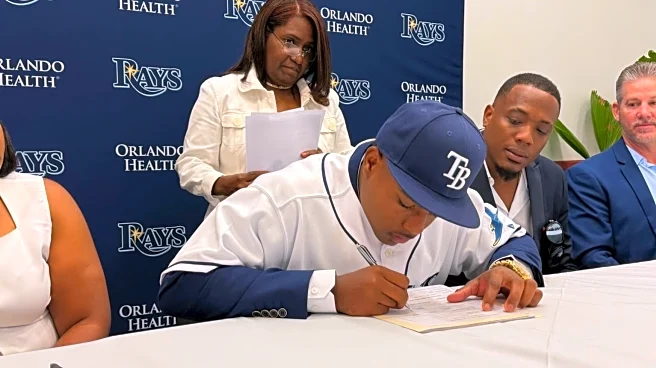
The Tigers signed the then 17-year-old Briceño for $800,000 in their January 2022 signing class. Hailing from the fascinating town of Colonia Tovar, a sort of mini-Bavarian village set high in the mountains of north central Venezuela, the young catcher got off to a decent start playing in the Dominican Republic, and then came stateside in 2024 and broke out in a big way in 2024.
Our first real looks at Briceño came from Single-A ball with the Lakeland Flying Tigers that spring. The young catcher was a little sluggish behind the plate, but his bat was already making a ton of noise when a PCL sprain in his right knee in mid-May cost him most of the season. He returned for the final two weeks of regular season action but only as a DH, but it was already clear this wasn’t a different player to the one who hit the injured list. Briceño worked his tail off in his rehab work, trimming down while building a lot of strength and flexibility. His legs were much stronger, and he and the Tigers made some adjustments to help him generate more power from his lower half. With that came a good amount of natural loft, and suddenly the ball was exploding off his bat to all fields. Briceño went out for work in the Arizona Fall League just after his 20th birthday, and despite only a brief look at even the Single-A level, he tore the Fall League apart in October.
He announced his coming out party with a dead center bomb off top pitching prospect Andrew Painter’s 98 mph heat early on, and then continued to maul far more experienced pitching than he’d ever faced before en route to a league MVP award. To keep pressure off his repaired knee, the Tigers only had him DH out there, and Briceño went on to hit 10 home runs, posting a .433/.509/.867 line in 105 plate appearances.
That performance opened everyone’s eyes nationally, and Briceño found himself a consensus top 100 prospect last offseason. His reign of terror continued at the High-A level in 2025, as he spent nearly four months with Kevin McGonigle and Max Clark setting the table for him as part of one of the best offenses in Midwest League history.
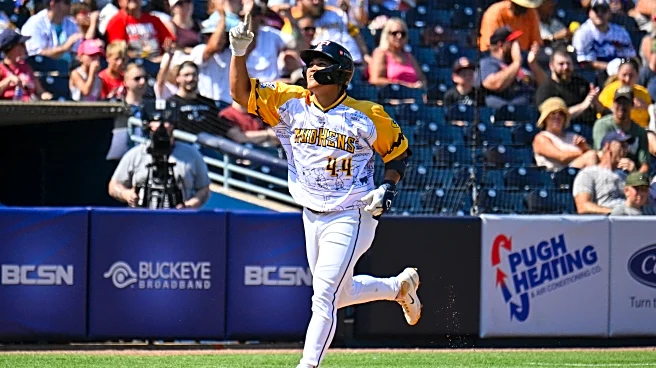
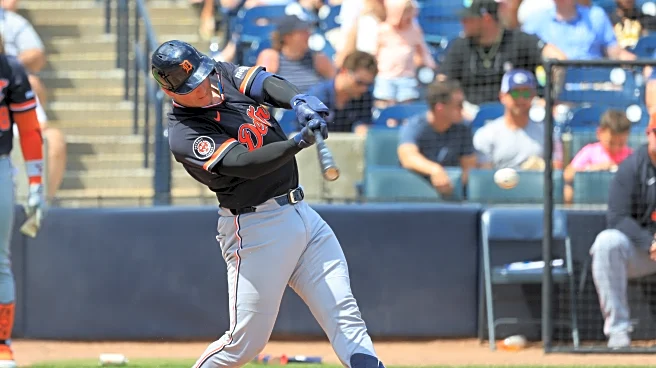
In 55 games for the Whitecaps, Briceño walloped 15 home runs, showing plus power to all fields. He hit .296/.422/.602 with a 16.8 percent walk rate outpacing his 16.4 percent strikeout rate. The discipline, contact, and raw power were extremely impressive, and what stood out beyond the numbers was that despite his fairly long limbs, he was able to delivery great batspeed even on pitches away, staying through those balls for some real tape measure blasts to left and left-center field. All that while still retaining the ability to crush anything on the inner half to the pull field.
By midseason, with Thayron Liranzo sidelined from catching duties by a shoulder issue, Briceño took over more work behind the plate. After the injury shortened 2024 campaign, he wasn’t quite up to the task and seemed to wear down somewhat over the final two months of the year. His on-base percentages were still great and he topped .800 OPS in both August and September, hitting five homers in 45 games, but he finally did start expanding the zone against better offspeed and breaking stuff, and his strikeout rate popped to 23.7 percent in that stretch for the Erie SeaWolves. Still, he was still pretty good, just not great, and enthusiasm wasn’t at all diminished. He didn’t even turn 21 until the season was over, and he’d both destroyed High-A pitching and still had a reasonably good start at the Double-A level.
Most remain skeptical of Briceño’s ability to catch at the major league level, but confidence in his bat continues to grow. Even sites that expect him to move to first base full-time still have in the middle of their top 100 rankings nationally. Personally I still think it’s a bit early to judge with certainty. Because of the knee injury, Briceño still only has 67 games caught in full season ball. That’s a pretty small sample with which to come to a hard and fast conclusion.
Briceño has an average throwing arm for a catcher, and that certainly says that he’s not going to be an everyday catcher in the major leagues. However, he’s a smart, hard-working player whose blocking and framing has shown pretty steady improvement in two seasons worth of part-time work. He had a couple of rough stretches last year where he gave up a few passed balls, but he has enough athleticism to be good back there with more work, and the Tigers do an excellent job coaching up their catchers. In time, he’s still got a fair chance to be good enough to handle the backup catcher duties behind Dillon Dingler. The bigger question is whether the Tigers will give it the time required, as Briceño’s bat is quite far advanced already.
Briceño makes a ton of hard contact, he has plus power, and he doesn’t chase out of the zone too much. Better pitching at the Double-A level did challenge him, particularly advanced left-handers. So, he needs some more time to adapt to upper level pitching, but he’s ahead of the curve, and way ahead when you consider his age and limited experience in pro ball.
One challenge left is to develop more against left-handed pitching, and that’s mostly a matter of experience. Even in Erie, Briceño was really tough for advanced right-handers to deal with. However, hitters don’t see a regular diet of good left-handers with command until they reach the Double-A level, and while he held his own against them, his numbers were signficantly worse against southpaws. He didn’t chase and strikeout that much against them, actually whiffing more against right-handed pitching last year, but he also did most of his damage against right-handers, while lefties were able to get him reaching more on pitches down and away to pop him up and keep him on the ground more often. He could use a little more time to acclimate to the level, and he’ll spend most of this season in Erie when he returns from the injured list.
Ultimately, Liranzo has the higher upside as a defensive catcher, and so I expect that while the Tigers will keep Briceño working behind the plate a while longer, his future is mainly at first base. His 6’4” frame and good reach plays well there, and he already looks pretty good around the base, though he does need to improve his fielding on ground balls.
His timelines, both defensive and offensive, are both aggravated by the torn tendon in his wrist while taking a swing early in spring camp. The tear required surgery, and Briceño is pretty likely to miss half the season. This probably clarifies the defensive question, as he’s going to lose out on getting a lot more catching reps this spring. Expect him to return to Erie sometime around midseason, looking to get his full strength and timing back in the second half before probably getting a look at Toledo late this summer. In 2027 he should be playing first base for the Toledo Mud Hens, ready to make the jump as soon as his bat is ready.
The Tigers have a pretty good pure hitter here with plus power to all fields. His defense doesn’t need to carry him much at all, and sometime next year I expect him to be splitting time with Spencer Torkelson and taking plenty of DH days for the Detroit Tigers.