

A Quick Note: Due to holiday travel plans I won’t be doing in-depth breakdown with individual plays, we will return to those for Week 12!
Coming off the bye, I think many of us expected a little more fireworks from the Bears offense against New Orleans. Instead, Chicago started slowly, put together consecutive touchdown drives to open up a 16-0 lead, and largely managed the game from there in a 21-13 win. It wasn’t particularly pretty, but the Bears improved to 8-2 with their fifth straight victory.
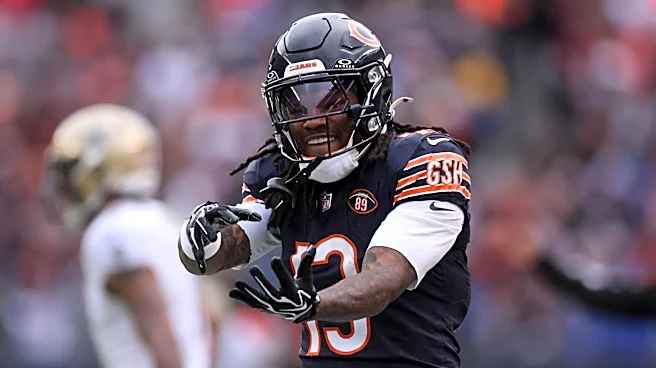
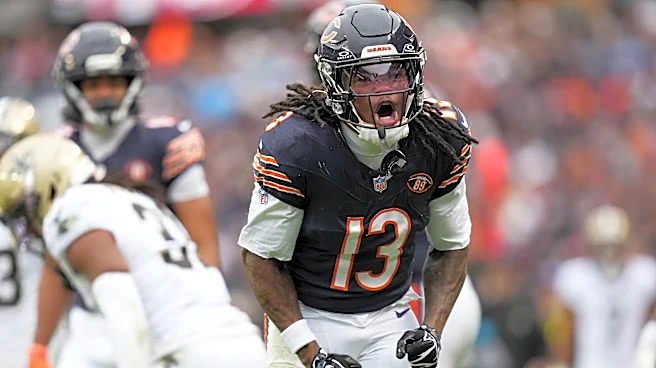
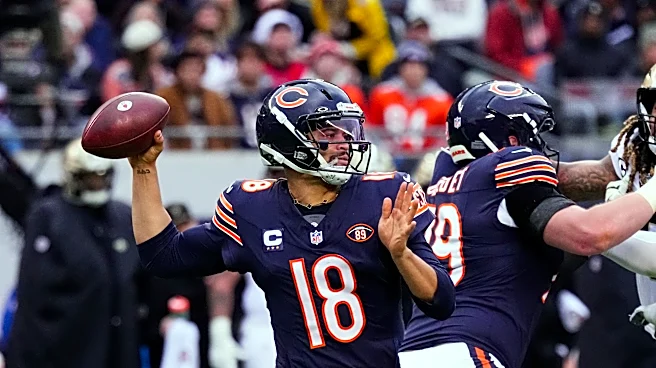
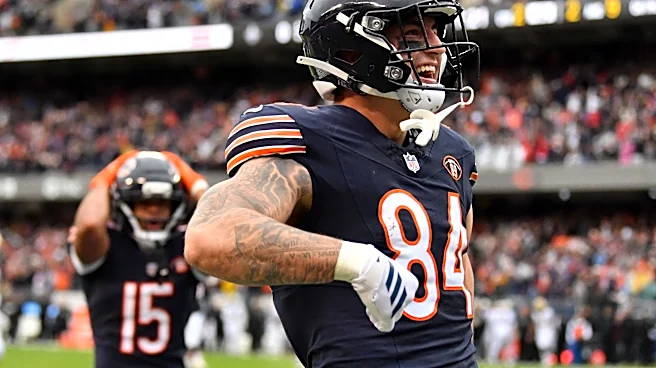
Caleb Williams capitalized on both of the defense’s second-quarter takeaways, finding D’Andre Swift on a 3-yard shovel pass before connecting with Colston Loveland for a 15-yard touchdown. Loveland supplied the highlight with a hurdle over Julian Blackmon, while Williams helped turn those extra possessions into some breathing room.
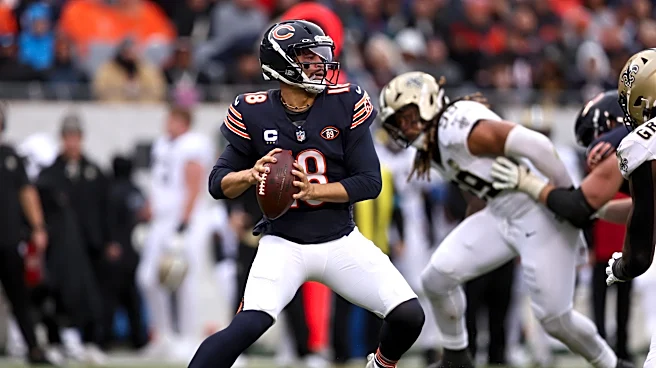
Williams finished 15 of 23 for 181 yards, two touchdowns and one interception on a deflected pass. There were opportunities left on the field, but I think the context of what he was being asked to do matters quite a bit this week.
My charting had Williams attempting a pass from under center on just four of 28 dropbacks, a 14.3% rate compared with his season mark of 32.8%. That’s an 18.5-percentage-point drop, and a noticeable departure from Chicago’s usual approach.
The formation and personnel numbers added another layer. Chicago used at least three receivers aligned wide on 15 of those 28 dropbacks, while 19 came in 11 personnel. That 67.9% dropback rate stands out alongside the Bears’ 49.4% overall season usage, although those aren’t identical samples. I don’t have a seasonal baseline for the wide alignments, so that number is descriptive rather than proof of an increase.
Fellow WCG writer Lester Wiltfong Jr. came away with a similar impression of the simplified game plan. With Detroit waiting on Thanksgiving, it wouldn’t surprise me if Johnson kept some things close to the chest. That’s my read, though, rather than something these numbers can establish.
StartKyleOrton pointed out that Chicago ran the ball 20 times on first down, with just four classified as successful. That’s useful context when evaluating Williams, because an ineffective running game can make the passing game’s job considerably harder. I can see the argument that Johnson wanted to work through some of those issues, but whatever his intent, the offense’s overall production and Caleb’s individual performance deserve separate consideration.
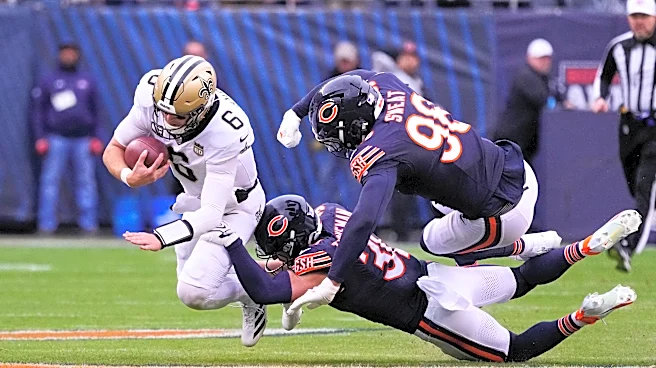
None of that gives the offense a free pass. New Orleans cut the lead to 16-10 before halftime, and Chicago needed a third-quarter field goal to restore a two-possession cushion. Still, with the defense producing six sacks and Montez Sweat adding a fourth-quarter safety, Williams didn’t have to carry this one.
It was a workmanlike win with plenty to clean up before Thursday. With the short turnaround, let’s get right into the benchmarks.
Benchmarks
(Season totals are underlined, Season Averages in Italics, and this week’s stats appear in regular text.)
C/A: 134/195 (68.7%) | 22.3/32.5 (68.7%) | 15/23 (65.2%)
Yards: 1546 | 256 | 181
Touchdowns: 10 | 1.7 | 2
Turnovers: 5 | 0.8 | 1
QB at Fault Sacks: 1 | 0.2 | 2
aDOT: 7.7 | 10.9
Passer Rating: 95.4 | 100.1
True Passer Rating: 115.7 | 139.7
Time to Throw: 3.10s | 2.84s
Time to Pressure: 2.55s | 2.55s
Pressure Rate: 37.05% | 34.482%
On-Target Rate: 85.9% | 68.4%
Poor Play Rate / Big Play Rate: 5.6% PPR / 8.8% BRP | 0.0% PPR / 12.9% BRP
EPA per dropback: +0.15 | -0.01
ANY/A: 6.6 | 6.4
Game Scorecard

The full grading sheet for each play can be foundhere.
Game Notes
NFL Passer Rating / True Passer Rating / PFN Impact Score: 100.1 / 139.7 / 76.7
- The NFL’s average passer rating through Week 11 sits at 91.3, putting Williams’ 100.1 comfortably above that mark and 11th among qualifying quarterbacks this week. His two touchdown passes helped offset the interception, producing a respectable result despite the offense’s uneven afternoon. His ability to remain efficient with a 7.9 yards per attempt also helped keep his passer rating healthy.
- This is where the box score and the individual grading can tell slightly different stories. Williams finished with a good passer rating, but that doesn’t mean his accuracy or execution was consistently where we’d like it to be (or where we’ve seen it for the most part of the year.)
- A 139.7 TPR represents a “Great” outing, matching the mark Williams posted against Seattle in Week 8.
- That result adds some perspective to an uneven afternoon. His accuracy wasn’t as consistent as we’d like, particularly underneath, but the quality of his better plays still deserves recognition, hitting on 5 of his 7 throws beyond 10 yards and posting a season high 10.9 aDOT also helps.
- On the PFN scale, where 75 represents an average qualifying starter and 90 is elite territory, Williams finished Week 11 with a 76.7 Impact Score, ranking 10th among 26 qualifying quarterbacks.
- That’s a slightly above-average result and a reasonable reflection of the afternoon overall. Williams contributed to the win, but this wasn’t a performance that required him to carry the offense or consistently overcome difficult circumstances.
On-Target Throws: 2026 Average: 85.9% | Week 11: 68.4%
- Reminder: Completion percentage ≠ On-Target Percentage. I only chart aimed passes, meaning throwaways, spikes and passes deflected at the line are excluded. Drops can still be credited as on-target.
- Short-Level Passing (Behind LOS–9 yards): 8/12 | 66.7% On-Target
- Deep-Level Passing (10+ Yards Downfield): 5/7 | 71.4% On-Target
- This was the most disappointing part of Williams’ afternoon for me. He finished on target on just 13 of 19 aimed throws, putting him 17.5 percentage points below his season mark.
- And while the misses we’re say at the level we saw in early 2025, it was an uncharacteristic outing in the context of 2026.
- The short-level accuracy stands out in particular. Four off-target throws on 12 attempts underneath is a considerable amount of missed execution in an area where we’ve seen greater consistency in 2026.
- Worth noting, 2 of those 4 off-target throws were still caught, they just required beyond ordinary effort relative to the throw difficulty.
- Williams was actually more accurate on throws traveling at least 10 yards downfield, although seven attempts is a small sample. The takeaway isn’t that the deeper passing was flawless, but that the shorter throws weren’t providing the dependable efficiency this offense needed.
- This was the most disappointing part of Williams’ afternoon for me. He finished on target on just 13 of 19 aimed throws, putting him 17.5 percentage points below his season mark.
Poor Play Rate / Big Play Rate: 0.0% PPR / 12.9% BPR
- Williams finished without a “Poor” graded play while still producing a 12.9% Big Play Rate. That combination helps explain how he earned a “Good” final grade despite the accuracy issues.
- An off-target throw doesn’t automatically qualify as a “Poor” play in my grading. Accuracy, decision-making, difficulty and the circumstances of the play all matter, so the lower on-target percentage and clean Poor Play Rate aren’t contradictory.
- His interception goes “Ungraded” because it came on a pass deflected at the line of scrimmage. Under my grading approach, I don’t assign quarterback blame for the unpredictable outcome of those deflections, and in most cases a defensive lineman leaving his feet is the fault of the offensive line.
- That doesn’t erase the turnover or its impact on the game. It means I’m separating the result of the play from what I’m assigning to Williams individually.
EPA per Dropback: 2026 Average: +0.15 | Week 11: -0.01
- Williams finished just below neutral at -0.01 EPA per dropback, a noticeable step down from his +0.15 season average. There were productive moments, but the passing game didn’t generate sustained efficiency across the afternoon.
- Conversely, EPA isn’t as forgiving as my individual play grading. The interception carried a -3.25 EPA value, regardless of the deflection or whether I assigned Williams blame.
- That’s a useful example of why I include multiple measures. EPA captures the damage the turnover did to Chicago’s scoring outlook, while the film grade evaluates Williams’ responsibility for the play. Both provide context, but they’re answering different questions.
ANY/A: 2026 Average: 6.6 | Week 11: 6.4
- Williams’ 6.4 ANY/A landed slightly below his season average of 6.6. The two touchdowns helped support that figure, while the interception and two sacks pulled it back down.
- Much like passer rating, ANY/A charges Williams for the interception regardless of how it happened. Even with that penalty, he finished close to his season baseline.
- The league average mark currently sits at 6.1, so Williams is still outperforming the average quarterback in the NFL.
Time to Throw: 2026 Average: 3.10s | Week 11: 2.84s
- Williams averaged 2.84 seconds to throw, finishing 0.26 seconds below his season average. The ball was coming out faster than usual, which fits the broader picture of a different offensive approach against New Orleans, especially the decrease in under center and play-action throwing.
- Paired with the short-level accuracy numbers, this is an area I’d like to see sharpened against Detroit. Williams doesn’t need to hold the ball longer to improve the results. More consistent execution on the available throws would be a good place to start.
Summary
Williams finishes Week 11 with grades of 1st Half (2.50) / 2nd Half (0.95) and an adjusted final Game grade of 4.20, with the adjustment applied because he fell below the 39-play threshold. That gives him a “Good” graded game, his fifth in seven outings this season.
It wasn’t his most impressive performance, and the quieter second half reflects that. Still, Williams helped turn two defensive takeaways into touchdowns, made enough plays to get Chicago across the finish line, and avoided anything resembling the turnover-filled outing we saw against Tampa Bay.
All that said, there are some trends to keep an eye on in the coming weeks. Interior pressure has increased, contributing to the majority of Williams’ turnovers and sacks over the last few games. I also saw a few reps where his footwork looked reminiscent of 2025 Caleb Williams, with inconsistent mechanics and some old habits creeping back in.
There were even moments where it almost seemed like he was battling his old self midgame. His 40-yard completion to Zavion Thomas was the most notable example. His feet started to get choppy, but he caught himself, settled and fired a dot downfield. The result was great, but the process is still something worth monitoring.
I’ll be watching how Ben Johnson and the Bears’ offensive line address the interior pressure, along with whether Williams can clean up his footwork and hit his checkdowns more consistently. One of his sacks came after he passed up an available checkdown to try to extend the play. Those are opportunities to keep the offense moving that I’d like to see him get back to taking more often.
But it really helps when the Bears can win without asking their quarterback to do everything, or be perfect. Thanks in part to great coaching led by Ben Johnson, who picked up his 20th win as Chicago’s head coach, moving to 20-9 including the playoffs. For some perspective on how different this has felt, the Bears already have two five-game winning streaks under Johnson, compared with one across the previous 12 seasons combined. We can pick apart an uneven offensive performance while still appreciating how much the expectations around this team have changed.
Then there’s Jeffery Simmons, who apparently decided two sacks in his first two Bears games weren’t enough. His three-sack afternoon against New Orleans brought him to five in three games with Chicago. As John Todd noted during the game, Simmons became the first Bear since Khalil Mack in 2018 to reach at least four sacks in his first three appearances with the franchise.
The broader defensive numbers from SumerSports are just as encouraging. Since Simmons arrived in Week 8, Chicago’s blitz rate has dropped from 39.6% to 22.0%, while its pressure rate has barely moved, going from 40.9% to 40.2%. EPA allowed per dropback has improved from -0.03 to -0.27. Simmons doesn’t get sole credit for that entire shift, but being able to generate pressure while keeping more defenders in coverage gives Dennis Allen considerably more flexibility.
Now comes Detroit on Thanksgiving, with very little turnaround time. I’d like to see Chicago create more favorable passing situations and Williams deliver a more complete performance across both halves. The Bears took care of business against New Orleans, but Thursday is an opportunity to pair that winning result with sharper execution against a division rival.
Until next time, Bear Down!
Gary Baugher Jr. is a second year contributor to WCG, bringing football insight backed by over 16 years of experience in organized football and more than 30 years as a passionate fan of the game. You can follow him on Twitter at @iamcogs.