


This is it. You can’t finish with a record of 11-6 until you first reach 5-6. Technically, the Ravens could make the playoffs with seven or eight losses — but this feels like a defining moment. With the Houston Texans on the rise, Tampa Bay’s roster built perfectly to beat the Ravens, and then four division games in a row, this game against Carolina feels like the easiest one remaining on the schedule. If the Ravens lose, any little fleeting hope for a run will fizzle. It’s been a drama-filled week
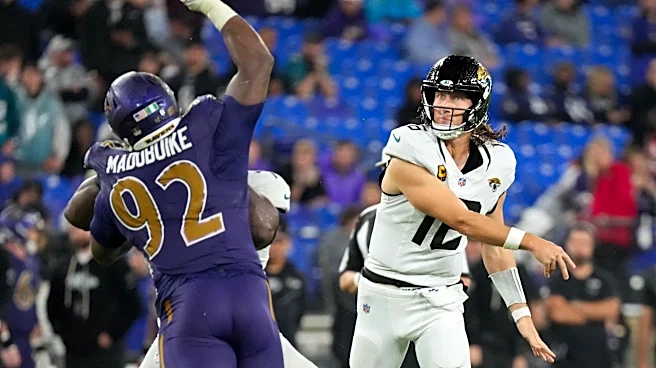
for the Ravens, and they’ll be missing Nnamdi Madubuike, so they need to figure out how to put their heads down and grind out this win to avoid dropping six in a row.
Find the formation that works
The Ravens have run multiple tight end sets at the seventh-highest rate this year, 43.6% of the time, according to Next Gen Stats. They are largely successful throwing out of these sets as well, averaging 8.1 yards per pass attempt, which is 12th-most in the league. The issue is they pass out of 12 and 13 personnel less than 40% of the time, according to SumerSports. This both inflates their pass success rate and shows they are running more than 60% of the time out of these formations, allowing defenses to key in on the run. Recently, Declan Doyle has had an issue with running out of heavy on first down too frequently, making it very obvious and setting the Ravens behind the chains.
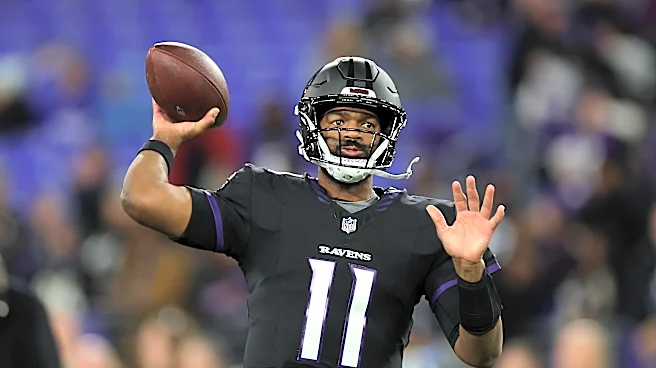
The Ravens need to start mixing it up more. That could mean throwing out of heavy on early downs more often to catch the Panthers by surprise. The biggest issue there is that the Panthers have allowed the third-fewest yards per attempt against multi-tight end sets (5.8). The real solution might just be to lean on Jacoby Brissetts arm, play more 11 personnel, and sling the ball around the field to Zay Flowers, Rashod Bateman and Ja’Kobi Lane. The Panthers have been down their top three cornerbacks for a while. Rookie Will Lee is expected to return in this one, but Jaycee Horn remains on IR and Mike Jackson, while practicing this week, hasn’t been activated yet. The Ravens might want to test whoever is covering their wide receivers. Spreading the offense out in 11 might help the run game as well if the Ravens can find success early through the air and back the Panthers off the line of scrimmage and out of the box.
Finishes from Mike Green and Trey Hendrickson
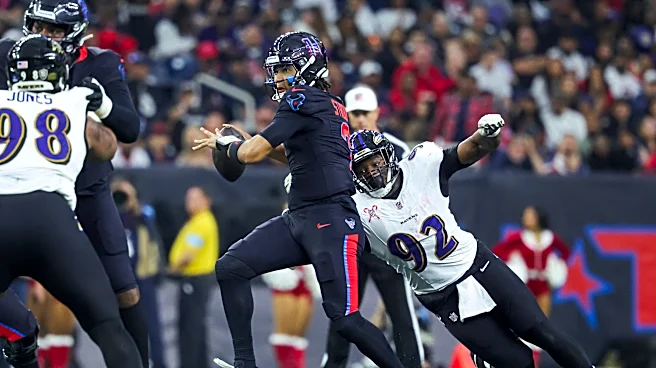
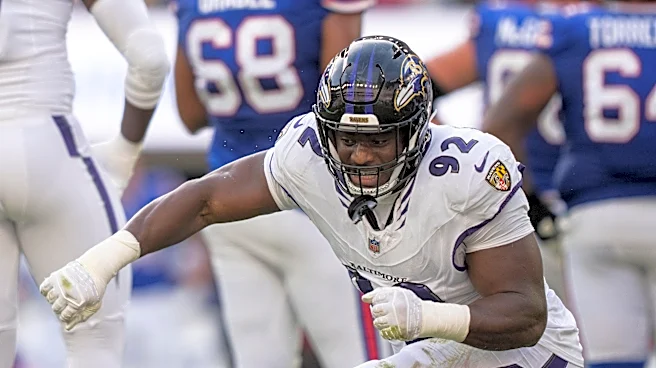
Hendrickson leads the Ravens in pressures despite missing two games and dealing with a figure injury since Week 1. He’s also getting double-teamed 42% of his pass rush snaps, according to ESPN. He also only has two sacks through his first eight games as a Raven, and that simply isn’t good enough or what the Ravens paid for. Conversely, the Ravens have seen Green get better throughout this season while going through some ups and downs, switching from one side of the defensive front to the other. He leads the Ravens in sacks with 5.5. The Panthers’ biggest overall weakness is their offensive line.
Both of Carolina’s offensive tackles have been question marks this season. Their rookie right tackle, Monroe Freeling, has a 6-foot-7 frame with speed and athleticism, but the transition from left tackle in college to right in the NFL hasn’t been without questions. Rasheed Walker on the left side has struggled this season and given up a chunk of sacks as well. Without Madubuike, the Ravens need their two top edge rushers to get pressures and, more importantly, finish.
Middle of the field defense
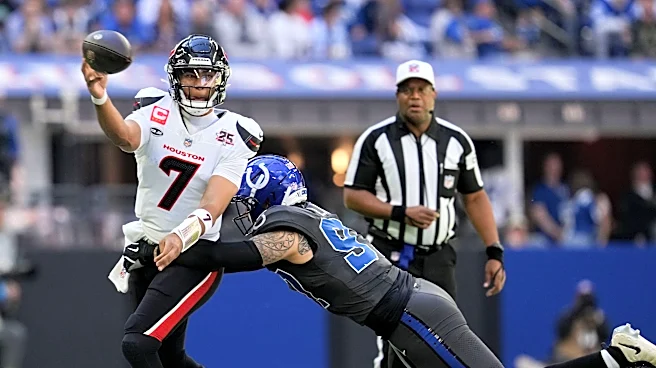
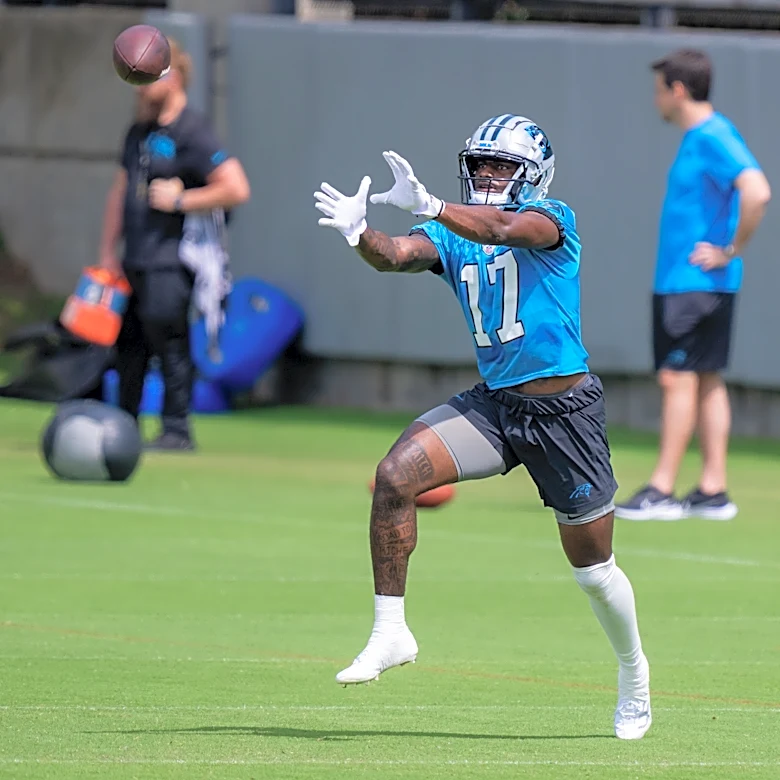
It’s no surprise to anyone who watches Ravens games that their defense has given up a lot over the middle of the field. They’ve also been the worst defense on intermediate passes, giving up a league-worst 0.77 EPA per play on passes between 10 and 19 yards. Furthermore, the Ravens have been targeted on in-breaking routes on 36.7% of opponents’ passes, giving up seven touchdowns on them, 10th most in the league according to Next-Gen Stats. Meanwhile, the Panthers have four different 6-foot-4 wide receivers, and Bryce Young has thrown in-breakers on 38.8% of his routes, averaging 9.0 yards per attempt on these routes. That’s a lot of size and a lot of attempts for Roquan Smith to cover over the middle.
Jesse Minter’s defense is designed to leave the middle of the field open; it’s the hardest area of the field to consistently throw in, with the most bodies, hands, arms, and heads to navigate. The idea is to funnel passes there, force as many tough throws as possible, and then have 11 hats on the ball to tackle quickly when passes do get caught there. It hasn’t worked so far. The Ravens players haven’t executed it consistently all season, and Minter has yet to deviate from it. Something has to change, and this would be a great game to make changes for it.