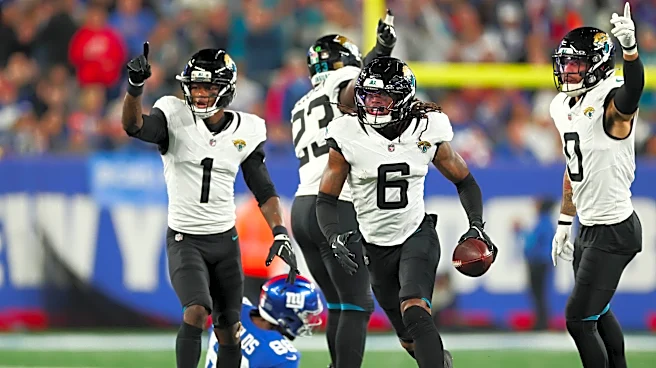


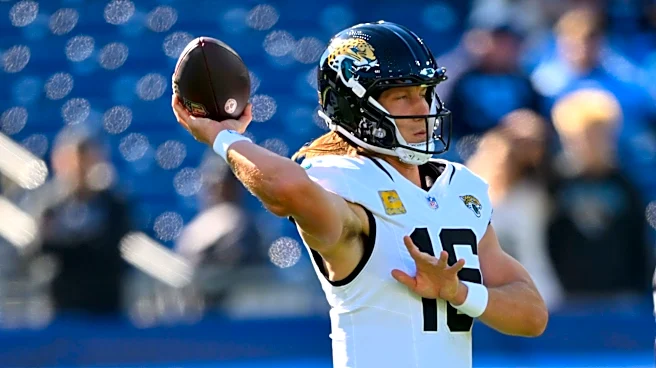
The Jacksonville Jaguars arrived at MetLife Stadium looking to extend their winning streak to four games and strengthen their grip on the AFC South. Instead, Liam Coen’s team suffered a frustrating 23-18 defeat against the New York Giants, with a combination of offensive struggles, physical dominance from the opposition and costly self-inflicted mistakes proving too much to overcome.
There were opportunities for Jacksonville to turn the game around, particularly after a defensive effort that kept
the Giants relatively quiet for much of the afternoon. However, the Jaguars repeatedly failed to take advantage, leaving New York to secure an impressive victory.
Here are three reasons why the Jaguars lost to the Giants.
Trevor Lawrence had a day to forget
There is no escaping the fact that Trevor Lawrence was a major contributor to Jacksonville’s defeat. The Jaguars quarterback had enjoyed an encouraging run of performances during the team’s three-game winning streak, but this was a significant step backwards.
Lawrence completed 25 of 47 passes for 301 yards, one touchdown and two interceptions. While the passing yardage looks respectable on paper, the numbers don’t tell the full story of an afternoon in which he struggled to find consistency, missed opportunities and repeatedly put his team in difficult situations.
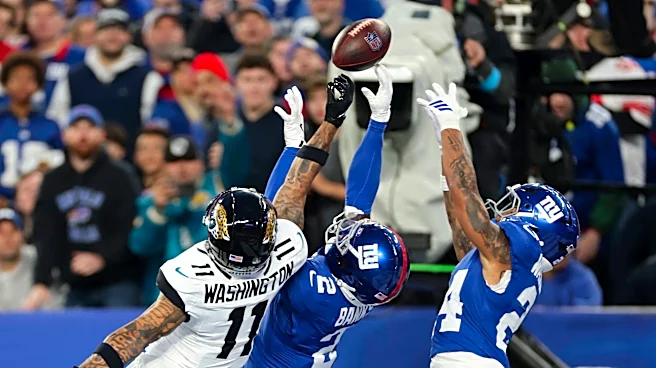
His first interception, picked off by Deonte Banks, handed the Giants possession in Jacksonville territory and helped New York get on the scoreboard. His second was arguably even more damaging.
With the Jaguars trailing in the third quarter, Antonio Johnson produced a huge defensive play, returning a Cam Skattebo fumble 42 yards to give Jacksonville excellent field position. It was precisely the sort of opportunity the offense needed to get itself back into the contest. Instead, Lawrence’s possession ended with an errant pass to Giants DB Paulson Adebo, extinguishing another promising scoring opportunity.
There were other frustrations, too. Lawrence failed to convert a fourth-and-one passing attempt in the red zone, while Jacksonville’s inability to turn promising drives into touchdowns became a recurring theme.
Lawrence was understandably critical of his own performance after the game, admitting that he had played poorly and failed to make enough of the routine plays. That’s an important admission, because the Jaguars need their franchise quarterback to be the difference-maker in games like this. Jacksonville’s ambitions extend beyond simply winning the AFC South, and performances like this won’t be enough against the NFL’s better teams.
The Giants deserve credit for making life difficult, but Lawrence will know he left plenty of opportunities out there.
The Giants won the battle in the trenches
One of the biggest factors behind Jacksonville’s offensive struggles was the Giants’ ability to dominate the line of scrimmage.
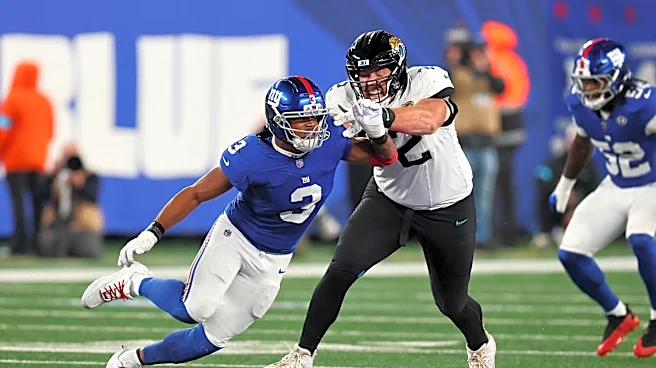
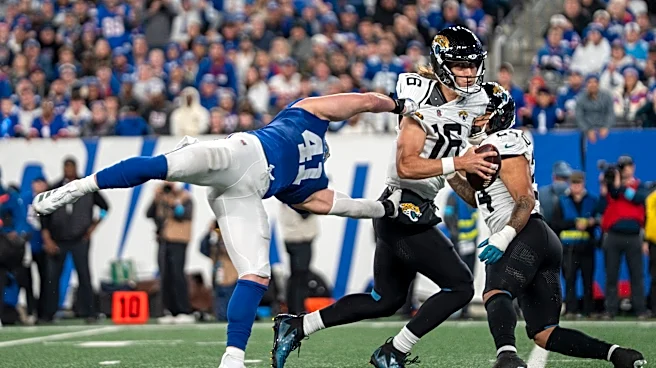
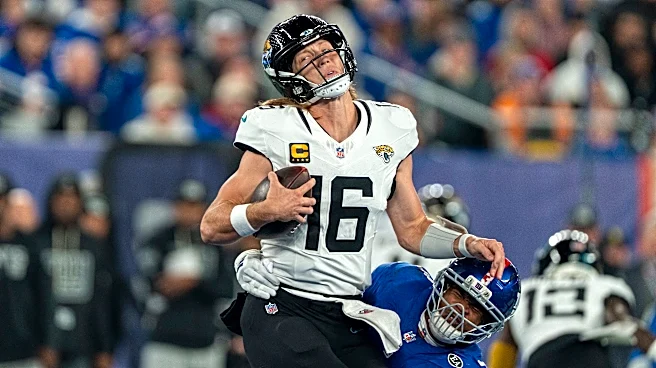
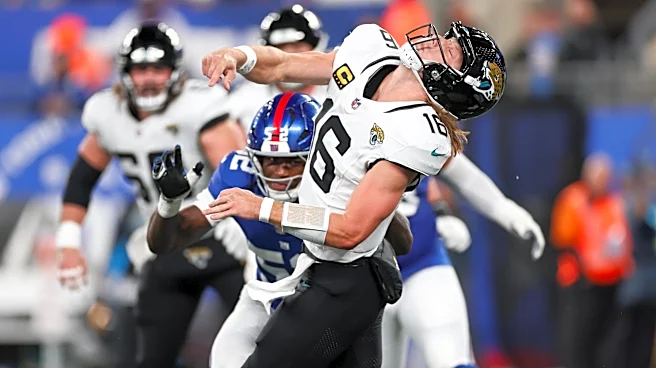
New York’s defensive front made life extremely uncomfortable for Lawrence, consistently generating pressure and preventing the Jaguars from establishing any rhythm. The Giants pressured Lawrence on 45.1% of his dropbacks and registered 11 quarterback hits, ensuring the Jacksonville signal-caller rarely had the time or comfort needed to work through his progressions.
Abdul Carter was particularly destructive. The young pass rusher recorded two sacks, five quarterback hits and 12 pressures, producing arguably the best performance of his young NFL career. His speed off the edge and ability to disrupt Lawrence’s throwing platform caused problems throughout the afternoon.
Jacksonville struggled to find answers. Lawrence was sacked three times in the first half alone, and the pressure contributed to an offense that managed just six points before the interval.
The problems weren’t restricted to pass protection, either. Jacksonville’s running game was largely ineffective, finishing with just 77 yards on 18 carries. Bhayshul Tuten managed 33 yards from 10 attempts, while Chris Rodriguez Jr. added 28 yards on four carries.
Take away Rodriguez’s 21-yard run in the first quarter and the Jaguars averaged approximately 3.3 yards per carry. That simply isn’t good enough to keep an opposing defense honest or take pressure away from the quarterback.
The situation was made more difficult by Jacksonville’s offensive line injuries. Starting center Robert Hainsey was unavailable, while Walker Little was forced from the game with a knee injury. With Anton Harrison already sidelined for the season, the Jaguars are having to make significant adjustments to their offensive line at a crucial point in the campaign.
New York took full advantage. The Giants controlled the physical battle, disrupted Jacksonville’s passing game and restricted its ability to run the football. Until the Jaguars can find greater consistency up front, opposing defenses will continue to have opportunities to dictate the terms of engagement.
Jacksonville’s lack of discipline proved costly
There is a recurring problem developing in Jacksonville, and Liam Coen will be increasingly frustrated by it.
The Jaguars committed 13 penalties for 107 yards against the Giants, matching their highest penalty total of the season. New York, by comparison, was penalized just six times for 46 yards.
That’s a significant difference, particularly in a game decided by just five points.
The penalties weren’t simply cosmetic additions to the box score, either. They repeatedly disrupted Jacksonville’s offensive possessions, put the team behind the chains and helped the Giants sustain drives.
On the opposite side of the ball, a pass interference penalty against Montaric Brown helped New York move the football to the Jacksonville one-yard line, setting up Jameis Winston’s first-quarter touchdown.
The Jaguars also struggled to convert on third down, finishing just five of 15 attempts. When a team combines that sort of offensive inefficiency with more than 100 penalty yards, it becomes incredibly difficult to maintain control of a football game.
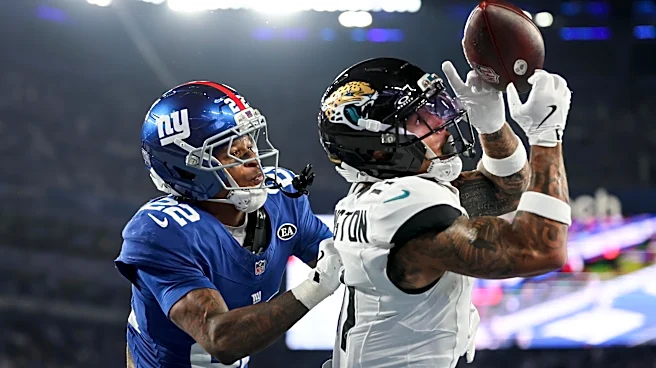
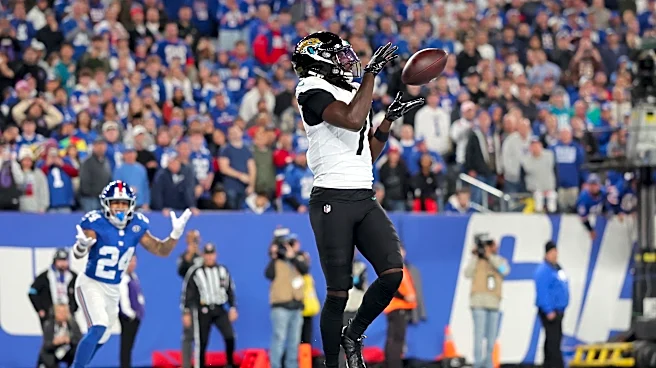
There were certainly some contentious officiating decisions, most notably the overturned Parker Washington touchdown opportunity early in the fourth quarter. Had that reception stood, Jacksonville would have been in a much stronger position to mount a comeback.
However, the officials cannot be used as an excuse for everything that went wrong. Coen recognised as much after the game, pointing to the 13-6 penalty differential as a significant reason why his team came away empty-handed.
Jacksonville has shown plenty of promise this season, but discipline and attention to detail are essential characteristics of a genuine playoff contender. The Jaguars cannot afford to repeatedly undermine their own efforts with unnecessary flags and avoidable mistakes.
Against the Giants, those shortcomings proved costly.