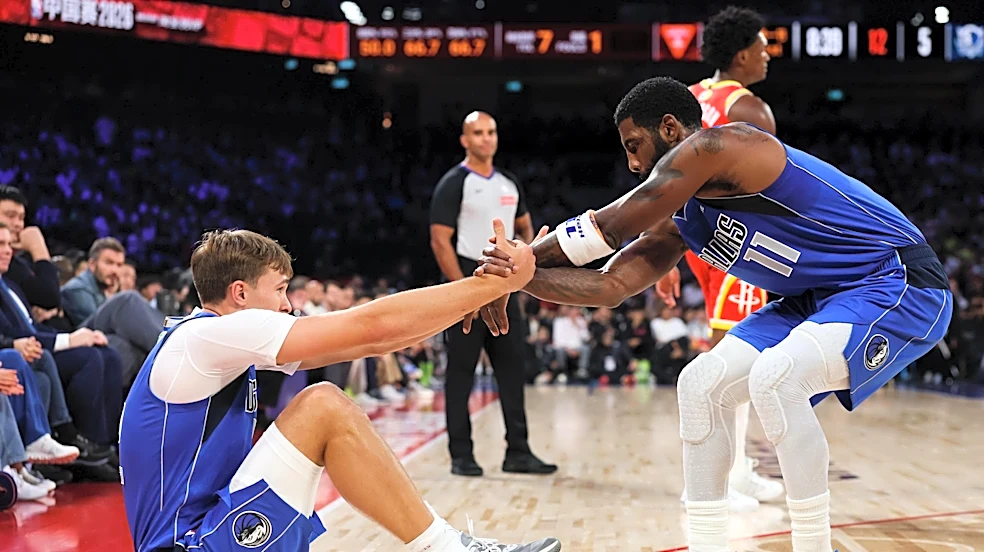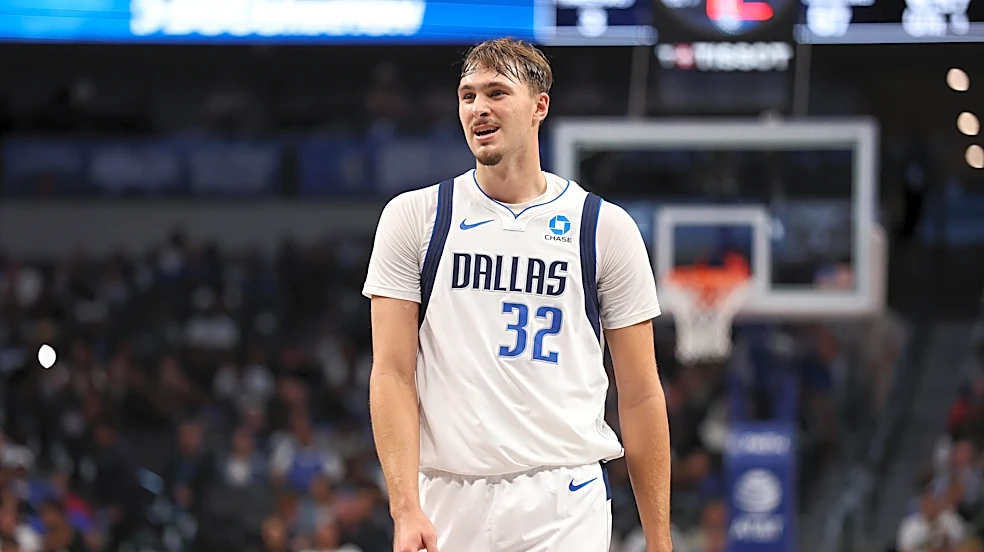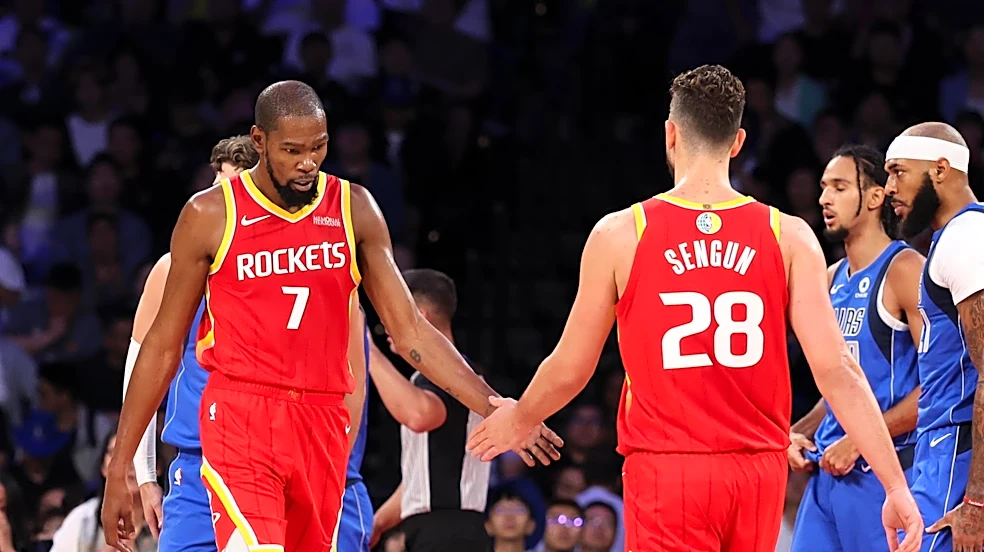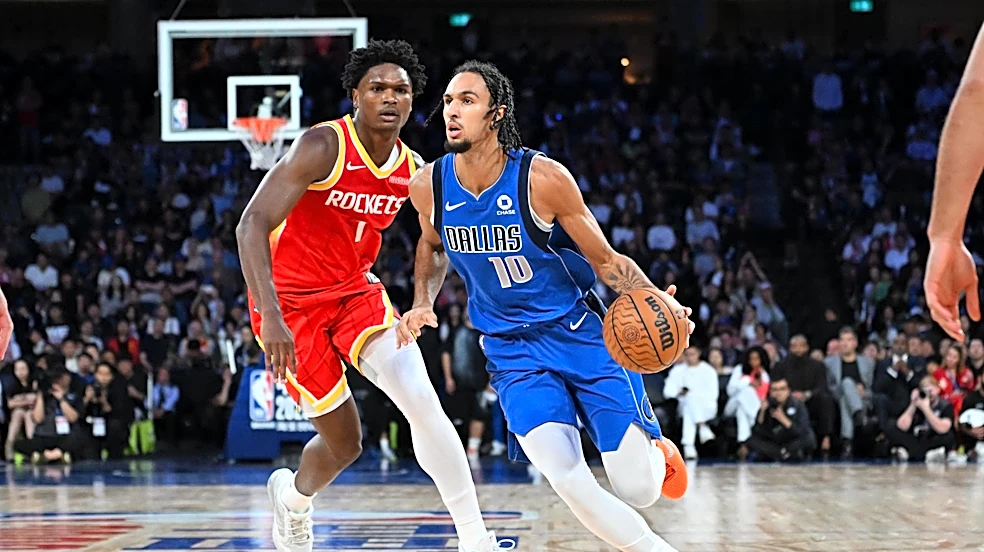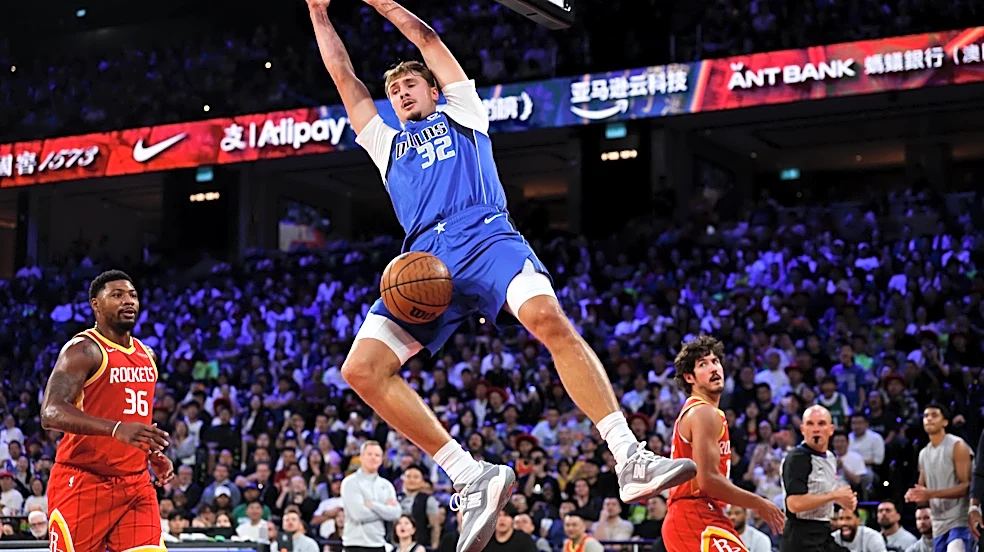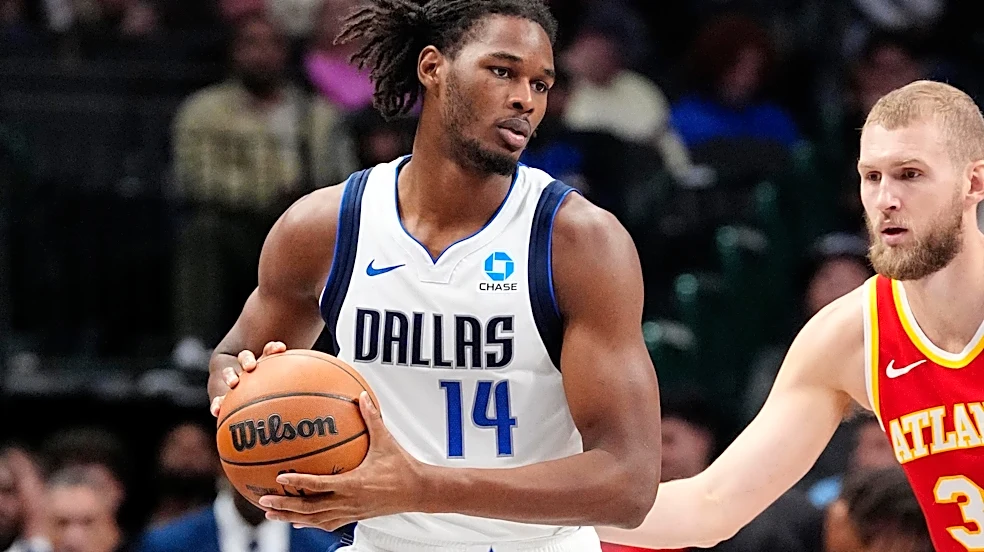


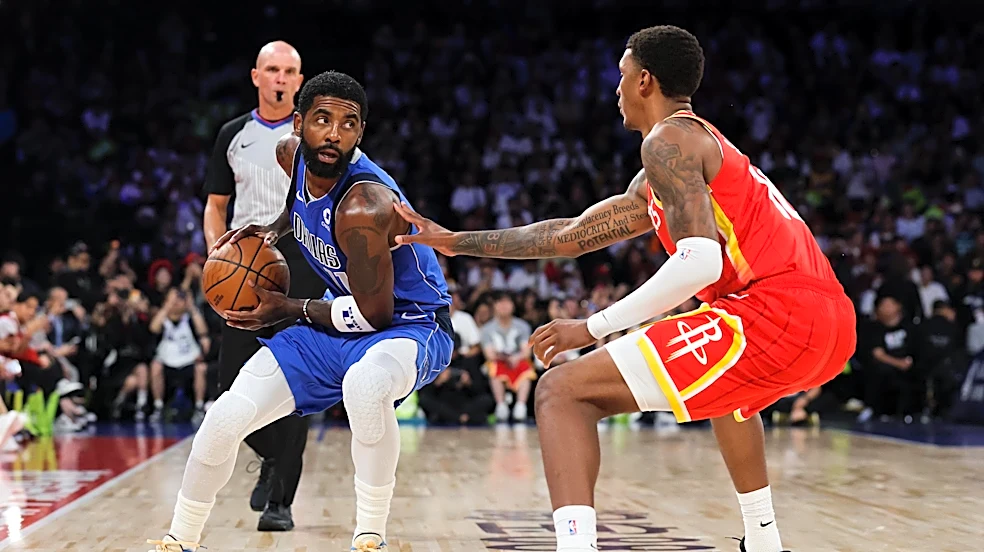

The Dallas Mavericks (0-1) opened the regular season on Wednesday with a 128-110 loss to the Houston Rockets (1-0), and for about 12 minutes, it looked like we might get a competitive basketball game.
Dallas actually started well. P.J. Washington knocked down the first basket of the season from three, Cooper Flagg hit one of his own, and Max Christie made a tough bucket as the Mavericks traded punches with Houston early. Washington was especially good through the first eight minutes, hitting two threes
and getting into the lane off the dribble, while Flagg added a difficult floater and consistently looked dangerous whenever Dallas actually put the ball in his hands. The Mavericks even shot 6-of-13 from three in the opening quarter, but Kevin Durant and Alperen Sengun kept Houston alive, and the Rockets closed the period stronger to take a 32-26 lead.
Then the game completely broke open.
Houston opened the second quarter with a Christie turnover, a Jabari Smith Jr. basket and an Amen Thompson transition alley-oop, quickly pushing the lead to double digits. Flagg briefly settled Dallas down by getting to the free-throw line, but the Mavericks couldn’t sustain their offense. Morez Johnson Jr. scored his first NBA points on a lob from Naji Marshall and later hit a turnaround jumper, but he also picked up four fouls before halftime. Daniel Gafford struggled, Zaccharie Risacher couldn’t get anything going offensively, and the Mavericks spent too many possessions asking secondary players to create while Flagg and Kyrie Irving watched.
The shooting disappeared with it. Dallas missed 21 consecutive threes at one point and made only four field goals in the entire second quarter. Meanwhile, Houston could not miss. Smith, Sengun, Durant, Marcus Smart and Bogdan Bogdanović all contributed as the Rockets scored 38 points in the period and took an absurd 70-38 lead into halftime. Houston shot 59.5 percent from the floor in the first half while Dallas managed just 33.3 percent.
At least the Mavericks did not completely quit.
Flagg came out of halftime attacking, and the team looked more alive when he ran things. Kyrie started finding some offense, Marcus Sasser gave Dallas a spark off the bench, and Naji Marshall had a productive stretch as the Mavericks finally started stringing together competent possessions. Flagg scored from the paint, the midrange, and the line while also creating turnovers on defense. Dallas still entered the fourth down 100-76, but the second half at least looked like an NBA basketball game again.
That continued into the fourth. Risacher showed some life with consecutive dunks and finished with five steals, while Sasser was outstanding, scoring 17 points on 6-of-8 shooting and 4-of-5 from three. Kyrie finished with 15 points on 6-of-9 shooting, but Flagg was easily Dallas’ best player, pouring in 32 points, five rebounds, two assists, three steals, and a block on 10-of-17 shooting while attempting 13 free throws. Sasser’s 17 and Marshall’s 16 added scoring, but Houston’s starting lineup was simply too much. Durant finished with 30, Smith scored 30 of his own, Sengun had 23 points, 10 rebounds, and five assists, and Houston shot 52.2 percent overall and 44.4 percent from three.
Dallas made the final score slightly more respectable, but the 128-110 loss was effectively decided long before the fourth quarter.
Flagg’s second-half explosion
Flagg was easily the best thing about an otherwise miserable opening night, which made his lack of usage even more frustrating.
He finished with 32 points, five rebounds, two assists, three steals, and a block while shooting 10-of-17 from the floor and getting to the line 13 times. Whenever Dallas actually let him lead the offense, something happened. He got downhill, drew fouls, created turnovers defensively, and looked comfortable pulling up and fading away when Houston cut off the rim.
The frustrating part was how often Dallas went away from him, especially in the first half. Dusty May pulled Flagg for a long stretch early in the second quarter, and the Mavericks spent those minutes trying to manufacture offense through a collection of secondary creators. By the time Flagg returned, Houston had already blown the game open.
You are going to get turnovers when you give a 19-year-old this much responsibility, and Flagg had four. That is fine. The alternative cannot be watching the offense collapse while your best player barely touches the ball.
If Wednesday showed anything, it is that Dallas needs to live with the mistakes and let Flagg drive this thing.
Dusty May’s rotations
May went to the bench early and often, completely changing the rhythm of the game.
Johnson was one of the first reserves to enter. May quickly started experimenting, and Naji, Risacher, Sasser, Marshall, and Sergio de Larrea all got early opportunities. By the opening minutes of the second quarter, Sasser had replaced Kyrie, and Johnson was already getting significant center minutes. Soon after, de Larrea and Marshall were sharing the floor while Flagg sat.
There is nothing wrong with testing combinations, but Dallas did not have enough creation on the floor during those stretches.
The offense fell apart without Flagg and Kyrie. Turnovers piled up, shots came from the wrong players, and Houston punished almost every mistake. Risacher struggled offensively, Johnson got into foul trouble immediately, and Gafford never found a rhythm. The Mavericks made four shots in the entire second quarter and went from trailing by six to trailing by 32.
Some of that is on the players, but May has to recognize which combinations cannot survive without one of his primary creators on the floor.
Swiss cheese for defense
Giving up 70 points in a half is bad enough. Giving up 100 before the fourth quarter makes winning almost impossible unless you have one of the best offenses in basketball.
Dallas does not. Houston shot 59.5% in the first half and 52.2% for the game. Durant and Smith combined for 60 points, Sengun consistently punished Dallas inside, and Houston finished with 32 assists on 47 made baskets.
The Mavericks lack the offensive firepower to win games in the 120s and 130s consistently. Flagg can have nights like this. Kyrie can still score efficiently. Sasser can occasionally catch fire. But Dallas cannot require all of that to stay competitive.
The point-of-attack defense has to be better. The transition defense has to be better. The communication has to be better. If this team is going to win consistently, its defense has to keep games manageable on nights when the offense goes cold.
On Wednesday, Houston was comfortable almost immediately, and by the time Dallas found some life, there was too much damage to undo.