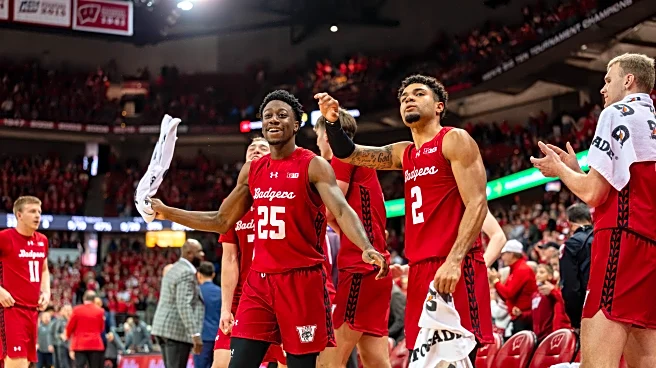

The Wisconsin Badgers win over the Marquette Golden Eagles offered more than bragging rights within the state. It gave the Badgers a clearer understanding of who they are and what they can become as the season
develops. The game revealed important truths about their leaders, their depth, and their ability to perform in high-pressure moments.
The first and most significant lesson centered on John Blackwell. His performance confirmed that he has grown into the type of scorer who can elevate a team in big games. Blackwell attacked off the dribble, finished through contact, and knocked down timely three-point shots.
He read Marquette’s defensive coverages with confidence, whether they sent multiple defenders at him or tried to force him into rushed mid-range attempts. His 30-point night was not simply an outlier. It demonstrated that Wisconsin can trust him to settle the offense, create late in the shot clock, and carry the scoring load when possessions get tight.
The Badgers learned that they have a true primary option who rises to the moment.
The game also underscored the value of Nolan Winter. Winter played with poise and physicality, showing the maturity that comes with years of Big Ten experience. His double-double reflected his work on the glass and his craft around the rim. He positioned himself well on both ends of the floor, altered shots without fouling, and kept Marquette from generating second-chance points.
Winter’s presence provided the interior stability Wisconsin needed. The team learned that he remains one of its most important pieces because of his ability to anchor the paint and maintain composure against fast and physical opponents.
Another valuable development came from Aleksas Bieliauskas. Giving him a starting opportunity in a rivalry game was a meaningful decision by the coaching staff. He rewarded that trust with strong rebounding, timely scoring, and an active defensive presence.
His length allowed Wisconsin to contest Marquette’s drives more effectively, and his energy helped fuel several important stretches. The Badgers learned that their frontcourt rotation includes more versatility than it has in recent years. Bieliauskas offers a different style from Winter, and the two complement each other well.
Offensively, Wisconsin learned that its identity is becoming more defined. The Badgers played patient, efficient basketball by moving without the ball, spacing the floor properly, and taking advantage of mismatches rather than settling for forced shots. Marquette thrives on pressure and deflections, yet Wisconsin stays composed. The team converted open threes, attacked the lane with purpose, and hit free throws in key moments. When the offense operates with this level of discipline, it becomes difficult for any opponent to dictate pace.
On the defensive end, Wisconsin learned that it can disrupt athletic teams when it communicates and rebounds with determination. The Badgers closed out with focus, limited transition opportunities, and controlled the boards in the second half. This prevented Marquette from generating the momentum swings that usually define its fast-paced style.
Overall, Wisconsin learned that this roster has the experience, balance, and toughness to win high-intensity games. The victory served as both a confidence boost and a blueprint for how the Badgers can compete at the highest level throughout the season.