




I was recently thinking about an article on my favorite non-Royals Review website, FanGraphs. In it, Ben Clemens goes to great lengths to analyze the old adage – one I’ve often repeated – that if you keep putting new guys in the game, you are eventually going to run into one who doesn’t have it. You really should read the whole thing, but this part has stuck with me:
Second, relievers are more likely to be in good form, too. Six arms means six chances to draw someone who turns in a clunker, but it
also means six chances to draw someone who’s red-hot. And while we think of blowups as largely driven by pitchers not having it, the converse is true too. A pitcher who’s really locked in on a given day is less likely to allow a blowup.
He went on the Effectively Wild podcast to discuss his findings, and elaborating that there seems to be an assumption that a reliever will put up zeroes unless they don’t have it. But that’s simply not the case. Reliever ERA in 2026 was 3.48 across all of MLB. That means that you’d expect a run to score in approximately one out of every three innings. The lowest individual ERA among pitchers who threw at least 50 innings in relief was Louis Varland at 1.27. So no pitcher who is perfect – even the best pitchers occasionally allow runs.
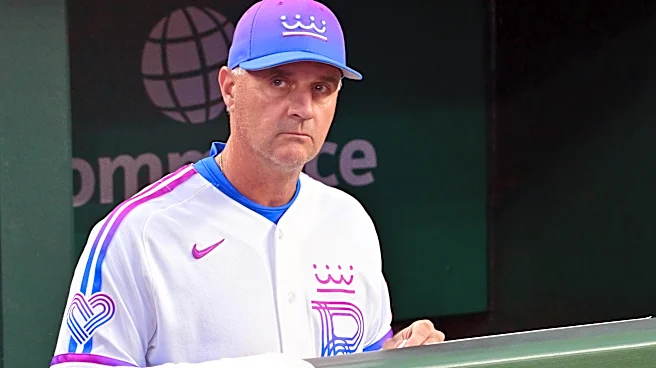
And I got to thinking: that applies to managers, too. There is an expectation that managers will never make mistakes. But every manager is going to make a mistake. They’re human. And we have learned over the past few years that even computers can’t be perfect. So why would we expect that from humans?
This is the flowchart too many fans use:

This is the one they should be using.

And even that’s far too simplified, but it’s light-years closer to how we should actually be thinking about things.
One year of ABS challenges is complete
Earlier this year, I engaged in a bit of a debate with Matthew LaMar over whether the Automated Ball Strike System (ABS) was improving the sport of baseball. At the time, I thought it was accomplishing the goal, and I was content to leave it where it was. As the year continued and teams began to figure out how they wanted to implement it, however, a few patterns emerged.
The first was that while some teams, though not all, could be quite aggressive when they had both challenges remaining, the moment they lost their first challenge, the last one would be held in reserve for only the most egregious of calls. This led to a lot of calls still being wrong because teams were afraid of having no challenges in the biggest moments to counter the worst calls. The second thing that changed is that we saw fewer and fewer batters challenging pitches. It turns out that catchers have a much better view of whether a pitch is a ball or strike and could be correct more often, so teams decided that mostly saving challenges for the guys most likely to get it right was the correct way to do things.
This means there is a new advantage for pitchers in a league that’s already so dominated by defense that MLB is testing increasing infield alignment restrictions, adding outfield alignment restrictions, and implementing automated check swing evaluations that are far more lenient than umpires currently allow.* But it also made me think about “the human element.” I came to the conclusion that the human element is important when the thing they are doing is the point. Computers are terrific for filling in the gaps and supporting that. When it comes to baseball, the point is the entertainment of the athletic competition on the field. The only reason umpires ever got involved in the first place was to remove bias and add perspective to facilitate the playing of a fair game. In the case where a computer can perform that sort of facilitation better than a human, we should let the computers handle it.
*I spoke about this on the linked podcast, so I won’t go into too much depth here, but I also think a sport that is dominated by strikeouts should be more lenient with check swings. People complain that swings aren’t properly defined in the rulebook, but the rulebook says that if the umpire determines the player attempted to strike the ball, it’s a swing. Most check swings are decidedly the batter attempting to not strike the ball. We’ve just grown used to it being called differently from what the rulebook says, much like how there was always a length of time allowed between pitches that wasn’t enforced, just in the opposite direction.
There is a reason that we use timers for the pitch clock rather than have the umpires do a countdown themselves. The computers are better at it. Similarly, computers are better at knowing whether a pitch is a strike or a ball, so they should do it. Another similarity between these two things is that the pitch clock timer doesn’t call the penalty on the batter or pitcher; that’s still the umpire’s job. And it should still be the umpire’s job to announce the balls and strikes. He or she should just be getting the answer from the computer instead of making the decision based on a more limited perception. Games should not be turning on whether a team used their challenges at the wrong moments; that’s not what we’re here to see. We’re here to see if a pitcher can paint the black in a key moment or if a hitter can squeeze one through the infield.* The sport should be leaning into the latter thing more.
*That, by the way, is why I’m in favor of extremely limited shifting. I want players to be getting outs because they’re athletic, not because their front office can crunch numbers the best to ensure they’re already standing in the correct place. Players should want that, too. Defensive skill would become much more valuable if it couldn’t be replaced by equations performed in the front office.
Royals Hall of Fame, Part 2
Last week, I wrote a bit about how crowded this year’s Royals Hall of Fame ballot is. I also posted a ranked-choice ballot to allow everyone to rank the case for each player rather than trying to select five. 59 of you responded, so here are some results.
The top five candidates, in order, were Zack Greinke, Carlos Beltrán, Lorenzo Cain, Eric Hosmer, and Wade Davis. I can’t find exceptional fault with those results even though I voted differently. Here’s the full order:
- Zack Greinke
- Carlos Beltran
- Lorenzo Cain
- Eric Hosmer
- Wade Davis
- Mike Moustakas
- Greg Holland
- Billy Butler
- Joakim Soria
- Kelvin Herrera
- Alcides Escobar
- Ian Kennedy
A handful of you figured out that you didn’t have to vote for everyone and could remove candidates from the ballot if you didn’t want them to even receive partial credit. One of you who figured that out voted only for Zack Greinke. Seems like a sad life to me, but as long as you’re satisfied, I guess that’s fine.
Zack Greinke was the runaway favorite, though, and I will be shocked if he isn’t actually elected. After him, Lorenzo Cain actually got the most first-place votes, but Beltrán had so many more second-place votes that he edged him out – I think there’s absolutely a world where both of them get in, too. From there, it was a big jump down in support to Hosmer and Davis, then another big jump down to Moustakas, another to Holland and Butler, and then big leaps down the rest of the way.
Based on this, I kind of expect everyone under Holland, at least, to fall off the ballot this year. That sucks for Herrera and Butler especially, to me. But that’s what the Veterans Committee is for. I expect both would get in eventually via that committee; I just don’t know how long it will be before that happens.