






Every league has a rule in place to help promote young talent within its’ own country. In Germany, the rule is that each club must have at least 8 locally trained young players in the squad while at least 4 of those 8 need to be homegrown (club trained) in order to register a squad for any footballing division. To qualify as locally or club trained a player needs to have been registered to play in a country or for a club for three years within their 15th and 21st birthdays. Bayern Munich’s Josip
Stanišić, for instance, qualifies as club trained because he joined the club at 16 and was registered to play for the club (and its’ youth teams) up until and then past the age of 21.
UEFA, one of football’s two big governing bodies, has the same general homegrown requirement as Germany for squads in the Champions League, Europa League and Conference League and it has been this way for a while.
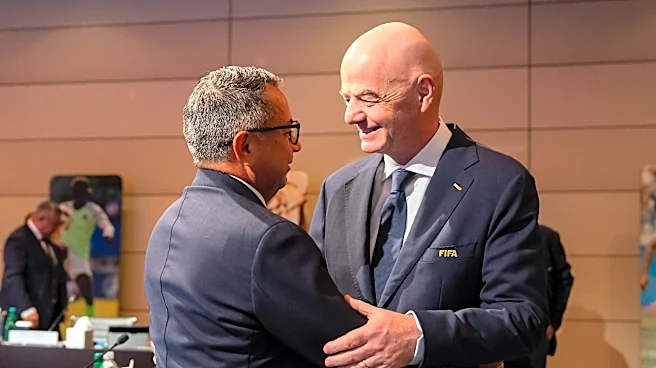
But FIFA, the other big footballing governing body, may want to shake things up. According to the Athletic, the homegrown requirements will become much more exact:
FIFA is considering a proposal which would mandate all clubs to have at least one homegrown player from the under-20 or under-21 category on the pitch 𝗮𝘁 𝗮𝗹𝗹 𝘁𝗶𝗺𝗲𝘀. A consultation process with all relevant stakeholders for the proposed obligation has been unanimously approved and is set to be submitted to the FIFA Council in the next year.
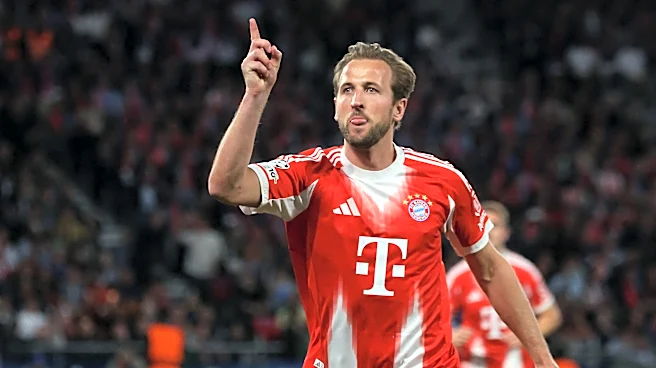
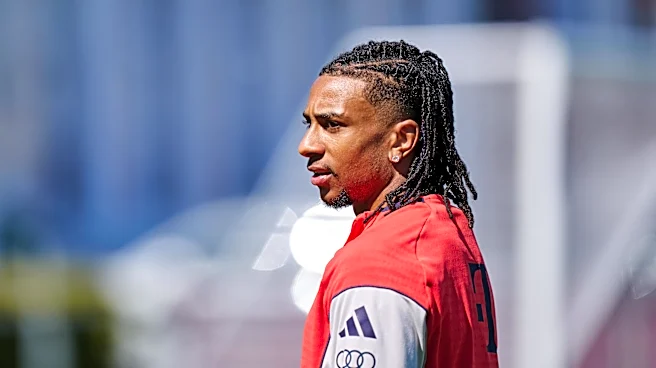
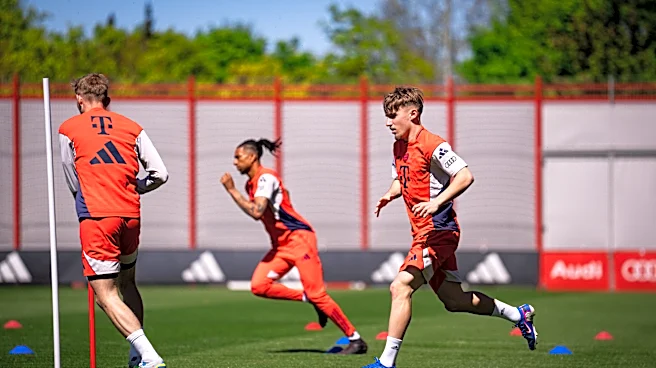
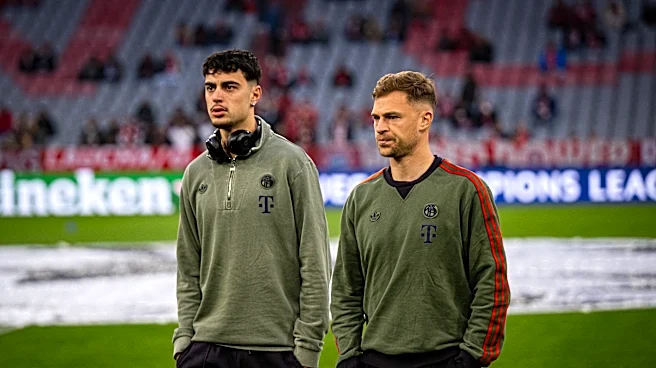
The first question one may ask, as a Bayern fan, is how this affect Bayern. With Jamal Musiala, Stanišić, Aleksandar Pavlović and Lennart Karl, Bayern have four homegrown players in the first team squad. It should be possible for Bayern to have one on the field at all times, while perhaps other youngsters could get game time.
It is important to note that the current homegrown rules, in place to promote game time for the young players of a country, can fairly easily be bypassed without giving said young players any game time. In the article from the Athletic, it is highlighted that Premier League clubs Leeds United and Burnley FC have gotten away with giving 0 minutes to U-21 English players, while 4 others have granted less than 100 minutes. This is not unique to England, either, as many countries see the exact same evasion of integrating homegrown players. One has to assume, then, that FIFA will consider implementing this new mandate in order to factually guarantee the playing time for these youngsters that the current homegrown rules were supposed to encourage.
But the more one thinks about this concept, the stranger it appears. What if all the homegrown players in a given squad are injured or suspended at the same time? Will a team get punished for this? Furthermore, what would the punishment be if a homegrown player is not on the field for a certain team? Does the team just play with 10 men? Will we see teams that will be forced to field one unprepared youngster per match to fulfill these new requirements? The proposal is still in the early stages, so it possible that all these questions could be answered logically, but one wonders what the answers to these questions could possibly be.
BFW Analysis
One also has to wonder how much influence FIFA have here. UEFA oversees most of the club competitions in football and operate independently to FIFA while FIFA mainly oversees the international tournaments. If UEFA refuse to give their approval, can FIFA really push this proposal through?
At the end of the day, there is every chance the proposal is quickly denied and we all move on with our day like nothing ever happened. But what would a world in which these regulations were to be passed look like? It is worth a thought.
If you are looking for more Bayern Munich and German national team coverage, check out the latest episodes of Bavarian Podcast Works, which you can get on Acast, Spotify, Apple, or any leading podcast distributor…
Join the conversation!
Sign up for a user account and get:
- New, improved notifications system!
- Fewer ads
- Create community posts
- Comment on articles, community posts
- Rec comments, community posts