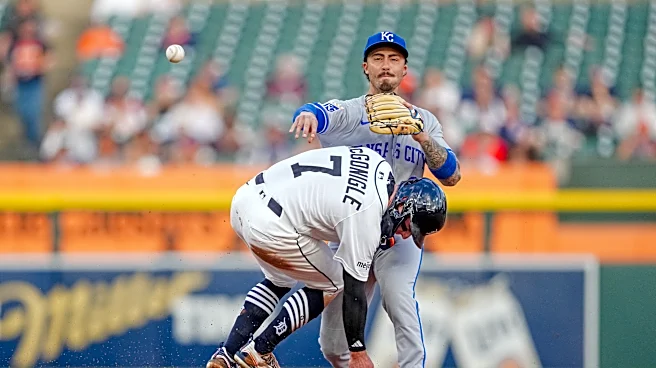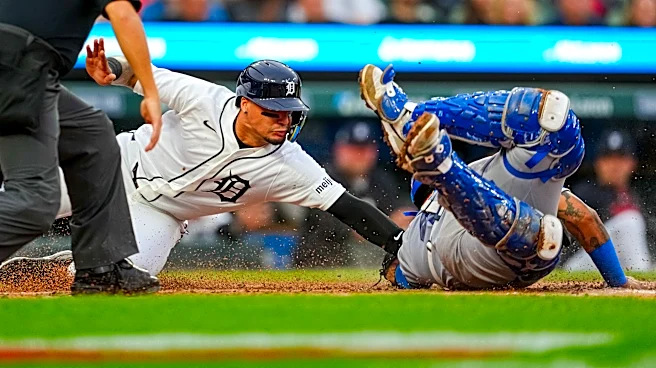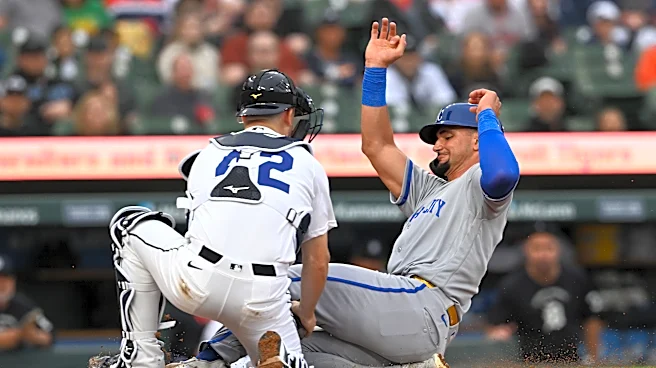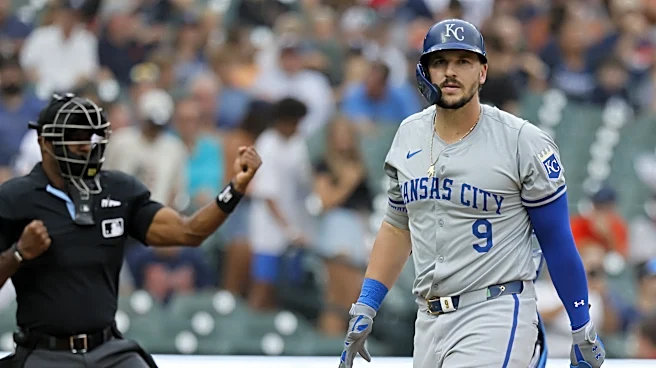


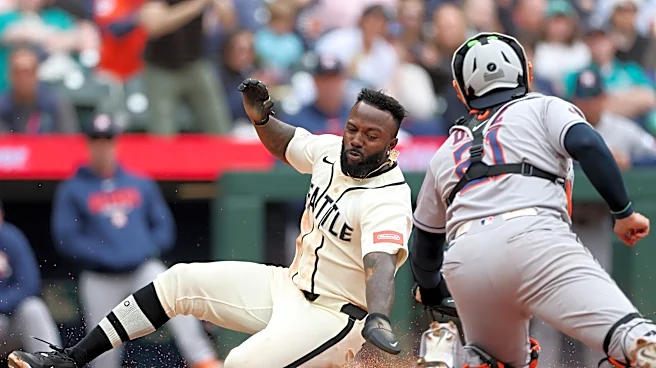
The Royals are averaging just 3.11 runs-per-game, second-fewest in baseball. They have scored three runs or less in 12 of their 18 matchups so far.
But for long-time Royals fans, this is just business as usual. If the calendar reads April, that means taxes are due, Midwestern showers are common, and the Royals are leaving goose eggs on the scoreboard.
The Royals have scored
fewer runs-per-game than the American League average in all but four seasons since 2007. But that shouldn’t be too surprising – the Royals have typically had a below-average offense. So I wanted to look at how the Royals performed in all months compared to the league average. Below is a chart that shows how much better or worse the Royals fared in runs-per-game compared to the AL average – 10% means they scored ten percent more runs than the average AL team, -10% means they score ten percent fewer runs than the average AL team. I also color-coded things to make it easier to scan – light blue means the Royals did 0-10% better than league average, and dark blue means they did over 10% better. Light red means they did 0-10% worse than league average, and dark red means they did over 10% worse.

If you think April is a bad month for the Royals, wait until May and June, it typically gets worse! The Royals have had some epic slumps in May. In 2014, they collectively hit .246/.300/.339 as a team, dropping 17 of 29 games. The team demoted Mike Moustakas and reassigned hitting coach Pedro Grifol in May. It was the second consecutive year the Royals had fired their hitting coach before the month of June, having reassigned Jack Maloof in May of 2013 after he suggested the team wasn’t hitting because of Kauffman Stadium.
And Royals fans have become familiar with the June swoon. The team dropped 20 of 26 in June of 2023, on their way to 106 losses. Last year’s June probably cost them a playoff spot – they lost 18 of 26 including series sweeps at the hands of the Athletics and Rays, and were shut out five times that month.
When do Royals hitters typically perform? They have fared well in August, particularly in 2013-15, when they made runs at a playoff spot. But often they also perform well in September, often when the team has been eliminated from contention.
Why do the Royals always seem to get off to a slow start offensively, only to get going as the summer warms up? I had a few theories.
The weather
Spring weather in the Midwest can be temperamental. It can be 80s degrees one day, and 40 degrees the next. Plus the Royals often make early season visits to chilly burbs like Minneapolis, Cleveland, Chicago, and Detroit.
According to Baseball Reference, the Royals have had 101 games since 2007 played with a first-pitch temperature of 50 degrees or less. They average 3.84 runs in those games, a bit lower than their average of 4.20 in all games over that time. That’s about five games per season, so not nothing, but not likely to make a large impact. According to a 2013 study published by Weather, Climate, and Society found that Kauffman Stadium actually has fewer overall “cold” games than Dodger Stadium in Los Angeles.
The wind could be a different story. But according to Baseball Reference, the Royals have only had 36 games since 2007 where the wind was greater than 15 mph and blowing in – interestingly only five were at home.
Spring training hangover
We are very familiar with Royals hitters raking in the warm, dry air of Arizona, then having the bats go completely limp once the regular season begins. While weather may not be a direct culprit, moving from the desert climate of Arizona to a much more damp spring Midwestern climate could be a difficult adjustment for hitters. Pitchers are said to be ahead of hitters to begin the year, although the Royals seem to struggle more than other teams early in the year.
Roster construction
The Royals are a small market team that commonly has to rely on a few proven stars, with some question marks to fill out the lineup. Some years that may mean hoping a young hitter like MJ Melendez figures it out, or it may mean banking on a career rebound from a veteran like Lane Thomas. Sometimes it works, but more often it does not, and the lineup has precious little depth. The Royals are typically able to make mid-season adjustments – a callup from the minors, a trade to bring in more depth. Last summer, the Royals were able to significantly improve the lineup by simply jettisoning dead weight like Melendez and Hunter Renfroe, and adding solid, but unspectacular veterans like Adam Frazier, Mike Yastrzemski, and Randal Grichuk.
Coaching
Coaching does matter, although its direct impacts can be difficult to ascertain, particularly now when so many players seek counsel outside the organization. If hitters are unprepared to begin the year, they may struggle. By late summer, a good hitting coach has identified mechanical flaws, opponents have tipped tendencies, and experienced hitters have settled into routines.
In 2014, the Royals hit .253/.308/.352, averaging 3.86 runs-per-game when they fired hitting coach Pedro Grifol. They hit .267/.316/.388 afterward, averaging 4.09 runs-per-game. It is impossible to say whether replacement hitting coach Dale Sveum made the impact, or if the personnel change was the shakeup the hitters needed to wake them out of their funk.
Of course, the simplest explanation is often the right one. The Royals have finished in the upper half of the American League in runs scored just three times since 2007. It may be that the Royals just haven’t been a very good offensive team. April doesn’t make them worse. It just makes them exactly who they are, before the calendar has had enough time to obscure it. Moving in the fences hasn’t changed things yet. The Royals still have a flawed offense that is mired in yet another spring slump.