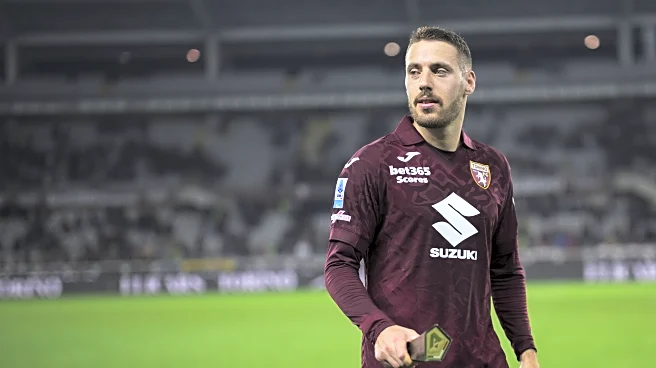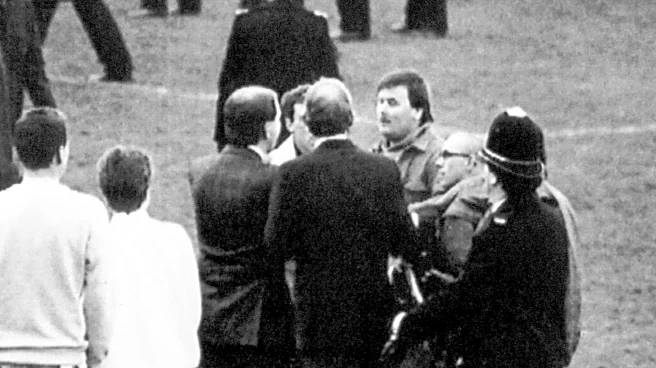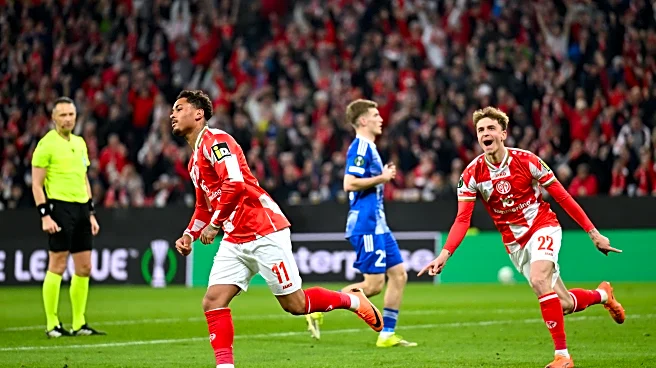

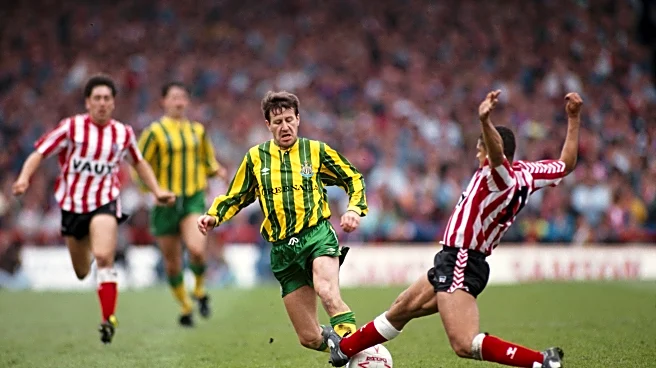
Anton Rogan is sixty years old today. Born in West Belfast in 1966, “Josh” was signed by Denis Smith in October 1991 from Scottish giants Celtic. His stay with us might have been short, but there was no shortage of talking points regarding a player who quickly developed a cult following at Roker Park.
As a lad growing up in West Belfast, Anton was a highly rated Gaelic football player and shared this experience with his international Northern Irish colleagues Mal Donaghy and Gerry Armstrong.
He tried
football and came to prominence at Cromac Athletic, where he was spotted by legendary Lisburn Distillery FC manager Roy Welsh (the Blonde Wizard). For three seasons, the young Rogan learnt his trade and came to shine, starring at left-back or centre-half (and occasionally in midfield) for the “Lilleywhites”.
He was spotted by Celtic and invited for a trial in October 1984 but unfortunately broke his leg in a game against Crusaders. Upon recovery, Celtic tried again and invited him on their pre-season tour of Holland, but before he could depart Anton suffered a second fracture of the same leg, which had not healed properly. These two leg breaks impacted Rogan’s career in latter stages.
Celtic were obviously keen on the young Northern Irishman and tried again once he had recovered, offering him the chance to come on the pre-season tour to Switzerland in 1985. He made an immediate positive impression and was promptly signed by the “hoops” for £7,500. In January 1987 he made his debut for Celtic and quickly established himself as their first-choice left-back.
Success followed with Celtic league and Scottish Cup winners in their centenary year of 1988. They won the Scottish Cup again in 1989 and got to the final in 1990 where Anton missed a penalty in the shoot-out that saw the cup go to Aberdeen. He was also part of the Celtic team defeated in the league cup final in 1990 at Hampden by Rangers.
With the Glasgow team struggling financially, Rogan almost left the club to join Portsmouth in a dispute over wages, but settled and continued his good form. Finances were still really tight the following year and new manager Liam Brady was forced to sell some of his assets.

With Sunderland offering upwards of £350,000, Anton was on his way to Roker Park.
Arriving at Roker Park an established Northern Ireland international, he made his debut in an exciting 4–2 victory against Brighton on 5 October 1991 at Roker Park. Johnny Byrne and Don Goodman would arrive shortly after him to boost a squad that was struggling to find its feet following relegation from the top flight the previous season.
Rogan quickly established himself in Sunderland’s defence, generally playing left-back with a couple of games as left-side centre-half. He brought some pace and aerial ability down the left-hand side of our defence and was a very consistent performer as well as being something of a character and joker in the dressing room.
Following a 3–0 defeat at Oxford on 28 December, Denis Smith was sacked by Bob Murray bringing an end to his tenure from the summer of 1987, with Malcolm Crosby placed in temporary charge of the team, whilst the board considered its options.
The team had performed woefully that day at the Manor Ground, but Rogan had picked up a knock and was substituted, missing the next game. He came straight back into the team (despite the 2–0 victory against Derby County at Roker Park in the game he missed) and had a fine game in the memorable 6–2 victory against Millwall at Roker Park on 11 January.
Having defeated Port Vale in the third round of the FA Cup at Roker Park, Sunderland would return to the Manor Ground in round four to exact a bit of revenge and progress to the next round.

January proved to be a good month for the newly installed Crosby as Sunderland registered four victories and thirteen goals, with Goodman and Byrne beginning to fire. The defence too began to find some consistency with generally Tony Norman in goal, John Kay and Anton full-backs, Kevin Ball and Gary Bennett at the centre of defence.
The results in January eased the fears of relegation to a degree, whilst a cup run bizarrely began to develop arms and legs, as Sunderland went all the way to the final putting out top-tier West Ham, Chelsea and Norwich on their way to Wembley and the eventual winners Liverpool. Rogan played in every round and replay in that marvellous cup run and provided sterling performances, thriving in the white heat of battle and becoming one of the leaders on the pitch.
As the cup run progressed our league form continued to give cause for concern from March through to the last five games of the season where a victory against Middlesbrough and four draws saw us finish in eighteenth position and safe by five points. It had not been comfortable though, and the prospect of a second relegation to the third tier had been galling for fans and board alike!
Our cup run had been something of a perplexing distraction with the team performing brilliantly at times against top-tier opposition but then failing in the league against fellow second-division strugglers like Grimsby, Newcastle and Plymouth.
Throughout all of our struggles in the league this season Anton Rogan was more often than not a consistent performer, never found wanting for effort and fight for the result. From his debut to season’s end he played forty-two games, missing only three games with minor injuries.
One memory of Anton’s time with us was the rip-snorter of a goal he scored at Brighton in a hard-fought 2–2 draw in April.
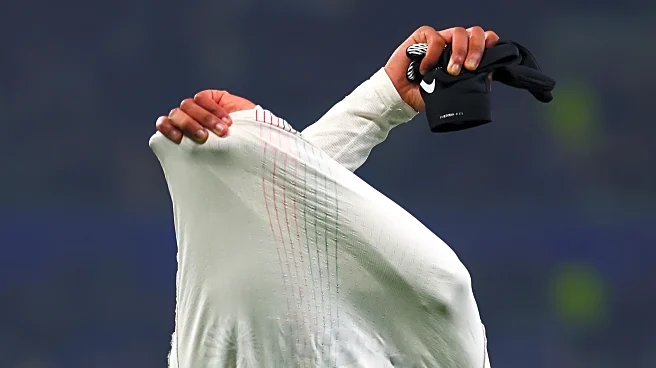
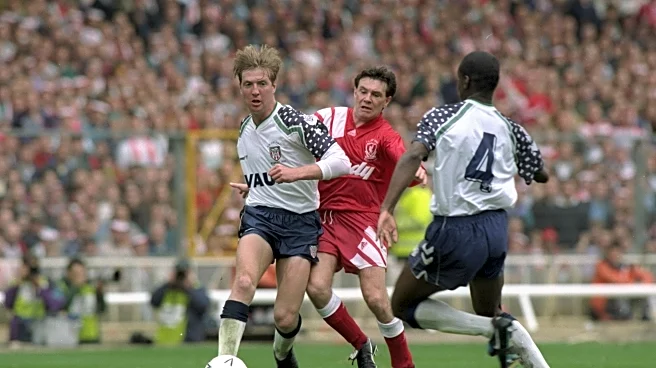
Another classic memory (especially for those of us who witnessed this in the flesh) was the game at Stamford Bridge in early March in the sixth round of the cup. With Sunderland legend Ian Porterfield as manager and Bob Stokoe on his staff as scout, this was a Chelsea team packed with talent such as Andy Townsend, Paul Elliott, Tony Cascarino, Clive Allen, Kerry Dixon and Dennis Wise. With the Pensioners pressing and looking most likely to blow the Lads away, a very handy if unusual stoppage came to our aid. The referee noticed that Anton (playing at centre-half) and Gary Bennett both had the same number (4) on their shirt. To much amusement the whole crowd was treated to the hilarious sight of our international defender who had removed his strip to reveal a fetching white “school vest” (thankfully not a string vest)! Anton in his vest whether he intended it or not seemed a cracking bit of shithousery for the Chelsea big boys; it also slowed the game down in that frantic early stage and allowed the Lads to gather themselves.
We went all the way to Wembley and the final against Liverpool. We could not beat a fourth top-tier team, but gave another good account of ourselves and had chances to take the lead, including a twenty-five-yard pile-driver from Anton that Bruce Grobbelaar managed to tip away for a corner. The 1992 FA Cup Final was Rogan’s fifth cup final in as many years.
Anton was a very proud wearer of the Northern Irish jersey and never gave anything but his best for his country in the eighteen games he played between 1988 and 1997, despite suffering sustained sectarian abuse at Windsor Park whenever he played there.
Rogan started the 1992/93 season at left-back and despite the indifferent start made by the team, his form had been consistently good. Calamity struck in his twelfth game of the season in the 62nd minute with the score at 1–1, when Anton broke his leg and was replaced by Terry Butcher. Sunderland went on to lose that game by five goals to two!
This was the third leg break of Anton Rogan’s career and whilst he did make it back onto the pitch for Sunderland as a 69th-minute replacement for Kevin Ball, in a 1–0 defeat at Grimsby on 12 April 1993, this would prove to be his last game for the Lads.
Butcher had taken over from Malcolm Crosby as Sunderland’s first ever player/manager in early February 1993. He and Rogan had crossed swords on opposite sides of the ‘Old Firm’ in the mid to late eighties and in August 1993 Rogan packed his boots and vest as he found himself out of the Roker Park door heading to Oxford in a cash and part-exchange deal for the excellent Andy Melville. Given the way the 93/94 season went under Butcher, we could have done with Melville and Rogan in defence!
Oxford were beset with financial difficulties and the team were struggling at the bottom of the second division. Despite this, Rogan and his family were very settled in Oxford. The U’s were relegated in 1993/94. After two years at the Manor Ground a former international playing colleague Mick McCarthy persuaded Rogan to join Millwall and managed to sign him on a free transfer. McCarthy left Millwall to take on the Northern Ireland job and even though he had scored eight goals and performed as well as anybody, he was released at the end of the 1996/97 season. Once again a former international colleague, Nigel Worthington, manager at Blackpool stepped in and offered him a contract for the 1997/98 season. After only two pre-season games injury struck and his two seasons at Bloomfield Road would prove to be his last in any serious level of football as the poorly managed leg breaks suffered as a young player at Distillery came back to aggravate further complications that he could not overcome. He retired from top-class football in June 1999.
His time with Sunderland was short, but his stay was eventful and memorable.
He played fifty-six games between October 1991 and August 1993, scoring one solitary but cracking goal.
Happy Birthday Anton Rogan.