




As the 2026 MLB season has unfolded, everyone involved, front offices, players, and fans, has approached this season with a sense of urgency.
The reason? Most observers aren’t sure there will be a season in 2027.
There will be a work stoppage following the completion of the World Series once the current Collective Bargaining Agreement expires, most likely through an owner’s lockout of the players that will last for months. Spring training will be affected and the likelihood that games will be missed
next year is very real.
Owners want a salary cap. The MLB Player’s Union is dead set against it.
It is the Kashmir issue of MLB’s labor battle. It is the Taiwan. It is the Jerusalem. It is seemingly the one topic on which there can be no compromise.
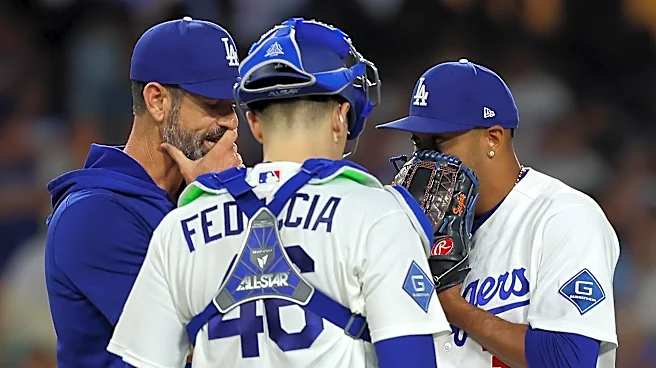
Owners point to a vast disparity in payroll for the teams at the top to the ones at the bottom. According to Fangraphs, the projected payroll for baseball’s top-spending team, the Los Angeles Dodgers, is $407 million, with a luxury tax payroll of $417 million. The Mets’ $359 million payroll is next, followed by the Yankees’ $310 million and the Phillies’ $290 million.
The Dodgers’ payroll alone is more than the combined payrolls of the Marlins, Guardians, Rays and White Sox. The payrolls of the Dodgers, Mets and Yankees ($1.07 billion) is more than the four teams already mentioned, plus the A’s, Cardinals, Nationals, Pirates, Twins and Rockies ($967 million).
Not only that, but roughly $1.05 billion in deferred salary will be paid to eight players between 2028-46 (ESPN). The Dodgers have stretched the limits on how much a franchise can spend on its players, but all of it is allowed within the rules of the current Collective Bargaining Agreement.
Baseball is pointing to the Dodgers and their wild spending as the problem and the dire need for new rules to be instituted in the next CBA to squelch it.
All of which makes the developments this week regarding the business practices of Dodgers owner Mark Walter very interesting.
Dual investigations by the Securities and Exchange Commission and the U.S. Attorney’s Office for the Southern District of New York are seeking to determine the details of financial dealings of Walter and two insurance companies he owns — Delaware Life Insurance Company and its affiliate Clear Spring Life and Annuity.
Regulatory filings released on Tuesday show Walter’s insurance companies shuffled billions of dollars in investments to businesses owned by Walter and other business partners. The filings also show a loan tied to the Dodgers has been almost entirely paid off.
Insurance companies like Delaware Life collect insurance premiums from ordinary people like you and me. Those premiums add up, and are then invested by the insurance company owners, like Walter, into other companies. Federal guidelines stipulate how much of an insurance company’s profits can be invested into other companies owned by the same person, in this case, Mark Walter. The allegations indicate Walter invested far more of those insurance company profits into other businesses he owns than is allowed, and that he mis-identified those loans/payments as being to outside entities.
It’s unclear how much of this, if any, is wrapped up in the Dodgers, and thus far, no charges have been brought against Walter. There is also no proof that the Dodgers’ sky-high payroll and hundreds of millions of dollars in deferred contracts is because Walters has funded his team’s payroll or TV cable deal with money from his insurance companies. The investigations will undoubtedly uncover where Walter’s profits went and how they were utilized.
But much of MLB’s incessant push for a salary cap is based on the notion that the Dodgers’ ability to outspend teams at the bottom of the income pool is unfair. That has been a winning argument in terms of public opinion. In March, The Athletic conducted a survey asking whether respondents were in favor of a salary cap system with a cap and floor. Nearly 7 in 10 (68%) said “yes.” Only a quarter (27%) said no.
That same survey found 67% said their fandom would be “significantly” (20%) or “somewhat” (47%) impacted by a potential lockout or strike, but one-third (33%) said they would be impacted “not at all.”
The argument that the Dodgers are destroying baseball is resonating with the fanbase, so from a public relations perspective, even the suggestion that the Dodgers’ payroll is what is due to shady or potentially illegal self-dealing undercuts MLB’s dire plea for help.
“The economics of baseball aren’t broken,” one could argue, “One of the owners was doing illegal, stuff!” will be the new mantra.
To be clear, there is no indication that Mark Walter did anything illegal or unethical with regards to his ownership of the Dodgers. The investigations are ongoing. But strictly from a public relations perspective, even the allegations are damaging because the success or failure of work stoppages in sports is oftentimes driven by fan support or opposition.
One other potential domino is whether Walter will sell the team he bought out of bankruptcy in 2012. He’s already sold his controlling interest in the Los Angeles Lakers and the Premiere League’s Chelsea franchise to raise money to pay off debts, and there is speculation the Dodgers could be next.
Could MLB really engage in a call for a salary cap and potentially blow up the economics of the game when the very franchise they’ve centered their arguments around is in the process of being sold?
The Athletic reported this week that Dodgers president and CEO Stan Kasten said the sale of the Lakers is “not related to the Dodgers and changes are not coming to the MLB organization.” Of course, things can change.
Even with the investigations looking into the Dodgers’ finances, a labor stoppage is still likely. The owners will still want a cap in the next CBA and the players will be dead set against it. But the argument MLB has been using to make their point has weakened considerably.