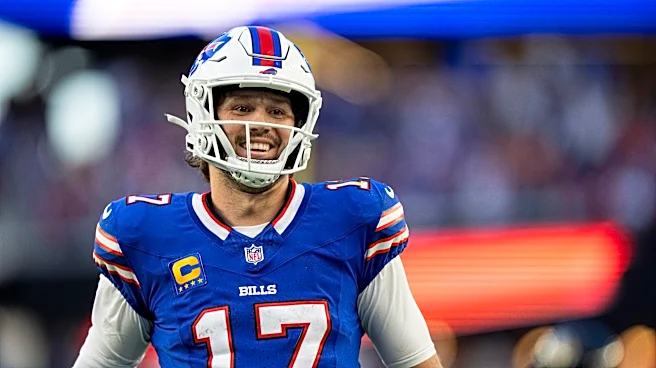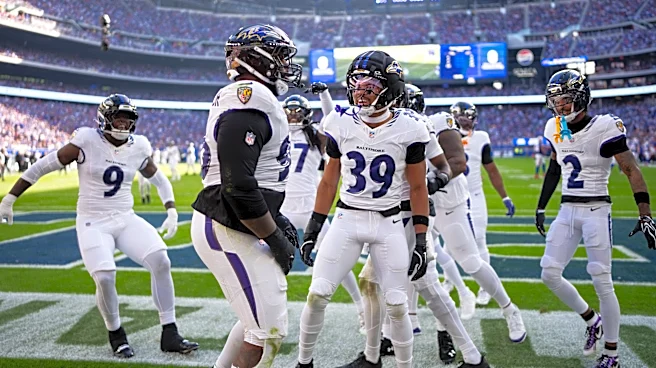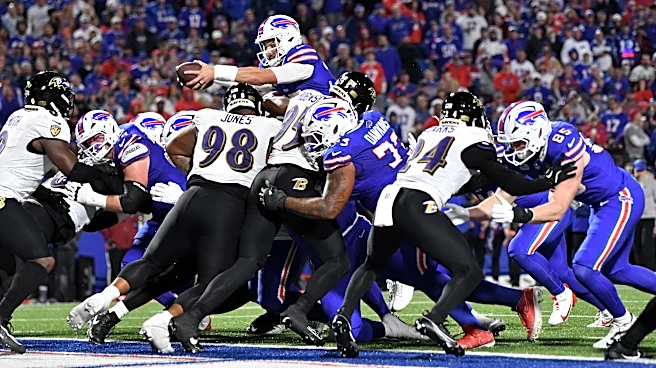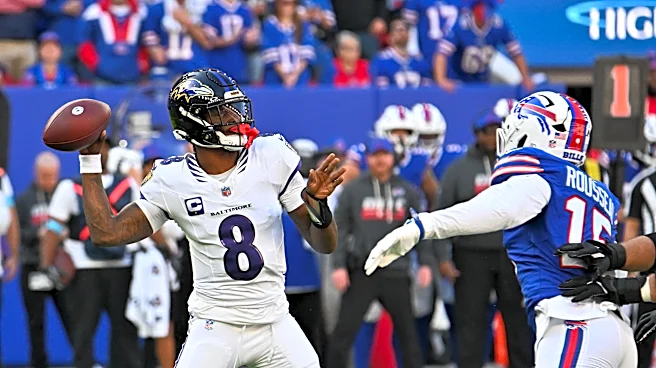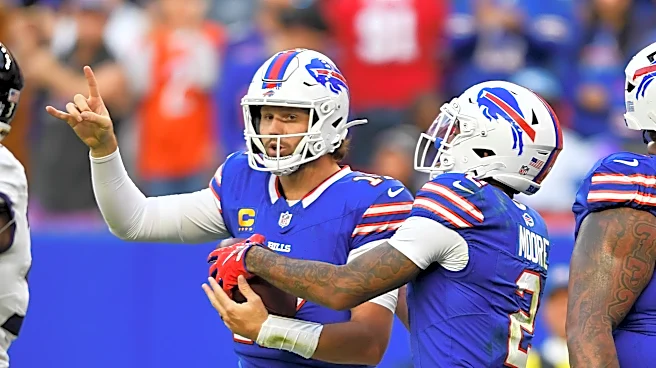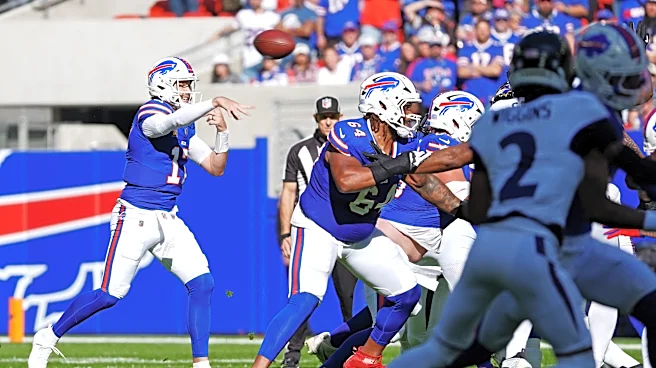

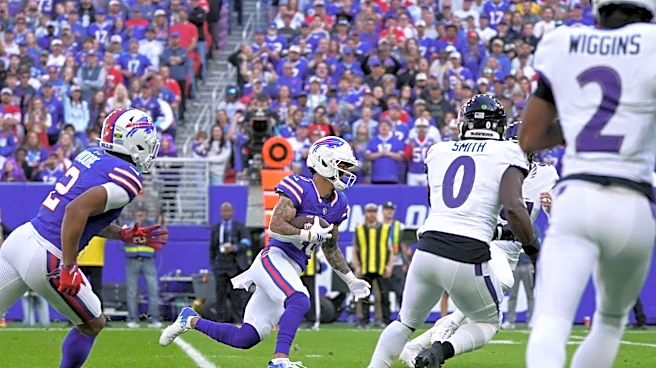
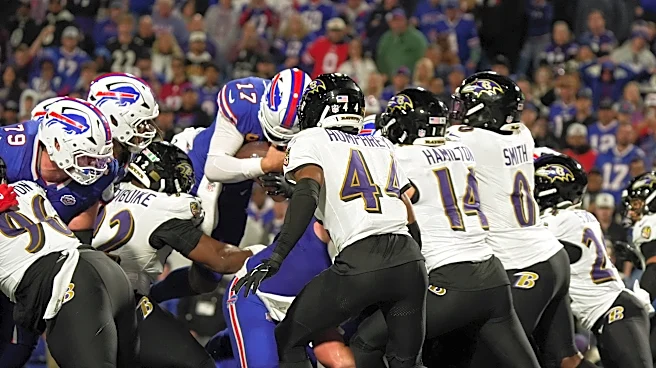
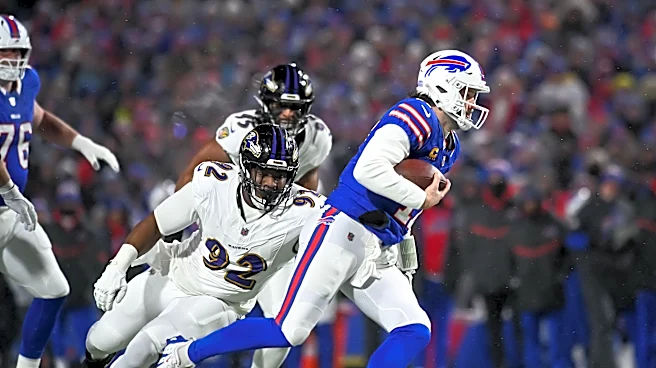

The Buffalo Bills had a wild game against the Baltimore Ravens; featuring third string quarterbacks. volleyball bumps turned into picks, and the most lopsided win of the year for the good guys. Along the way, the two teams convinced the officiating crew to throw 18 flags and that’s not including a very obvious flag that wasn’t called on Roquan Smith (I do expect some news from the league on that one though). Through it all though, which team had the harder slog through the penalties this week? I have
the answer.
Standard and Advanced Metrics
Penalty Counts

Starting off with how most of the world sees penalties, it seems my question is indeed a silly one. Of course the Buffalo Bills had the harder time as they clearly make the NFL average count and true count look diminutive in this bar chart and the Baltimore Ravens didn’t even quite hit the average. Pretty obvious it would seem. I apologize for the short article this week then.
Unless there’s more to the story that is…
Penalty Yards

OK, this isn’t helping is it? The question seems even sillier as the Bills’ yards seem elevated even in consideration of the count and the Ravens seem like they stuck to mostly procedural flags if you’re going by yards. When we factor in True Yards, which includes those yards negated or otherwise impacted by flags in addition to the assessed, it’s even more bleak for Buffalo.
Oh, and if you’re looking at metrics elsewhere, it’s even more lopsided. My chart includes five assessed yards for the kickoff that went out of bounds to start the game for Baltimore. The NFL’s stats don’t count the five yards difference between that and a touchback for some reason and I think that’s a bad practice.
As an aside, if you’re looking for a foreshadowing moment, it is kind of poetic that the Ravens started off with a totally wacky and unnecessary miscue.
Penalty Harm
Baltimore Ravens

Now right away we have an elephant in the room. The offensive holding call from Ronnie Stanley sure stands out doesn’t it. That flag wiped out what would have been their second touchdown of the day. Penalty Harm enthusiasts know we hand out one point of Harm for every point taken off the board and that’s 7.0 right out of the gate. The flag itself was 10 yards or 1.0 Harm.
Harm is a harsh rating system on top of that. Offensive holding can be called at the spot of the foul, not necessarily the initial spot of the ball. That means the timing of this one bringing the whole thing back makes it even worse. The play occurred on 2nd & 6 at the 10. Hypothetically then, the flag could have occurred an inch before the score which would have kept the 10 yards and the first down. In other words, we add another 1.0 Harm for the 10 yards negated and 1.0 more for the one down lost.
This flag resulted in the Ravens settling for a field goal, directly taking four points off the board. Harm doesn’t care that it was a blowout, it’s a big deal flag.
It gets worse for Baltimore. Typically I don’t call out false start flags, but Stanley’s came on 3rd & 1 in the first quarter where Derrick Henry likely would have converted to help Tyler Huntley out. Instead, the Ravens called a passing play and the team couldn’t get the job done with their backup QB throwing it. The drive might have stalled later on, but it helped force a quick punt.
Making that one an “insult to injury” flag, sometimes the yardage on these is listed as four rather than five due to rounding errors and this was one of them. Interestingly enough, the same thing happened on the Nnamdi Madubuike defensive holding.
None of the other flags had such a dramatic impact on the final result, but all told the Ravens had 15.9 Harm which is firmly above the bad day threshold of 10.0 Harm.
Buffalo Bills

So let’s answer the darn headline question already. The Buffalo Bills, despite a ton more yardage and a much higher count than the Baltimore Ravens, had a slightly better day with flags hitting 15.0 Harm in the contest.
There were several nuisance-level flags that in a closer game might have haunted Buffalo. On 4th & 2, the Bills decided to go for it in the first quarter. And they got it too, with Josh Allen connecting with D.J. Moore for eight yards. The illegal shift wiped out the three downs that would have been gained and pushed the Bills back far enough where head coach Joe Brady elected to kick the field goal, potentially pulling four points off the board.
The lone touchdown from Baltimore likely still would have happened, but Deone Walker getting flagged for encroachment made it a near guarantee that Henry would get it with ease by making it 1st & goal at the two rather than the five.
While Baltimore’s big flag took a touchdown off the board, without two big flags on Buffalo, it’s possible they’re stopped before then anyway (though the field goal outcome seems like it would have been likely still). Ed Oliver’s roughing the passer flag nearly brought out the fourth quarterback of the game for Baltimore and also helped them move 15 yards down the field. Giving credit where it’s due, this was one of Joe Fagnano’s better passes of the day, gaining 22 yards to Rashod Bateman.
Now at the 28-yard line rather than the 43, Terrel Bernard was called for a low block on a play where Henry had been stopped for no gain. Rather than a gain of “none” and moving on to second down, the Ravens were moved to the 14-yard line with a fresh first.
The Bills overcame these mistakes like they have all season, but playing a bit cleaner would make their lives a good deal easier.