
Welcome to Volume III of our “Choose Your Own Adventure” starter series, where we explore the Milwaukee Bucks’ options at each position. Read along, make your choice, and share your pick in the comments—if you dare!
We’ve covered the pointand shooting guard too, now it’s time for the wing—at small forward, start who? Awkward rhyme aside, the question is valid and just perhaps the most difficult one. After all, the Bucks don’t have a single player on their roster who was a full-time starter at the three
last year. No, AJ Green does should not count, that much has proven itself (sorry, AJ—I still love ya!).
To find out who does count as a potential starter, go on to OPTION 1.
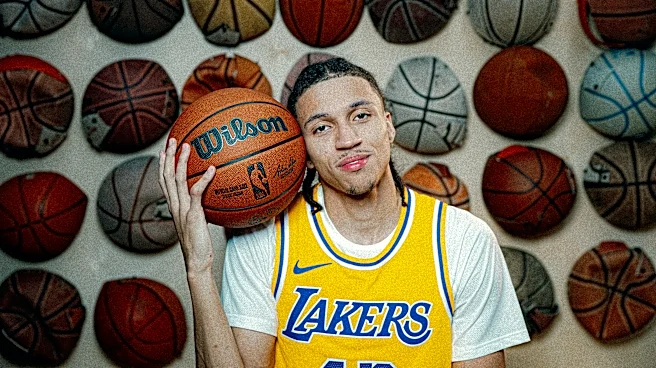
1. The not so sixth man: Jaime Jaquez Jr.
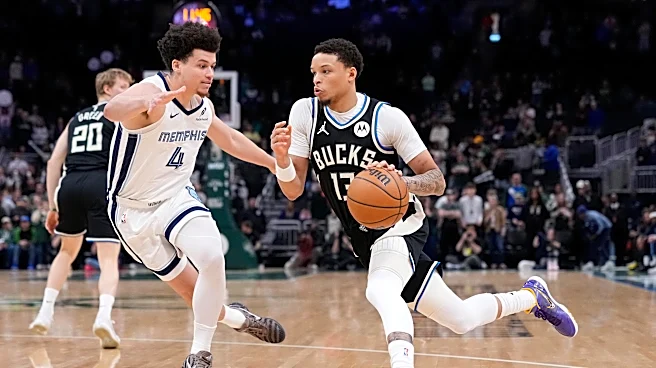
Oxymoronically, last year’s runner-up in Sixth Man of the Year voting, Jaime Jaquez Jr., likely has first dibs on the starting spot. A Jack of all trades, master of none, Jaquez fits as a starter because of his complementary skills.
First, he’s terrific in a playmaking role (4.7 APG, 24% assist percentage), which bodes well for pairing with natural born scorers—and likely starting backcourt—Ryan Rollins and Tyler Herro, who are both effective playmakers for others but not first-rate distributors, not to mention bigs Myles Turner and Kel’el Ware, who both rely on others to set them up (87.3% and 76.2% of their made field goals were assisted, respectively).
Second, he thrives in the paint. With shooters likely all around in the starting lineup, someone has to collapse the defence—and there’s a massive, Giannis-sized hole to fill in that regard. While Jaquez can’t do that alone, he did lead the Heat in points in the paint last season (9.9 per game), a number that’s more than two points higher than any non-Giannis Buck (Kevin Porter Jr. ranked second for the Bucks last year at 7.6 per game).
If you need an action hero, Juan Wick is your guy. If not, go on to OPTION 2.
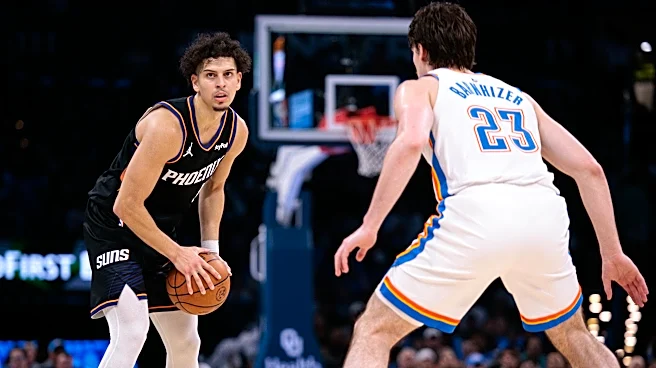
2. The trade deadline darling: Ousmane Dieng
Prior to the offseason, Ousmane Dieng was the young piece the Bucks were hitching their wagon to. Okay, maybe that’s hyperbole, but at the very least he was an intriguing option who, down the stretch, showed promise of something more. He twice hit five threes in a game, twice dished out double-digit assists, and thrice collected double-digit rebounds. At his best—think his showings against the Oklahoma City Thunder, Houston Rockets, and even the Phoenix Suns—Dieng showcased a versatility not too dissimilar to Jaquez.
In his first 17 games as a Buck, Dieng shot 43% from downtown (on 4.4 attempts per game). In his last 13 games, he averaged 5.5 APG as a primary playmaker. Against the Rockets, he dominated in downhill action as a pick and roll ballhandler, getting into and finishing in the paint. Against the Suns, he guarded down, playing the type of wing defence that wins in the postseason, locking up perennial All-Star Devin Booker. In all, Dieng can do it all, but so far it’s mostly been in snippets. Is he ready to take the next step?
If you want your Ous to really be loose, choose Dieng. If not, run to OPTION 3.
3. The force-feed me neophyte: Nate Ament
Ament is still super early in his narrative arc, so it’s highly unlikely he starts this season, let alone from the jump. But that doesn’t mean he couldn’t—or shouldn’t. For one, Ament has the size height no one else can offer at the position. At 6’10” he towers over Jaquez, let alone the guys below him on this list. In fact, he’s the equal fourth-tallest Buck, shorter than only Kel’el Ware, Myles Turner, and Bogoljub Markovic. This height and length—his wingspan is 7-foot—makes him an ideal cog in a Taylor Jenkins machine that figures to get after it defensively. But it will also prove useful on the offensive end too, whether that’s by getting to (and hopefully finishing at) the rim, or by augmenting the horizontal spacing his shooting provides with vertical spacing too (i.e., it’s harder to close out on taller shooters).
Of course, the real argument for Ament as a starter is to try and accelerate his development; forget the narrative exposition, begin in medias res. In addition to force-feeding him calories in the kitchen and weights in the gym, force-feeding him minutes on the court is pivotal if he has any chance at becoming the player his potential teases. Plus, as a starter he’d be better insulated by the best the Bucks have to offer, enabling him to focus on a narrowed set of responsibilities. Think of it as a JOB start—that’s Johnny O’Bryant for those who forgot—only on steroids (not literally).
If starting Ament doesn’t raise your eyebrows, choose him. If it does, turn to OPTION 4.
4. The too small small forwards: Tyler Herro, Brayden Burries, or Gary Trent Jr.
Natural threes aside, there is the potential the Bucks roll with the dreaded three-guard lineup. “Why!?” you may be asking screaming. Well, unlike last year, when the Bucks simply didn’t have enough options to play a traditional small forward, this year it comes down to math: too many quality guards and not enough minutes to go around. So, in the event that all the guards remain on the roster and show out in training camp, Jenkins might have his hand forced.
As I wrote in the shooting guard chapter of this series, Tyler Herro played a not-so-insignificant 20% of his minutes at small forward last season. And in lineups that featured Bam Adebayo, Andrew Wiggins, Herro, Norman Powell, and Davion Mitchell, where Herro was the nominal three—Powell recorded just 4% of his playing time at small forward; Mitchell had 0%—the Heat achieved a net rating of +5.2.
Should Herro remain in the backcourt, Brayden Burries could even slot in as a small-ball three. Yes, he’s short for the position, but at 215 lbs he’s already heavier than every non-big on the roster (besides Jaquez)—and, for that matter, Nate Ament and Bogoljub Markovic, too. Built like a brick sh*thouse, Burries is certainly strong enough to guard up and this would be the easiest way to solve his minutes paradox while still playing the veteran guards (or even Kasparas Jakučionis).
Before I close, Gary Trent Jr. could fill this spot too (yes, you read that right). After all, he played 61% of his minutes at small forward last season and 47% the year prior. And, yes, I am aware of all the free throw rate and rebounding graphics going around that highlight the ineptitude of such lineups. Still, Trent is back for a the foreseeable future and who knows what else that handshake meant he can be a positively impactful player. Can’t he?
QUICK! Make a decision, or you’ll be trapped in small forward purgatory! Choose Herro, Burries, or Trent if your name is Doc and/or you’re a sucker for a three-guard lineup. Otherwise, pull a rabbit out of your hat and tell us who it is in the comments.
THE END