


The Colorado Rockies are trying to reinvent themselves for 2026. With a new front office and coaching staff in place, the intention is to come up with a way to be successful in Colorado. Obviously, pitching is the team’s biggest area of focus, and President of Baseball Operations Paul DePodesta has mentioned several times that anything is on the table. Successful pitching at Coors Field is the elusive mystery that the team has been trying to figure out for decades, and they are perhaps once again
looking to be innovative and experimental in the coming season.
The last time the Rockies truly tried to be innovative/creative when it came to pitching was back in 2012 with their four-man rotation and piggyback system dubbed “Project 5182.” Perhaps the new top brass could revisit this experiment and revise it for the modern game.
A history refresher
For those who aren’t familiar with this piece of Rockies history, here is a refresher. Dealing with a myriad of injuries to the starting rotation and a general lack of success in an abysmal 2012 season, general manager Dan O’Dowd decided it was time to get creative and implement an idea on June 19, 2012, that had been kicked around for a few years.
The idea was that the Rockies would utilize a four-man rotation with a limit of 75 pitches. They would then utilize one of three relievers designated as the piggyback to eat up a couple of innings, hopefully through the seventh, with the hope of closing the game out with traditional bullpen usage in the final innings.
The hope was to limit workload on pitchers so they could pitch on a shorter schedule and also mitigate the drastic effects of altitude while also limiting exposure to facing an opposing lineup a third time through. On paper, if everything worked out, the Rockies could try to limit bad outings and give the offense a better chance to win games.
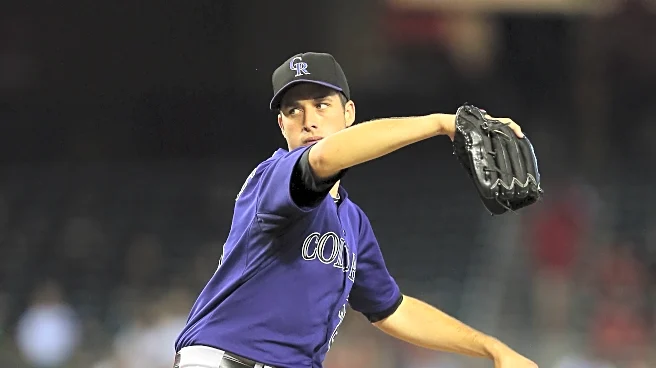
During the experiment, the four-man rotation primarily consisted of Jeff Francis, Josh Outman, Christian Friedrich, and Alex White, with appearances from Drew Pomeranz and Tyler Chatwood. The three primary piggyback relievers were Josh Roenicke, Adam Ottavino, and Carlos Torres. Guillermo Moscoso also saw some action as a piggyback from time to time.
So, did it work?
Well, not really.
Before it began, Rockies starters posted a historically horrific 6.28 ERA. After that, the starters managed a 6.06 ERA in the two months of starts. Francis seemed to be the most fruitful, posting a 5.20 ERA and regularly going five innings within the parameters of the pitch-count. The rest of the rotation members weren’t as productive.
Meanwhile, the bullpen did fairly well that entire season. Roenicke proved most effective as a piggyback and late-inning reliever during that stretch, posting a 3.13 ERA in 31 2/3 innings. Unfortunately, the efforts of the few didn’t outweigh the flaws of the many.
Once a couple of starters returned from the injured list on August 21 that season, the idea was tabled, and a traditional five-man was mostly used for the rest of the year. The experiment was a failure, and though the Rockies had intended to use it again in 2013, the resignation of manager Jim Tracy over the concept may have forced them to go back to conventional means.
The constant rotation and non-traditional roles disrupted the pitchers’ routines, leading to poor performance, further injuries, and general ineffectiveness. The concept was scorned by the league and the players themselves. This was a time, of course, when starting pitchers were expected to work deeper into games, and the idea of a strict 75-pitch limit felt like a shackle. The prospects of using the system further would have forced the Rockies to utilize ambitious young starters will to take a crack at it, while alienating better-performing players. Troy Renck of The Denver Post had noted that it would also require the Rockies to implement the strategy throughout the organization, which could have detrimental effects on the development process.
A return to the idea?
As it turns out, however, O’Dowd may have been ahead of his time with the piggyback system in a way. Over the years and with the rise of analytics, strategies like using “openers” and committing to bullpen days have become quite commonplace in the modern game of baseball.
Teams understand now that limiting exposure, particularly of a starter, often gives their team a better chance at winning a game. Data shows that a starting pitcher is much less effective a third time through the lineup, giving credit to the rise and importance of bullpen arms. So while O’Dowd’s 2012 intentions were well-meaning, the implementation wasn’t quite figured out yet until teams like the Tampa Bay Rays perfected the model of openers and bulk relievers.
Now, since 2018, opener usage has seen a stark decline. Usage trends were headed downward in 2025 as teams seemed to instead mold the model into general bullpen days to garner extra rest for starters during a long road trip or other means of need. The Rays had turned to openers in the past out of necessity because of a lack of pitching depth and numerous pitchers better deployed in shorter outings.
That second part sounds like the Rockies headed into 2026. A common word that seems to have been coming from DePodesta this offseason is “bulk reliever.” Now, the bulk man is just another fancy name for a long reliever, but is very much akin to the piggyback of 2012. Rule-5 pick RJ Petit had been described as being viewed as a bulk reliever heading into 2026. Waiver claim Keegan Thompson could be a swing man capable of multiple innings as could other depth pick-ups this offseason.
The Rockies’ problems in the past stem from the fact that they had to turn to pitchers to cover innings out of desperation rather than utilizing them for outs. Bullpen usage is most effective for a manager when he can use relievers when he wants to, not when he has to.
Should the Rockies go back to a form of the 2012 piggyback that has now evolved into the usage of openers? I say it should be something that remains on the table, but on a case-by-case basis. Perhaps Chase Dollander could limit his Coors Field exposure and work in tandem with a bulk reliever until he can find some comfort at home. Perhaps the young starters who struggled in the first inning could follow an opener like Antonio Senzatela did on June 6, 2025, where he then tossed four shutout innings.
The Rockies certainly need more out of their starting rotation as I wrote last week, but a planned usage of openers on a strict pitch limit followed by a bulk reliever could be the necessary change of pace to help a team solve its pitching woes, especially at home. It doesn’t have to be used all the time, but adding it into the tool bag a little more often wouldn’t be a bad idea if pitchers buy into the idea. Jimmy Herget had already offered to be a starter near the end of last season. Could that eagerness be channeled into serving as a multi-inning opener from time to time?
2012 was a disaster of a season, but the new bosses in Colorado could dig out the old “Project 5182” and adapt it to the modern trends and strategies for 2026. This year is all about experimentation, so everything can and should be tried out at some point. Who knows, maybe it just might work.
Like the Rox, McCarthy is ready for a turnaround | MLB.com
2025 was a rough year for the Rockies, but players across the league had rough years and new outfielder Jake McCarthy was among them. He admits he tried to tap into some more slugging last season and it threw off a lot of his game. He realizes he needs to go back to what made him successful in the past and is prepared to try and do that with the new opportunity in Colorado.
Affected by Altitude Episode 195: The Rockies Did Some Stuff! | Rocky Mountain Rooftop
On this week’s podcast episode, Evan Lang and I talk about the Rockies roster moves from the previous weeks and what it could mean for the 2026 roster.
Cardinals Trade Nolan Arenado To Diamondbacks | MLB Trade Rumors
The trade saga has finally ended between St. Louis and Nolan Arenado. After nixing a trade to Houston last offseason, Arenado agreed to a trade to Arizona on Tuesday. So, the Rockies fan will see him a little more often these next two seasons, but they at least aren’t having to pay him anymore.
Please keep in mind our Purple Row Community Guidelines when you’re commenting. Thanks!