

Training camp.
Why is it called training camp? The reason is to get players back in shape: to “train” their bodies. So, they lived a full life away from the game and ate what they wanted. Back in the day, players and coaches had offseason jobs. When Vince Lombardi was the offensive coordinator with the New York Football Giants, he worked as an executive in a New York bank. He almost remained there.
RELATED: ROOKIE AND VETERAN REPORT DATES
QB Y.A.Tittle had an insurance business. Even though he is no
longer with us, his agency is still going strong. Another quarterback, Frank Ryan of the Cleveland Browns, worked as an assistant professor teaching advanced math at Case Western Reserve University. Roger Staubach sold real estate. Cleveland’s own Jim Brown became a marketing representative for Pepsi-Cola and was an actor in movies. Lou “the Toe” Groza sold insurance.
The reason they had desirable jobs was the fact that pro football paid better than most occupations during the season, but did not carry an athlete for all 12 months. Both the Green Bay Packers and Decatur Staleys (later renamed the Chicago Bears) began as company teams. The allure to play for one of these two clubs was that guys could play football and get paid, and after the season was over were hired to work in the plant.
Today, player contracts contain workout bonuses. Mostly, athletes will work out during the offseason, and so when they show up for training camp, they are already in shape. Not all, of course, but the percentages are pretty high.
If a player spent his offseason working for his father’s tire store, most likely he showed up in shape and was already used to the humidity and heat. If he was a substitute school teacher, chances are he needed to be pushed, and that is what training camp did.
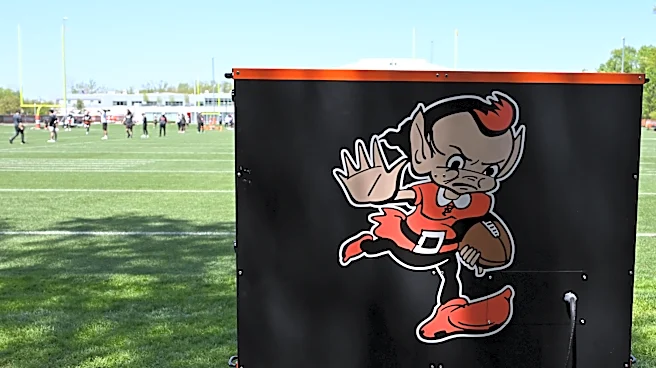
The Browns are set to open training camp at the Browns Training Facility in Berea, Ohio on July 22 for rookies and July 28 for the veterans. If you haven’t seen this magnificent complex, it is quite a gem for the players and coaches.
Having such a nice place for training camp wasn’t always the case. In fact, players were isolated from the rest of the universe, including their families. In the past, camp was held at a college campus that did not have any students yet, being the summer months. Friends, wives, relatives, church members, and neighbors were only able to come out on certain days and watch practices or able to visit with their player or coach.
The remainder of the days of the training camp calendar were reserved for the Browns coaching staff. The remoteness allowed the players to do two things: concentrate on football, and make the final roster.
For the longest time, every NFL club found a college campus for training camp. And it was usually the small to medium colleges. Each school had a football team, so there were several practice fields readily available, plus dorm rooms for players and coaches, rooms for meetings, a cafeteria for meals, an area for nutritionists and medical, saunas/cold baths, showers, weight rooms, running track, and the atmosphere was perfect for isolation without any distractions or the comforts of home. Players were basically stuck for weeks on end in college dorm rooms.
Up until 1992, the Browns opened training camp somewhere else. From their inception in 1946 up until 1991, Cleveland held training camp at area colleges and universities.
Browns training camp locations:
- 1946-1951: Bowling Green State University (Bowling Green, Ohio)
- 1952-1974: Hiram College (Hiram, Ohio)
- 1975-1981: Kent State University (Kent, Ohio)
- 1982-1991: Lakeland Community College (Kirkland, Ohio)
- 1992-1995, 1999-present: Browns Training Facility (Berea, Ohio)
In the case of the Cleveland Browns being formed, the process began in 1945. The All-America Football Conference (AAFC) was a new pro football league that would become an NFL-rival league. It awarded a franchise to Mickey McBride, who owned several taxi cab companies in Cleveland. He decided to place his team in the City of Cleveland.
At the same time, the Cleveland Rams of the NFL were still based in Cleveland. Their owner, Dan Reeves, had for years wanted to relocate the Rams to Los Angeles, but the other NFL owners voted him down each time because of the travel costs. Beginning in 1946, cross-country air travel was now available, and when Reeves saw a rival team moving in, the NFL owners voted to allow him to relocate to Southern California.
Here is a capsule of each Browns training camp site:
United States Military Bases
Paul Brown was a lieutenant in the U.S. Navy. In his last season as a head coach, he had guided Ohio State to a National Championship. His job was waiting for him.
McBride approached Brown about the AAFC Cleveland head coaching position. What intrigued Brown was the fact that he could run his own ship. Players didn’t have to worry about finals, studying, or the rigors of campus life. They could concentrate solely on the game.
Coach Brown was still in the Navy drawing a paycheck when he accepted the AAFC Cleveland head coaching position. At the same time, his pro football club was in its infancy without any players, front office, assistant coaches, equipment, colors, uniforms, or even a team name. And he was being paid for that, too.
Since Coach Brown had coached at Massillon (Ohio) High School, Ohio State University (OSU), and the Great Lakes Navy team that played major college teams, he knew of his own former players. Plus, he had the knowledge of every player that his teams had played against and what their skill levels were. This was a huge advantage; not to mention the fact that he was an officer in the military and had access to information of former NFL players who had to leave their teams and enter the war effort.
Plus, there were scores of former college players that would still be playing if it wasn’t for being inserted into the war effort. Coach Brown knew where each athlete was currently stationed, which branch they were in, and how to contact them.
Coach Brown compiled a list of targeted athletes. Unknown to most, a lot of Browns’ players were signed while still in the military (just as Brown had been) and paid monthly retainers with AAFC Cleveland. Coach Brown sent out in the standard military mail to prospective players a personal letter, an offer of $250 per month until the war ceased, a signing bonus of $2,500, and when they arrived at Cleveland’s training camp, a $7,500 salary to play professional football with the new AAFC Cleveland ballclub.

Coach Brown contacted Otto Graham, who was stationed in the Navy’s V-12 flying program. OT Lou Groza and OG Lin Houston had played for the freshman team while Brown was head coach at OSU. The following year, both players enlisted and missed their final three college years and were now in the Philippines when they were contacted. After signing, Groza, also a kicker, was sent two footballs in the mail to begin practicing.
WR Dante Lavelli had fought in the Battle of the Bulge and was serving in the 28th Infantry Division when he signed. WR Mac Speedie was seen by Coach Brown when he was playing for a Marine Corps team. DB Al Akins was serving in the Pacific when he got Brown’s letter. Coach found OG Ed Ulinski, whom he remembered playing at Marshall University and now was in the Air Force. In all, 26 of the players signed to the 36-man roster had played in the NFL or had been drafted by an NFL club before enlisting in the military.
Each player signed while still in the military was given detailed exercise instructions with daily running routine procedures to follow. This essentially became the Browns’ first unofficial training camp.
Bowling Green State University: 1946-1951
Once World War II was over and the Browns’ coaches and players could finally get together as a formal team, the first official training camp was held in Bowling Green, Ohio at Bowling Green State University. Coach Brown felt at home here because of the University’s V-5 and V-12 Navy training programs. The school had also just built 15 metal buildings to house students close to their football stadium, which was a perfect setup.

The student population hovered around the neighborhood of 4,000-5,000 and was mostly vacant during the summer months during the period that training camp would be held, which was perfect conditions for classroom sessions. Into the 1960s, numerous new buildings were constructed on the campus, which brought forward more modern facilities for the Browns.
The campus sits just about two hours west of Cleveland and was considered a lucky charm for the team as players loved going there. Dorms and other buildings were all nice with then-modern amenities. While training here, the Browns won four AAFC titles, plus the 1950 NFL Championship, followed by their very first defeat in a league title game with a 24-17 loss to Los Angeles in the 1951 NFL Championship Game.
Key players during this time included Marion Motley, Bill Willis, Frank Gatski, Dub Jones, Ara Parseghian, Ollie Cline, Cliff Lewis, Abe Gibron, as well as the aforementioned Graham, Groza, Speedie and Lavelli.
Hiram College: 1952-1974
If you are an older Browns fan, this is the training camp you remember. The team back then was very fan-friendly and had no issues with folks coming out and watching practices. Which, by the way, were free to attend. Fans also had the opportunity to meet and talk to players.
Located just 41 miles east of Cleveland, Hiram College provided fans a quick trip to watch practice sessions. This would become the longest tenured site for the Browns to hold training camp. Coach Brown would spend 11 years here, followed by head coaches Blanton Collier and then Nick Skorich.
Hiram was strictly a country town with only the college to make it seem larger than it was. The practice fields at the college seemed to be mostly dust with only a handful of bleachers for spectators. After some practices, most fans had access to the players with a few photo opps with a Coronet Button camera or one made by Kodak.
During this period, the Browns won three NFL titles, one coached by Blanton, and were the runner-up in another six championship games. The franchise also captured 12 division crowns while training at Hiram.
Otto Graham would retire after the 1955 season, in which Cleveland won their second championship in a row and had played in six consecutive title games, winning three.

Other key players during this time included Jim Brown, Milt Plum, Chuck Noll, Mike McCormack, Bob Gain, Walt Michaels, Bobby McNeil, Ray Renfro, Frank Ryan, Paul Warfield, Gary Collins, Dick Modzelewski, Bill Glass, Galen Fiss, Monte Clark, Ernie Green and Vince Costello.
Kent State: 1975-1981
Located 37 miles southeast of Cleveland in Kent, Ohio, this 866-acre campus is designed for undergraduate degree programs with a strong teaching-training lineup. When Browns’ owner Art Modell hired Forrest Gregg as head coach, Cleveland began using this location, followed by the next head coach, Sam Rutigliano.
Popular players during this time period include Mike Phipps, Jerry Sherk, Clarence Scoot, Don Cockroft, Greg Pruitt, Reggie Rucker, Brian Sipe, Paul Warfield, Gerald Irons, Thom Darden, Barry Darrow, Mike Pruitt, Ozzie Newsome, Lyle Alzado, Calvin Hill, Clay Matthews, Joe DeLamielleure, Charles White, Hanford Dixon, and Cody Risien.
Lakeland Community College: 1982-1991

Modell was looking for a new college setting after leaving Kent State, and several areas came to mind, such as Columbus or Akron. Ultimately, Lakeland Community College in Kirkland, Ohio offered the best accommodations in terms of housing, practice, and meeting facilities. Their effort to get the Browns was really a community effort with the city and school partnering up to make it extremely attractive for the club in general as well as for the fan experience.
Lakeland had 400 acres and was a school with only about 5,000 students at the time. This was a time period that was the end of the “Kardiac Kids” era of Cleveland football; at training camp, the atmosphere was like a festival for the over 10,000 daily spectators.
This was also the birthplace of the franchise’s usage of the moniker “Dawgs” attached to the defense, which later relocated to the east end zone of Memorial Stadium in what would be coined the “Dawg Pound.”
Lakeland was also the Bernie Kosar years. Head coaches included Rutigliano, Marty Schottenheimer, Bud Carson, and the first year of Bill Belichick’s short reign.
Cleveland Browns Training and Administrative Complex: 1991-present

When Bill Belichick took over as head coach in 1991, the Browns began what would become a trend in the NFL with clubs having their own facilities in which they would have everything they need at their fingertips all year round. The training complex is located in Berea, Ohio, on the campus of Baldwin-Wallace College. The City of Berea built the complex in 1991 and still owns the facility.
In past training camps, there would be a mountain of equipment, staff, apparel, trainers, front office personnel, and medical equipment to crate up and relocate. Now, everything was in-house and never had to be moved, packed, and re-packed.
The main building has gone through changes in 1999 and 2009. In 2013, the city went through $3 million in improvements. The city council approved a new agreement in 2015 to contribute $4.6 million on gradual annual upgrades through the year 2028. This was the same time period when the City of Columbus was making a push to have the Browns relocate their training camp.
In June of 2025, the Browns broke ground on this expansion project, which is now called the “CrossCountry Mortgage Campus.” The current building is 37,000 square feet.