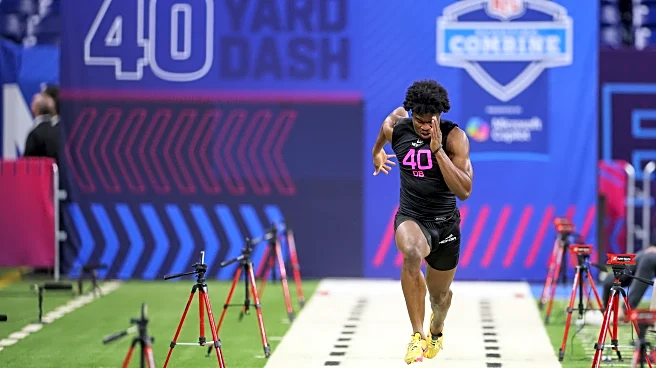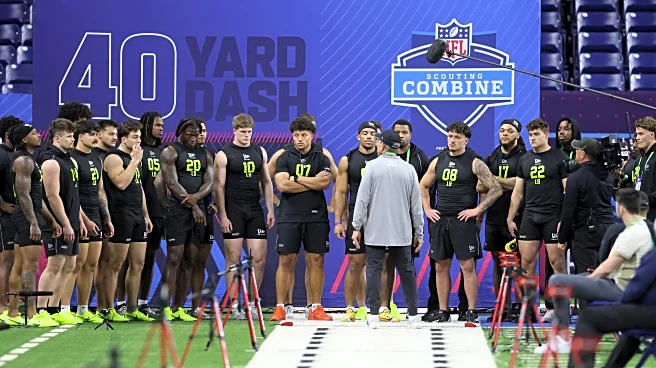

Thursday was the start of the on-field testing drills for this year’s NFL combine, a day that showcased the upcoming draft class’ front seven defenders (interior defensive linemen, edge defenders and linebackers). If you missed the action…you didn’t actually miss much.
Why’s that? Not many of them actually tested.
Let’s take a look at Day 1’s participation rate and compare it to previous combines.
Participation Rate — Drill
- 40-yard dash: 47 of 92 players participated (51 percent)
- Vertical Jump: 47 of 92 (51 percent)
- Broad Jump: 44 of 92 (48 percent)
- Short Shuttle: 18 of 92 (20 percent)
- 3 Cone: 12 of 92 (13 percent)
- Overall: 168 of 460 opportunities (37 percent)
The 92 front seven defenders were scheduled to do five drills at the combine yesterday, with their bench
press day being today. Over those five drills (460 total drill opportunities for this crop), there was a 37 percent participation rate (168 opportunities actually taken), based on NFL.com’s results page.
Last year, 102 front seven players participated at a 44 percent rate over the same five drills. So 2026 is just another year of continued drop-off for the combine, an 18 percent drop in participation relative to the 2025 rate. From a raw numbers perspective, the front seven defenders did 58 more drills last year than this class did. The drills per player rate dropped from 2.2 in 2025 to just 1.8 in 2026.
The last “pre-Covid” combine was actually in 2020, as the NFL was able to thread the needle before travel restrictions started to hit. That year, there was a 63 percent drill participation rate among front seven defenders. The drills with the lowest rate of participation were the agility drills (the short shuttle and three cone), which still saw 50 percent of the participants run. Now, those drills are at 20 (shuttle) and 13 (cone) percent. Woof.
Overall, drill participation among these position groups is 42 percent lower in 2026 than it was in the last pre-pandemic combine.
Long-term, participation has significantly dropped. Year to year, participation has also significantly dropped. When will it stop? It’s anyone’s guess.
Top-100 Players — Didn’t Run 40s
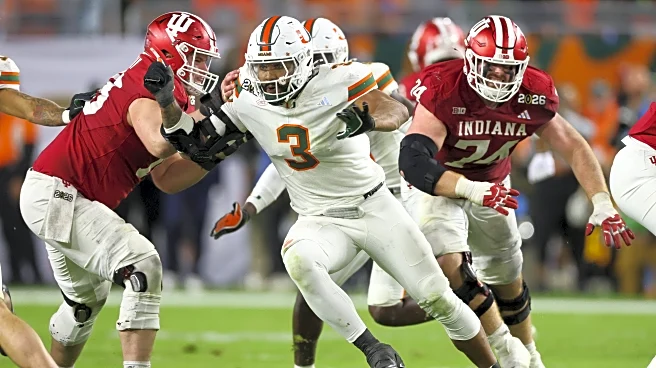
- #3: Rueben Bain, EDGE, Miami
- #15: Keldric Faulk, EDGE, Auburn
- #17: Peter Woods, DL, Clemson
- #24: Akheem Mesidor, EDGE, Miami
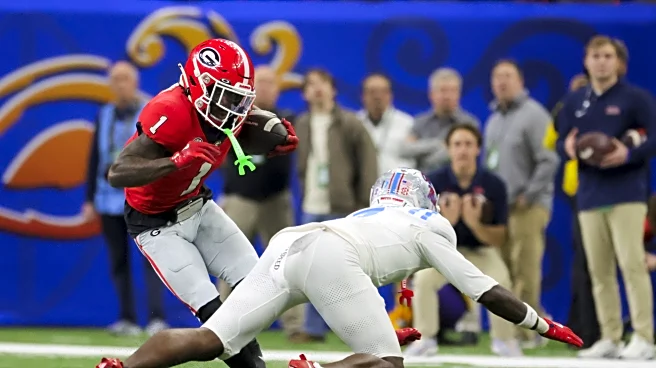
- #28: C.J. Allen, LB, Georgia
- #30: Kayden McDonald, Ohio State
- #37: Zion Young, Missouri
- #45: Christen Miller, Georgia
- #55: Gabe Jacas, Illinois
- #63: Josiah Trotter, Missouri
- #65: Derrick Moore, Michigan
- #69: Joshua Josephs, Tennessee
- #73: Domonique Orange, Iowa State
- #75: Darrell Jackson Jr., Florida State
- #92: Deontae Lawson, Alabama
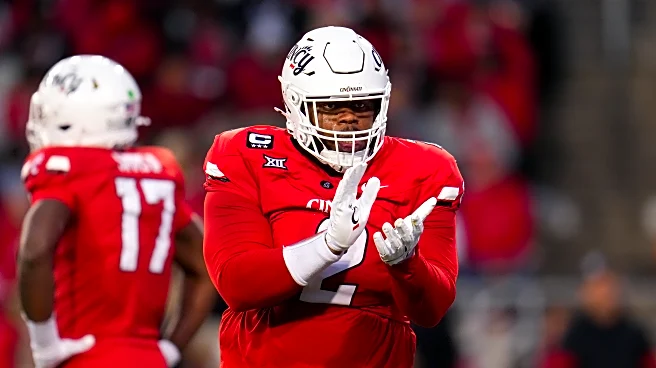
- #93: Dontay Corleone, Cincinnati
The drill participation doesn’t really lean one way or another based on draft position, either. Among the 32 projected top-100 prospects in this group, per the consensus draft board, 50 percent of them ran the 40-yard dash, which holds up compared to the overall rate of 51 percent for this specific drill. Three of the top four players on Thursday, #2 Arvell Reese, #5 David Bailey and #12 Sonny Styles, even ran. You can’t just say “Well, the top guys aren’t running.” It’s sort of indiscriminatory who is or isn’t running. It’s both projected first-round picks and projected undrafted free agents who are saying they’d rather run at their pro days, if they run at all.
The Combine’s Overarching Problems
You’ve probably long heard that Green Bay Packers head coach Matt LaFleur doesn’t attend the combine, and hasn’t for years, but that’s a relatively new phenomenon for NFL head coaches, which started with the Los Angeles Rams’ Sean McVay and the San Francisco 49ers’ Kyle Shanahan.
This year, only 20 head coaches attended the combine, based on the league’s press conference interview schedule. Last year, that number was 26, meaning the absent head coaches have now doubled in one year for what used to be a can’t-miss event for the league. That’s not great for the combine!
On top of that, you have the credibility problem. You might have seen ESPN’s Adam Schefter tweet this out and thought, “Wow, Schefty is doing some PR for Bain’s agent,” but this was a real problem for the combine last season, based on conversations I’ve had with people in the scouting industry.
In 2025, it was common for players to have their arm length measured at one length at all-star games, only for it to drop an inch or so at the combine and then measure in back at their all-star game length at pro days. The event took a pretty big credibility hit for this. Now, apparently, teams are measuring arm length themselves (presumably in meetings?) if you’re to believe Schefter’s tweet.
Then there’s the next set of problems: Do these numbers even matter? Packers general manager Brian Gutekunst said this week that the team doesn’t really look too much into 40-yard times anymore because they already have access to players’ GPS data from college games.
So if teams value the combine less, to the point where nearly half of the league’s head coaches don’t show up, and players value it less, as nearly two-thirds of them skip a given drill…why exactly should fans care about this event?
Because of how few defensive tackles (the first group up on Thursday) ran the 40-yard dash, the broadcast crew for the combine nervously commented on how quickly it went by. Here’s their problem: The broadcast still has a full five-hour window to fill, even with the lack of participants. If you watched on Thursday, you probably noticed a considerable uptick in the booth and on-field sets filling up airtime.
The combine has always been more about the non-TV content (medicals, interviews with prospects, tampering with upcoming free agents’ representatives) than the on-field drills for the league, but selling the combine as a TV product for fans is finally starting to become an actual problem. Over four days, the NFL is still selling the same 21 hours of live combine coverage, but now it’s coming with 42 percent less action.
This could get real Pro Bowl really quickly, if the league doesn’t fix its problem. Fans throw the combine on to watch measured events (runs or jumps), not the wave drill, gauntlet or a booth segment. At some point, fans are going to stop turning on the combine if the measured events make up so little of the NFL’s combine broadcast.