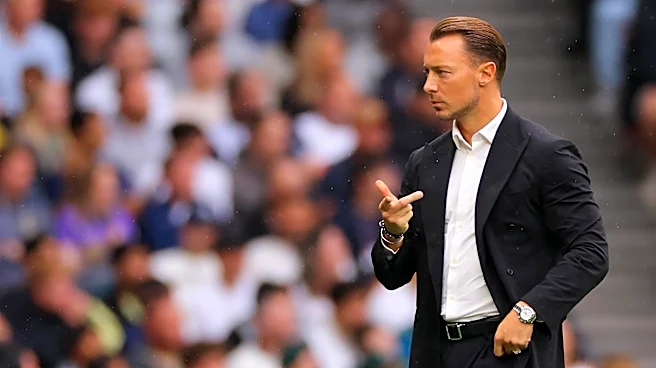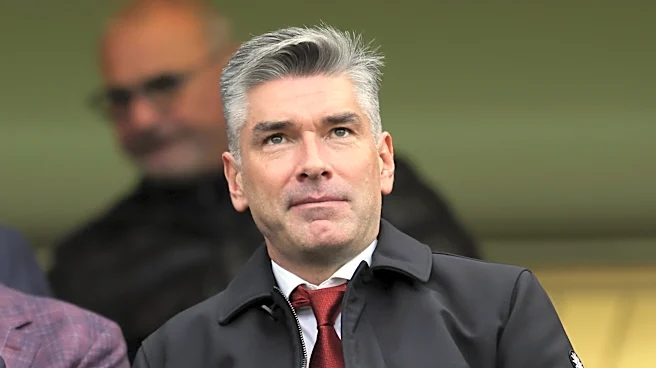



Three years ago, Richard Hughes was brought along by a returning Michael Edwards to be the club’s sporting director with the goal of overseeing the transition to a new era at Liverpool. Jürgen Klopp was leaving, but he was leaving a title-calibre squad behind for his successors to use as a foundation for what was expected to be a bright new era of titles and trophis for the Reds, and hopes were high.
Today, Richard Hughes officially departs the club, popping the parachute and escaping to a job in the Saudi
Pro League with Al-Hilal. There is a strong case that he is the worst front-facing appointment Fenway Sports Group ever made as owners of the club. Most Liverpool fans will be celebrating his departure.
Transitions of the sort Hughes was charged with overseeing are always hard, but at the time everyone agreed Klopp had done something unique by spending an extra year at the club to oversee the signing of a new midfield and ensuring whoever came next would have the best possible chances of success. And Edwards, Hughes, and hand-picked head coach Arne Slot had just that.
They had success. At least on the pitch with the squad Klopp gifted to them, winning the league in that first year. As head coach, Slot will always deserve a great deal of credit and praise for actually guiding of them to that.
The victory lap Hughes and Edwards did in the press following that tile win, though, was always a little ugly. Edwards had spent much of the Klopp era in the background helping to guide recruitment and build one of the greatest sides in the history of the Premier League, but Klopp had always received the lion’s share of the credit.
The reaction felt like people trying to claw back something they felt was owed. It felt a little jealous. And it meant that Hughes was really going to have to deliver in his second summer.
In his first summer, the total of Hughes’ transfer business had been to sign Federico Chiesa (who hasn’t been included in this year’s Champions League squad), sign Giorgi Mamardashvili (who arrived with question marks about his ability on the ball and whose ability on the ball has in fact now largely ruled him out as a successor to Alisson Becker), and failed to sign Martin Zubimendi.
In the second summer, he sold off everything that wasn’t nailed down to fund a flashy pair signings that a year on still haven’t proven their worth. He sold off homegrown talent. He sold off key starters and didn’t replace them. He allowed contracts to tick down.
He took a balanced, effective squad that had just won the title and created something heavy on star power but light on depth, lacking balance, and with glaring positional issues. Arne Slot was sacked 12 months later. In part that was because he under-delivered with the squad he had. Yet it was also clear the squad he had was worse than the year before and that Hughes had made his job harder than it should have been.
Liverpool ended Hughes’ third and now final summer in charge with four left wingers and no right wingers, no player who could be considered an effective midfield destroyer, and with the worst fullback situation the club has had going back a decade. Regarding all of these issues, Liverpool looked better in year two.
As was the case last summer, Hughes got his star signing across the line. But the team as a whole is worse in year three than it was in year two and it was worse in year two than year one and he’s spent around £700M in signings to get Liverpool to this point.
When FSG’s bad appointments are talked about, early sporting director Damien Comolli will often be mentioned. Comolli, though, didn’t spend £700M over three summers to make Liverpool worse. He didn’t spend £700M over three summers to turn a title-calibre squad he’d been gifted into a lopsided, shallow, star-heavy mess.
Today Richard Hughes isn’t Liverpool’s sporting director any more. In a word where opportunities and rewards actually got dolled out based on talent, results, and meritocracy, his disastrous management would rule him out as a sporting director for any top club. That he’s managed to turn his failures into a lucrative Saudi payday should raise eyebrows and curl lips.
From a Liverpool point of view, though, it’s worth celebrating. Nobody in a management position at the club has ever been given the things Hughes was given—the squad he started with, the financial backing, the free reign to make changes. And he has been a disaster. Pop the bubbly. Then hope whoever comes next is better at his job.