





At the risk of beating a dead horse, the Dodgers went to the White House again on July 23. Without delving into the visit itself, one item from that encounter is relevant to this essay. Per Adam Kilgore of The Athletic:
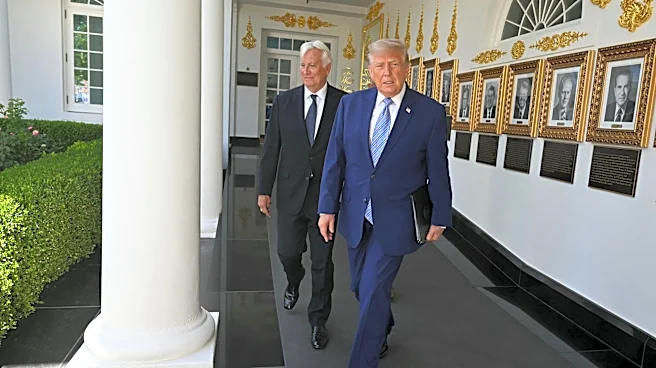
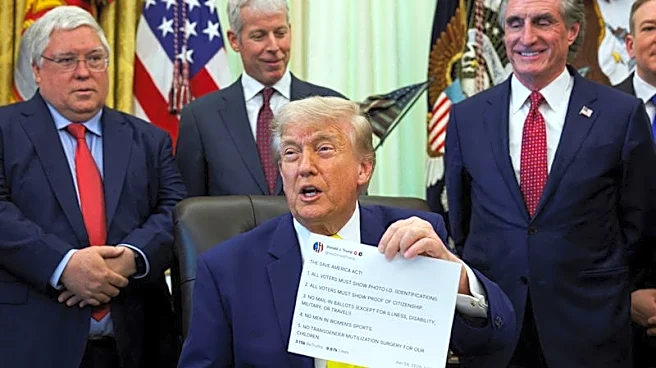
The Dodgers visited the White House for the second consecutive year on Thursday afternoon, standing behind President Donald Trump during the traditional trip for World Series champions. Owner Mark Walter and Manager Dave Roberts walked with Trump from the Oval Office as “Hail to the Chief”
played over the loudspeakers. Both thanked Trump, offering their gratitude for his hosting them. At the end of the ceremony, Walter presented Trump with a World Series ring engraved with the president’s name.
“Do I have to report this?” Trump asked, laughing. “I don’t want to report this.”
[Emphasis added.]

Footage showed that President Trump immediately pocketed the ring. CNN reported that the presented ring was a replica, and therein lies the unanswered question. The Dodgers were auctioning an actual, customizable World Series ring that ultimately sold for over $110,000. Replica 2025 World Series rings go for under $30 on eBay.
Considering all the ink spilled, it would be pretty funny to get worked up over a $30 replica ring. The alternative is that, while the president can receive such an expensive gift, he must disclose it on federal disclosure forms to the Office of Government Ethics.
This story was originally going to end here, before news of ongoing federal activity as to Dodgers’ owner Mark Walter broke.
The Federal Investigations
The implications of the gift look awkward, at best, in timing, given the ongoing federal investigations into TWG Global, the holding company of Guggenheim Partners, where Walter is CEO, by both the U.S. Attorney for the Southern District of New York and the Securities and Exchange Commission.
We have previously covered Guggenheim Partners and TWG Global in previous stories at True Blue LA.
Per Kristie Ackert of USA Today:
U.S. prosecutors in Manhattan are investigating potential financial improprieties at two insurance companies controlled by Mark Walter and at Guggenheim Partners, where he is chief executive officer, Bloomberg reported [July 20, 2026], citing people with knowledge of the matter and regulatory filings. The Securities and Exchange Commission is running a parallel investigation.
No one has been charged. Walter has not been accused of wrongdoing, and probes like this can end without charges or enforcement actions. His holding company, TWG Global, said in a statement it is “aware of and cooperating with the investigation.”
But the investigation goes to the heart of how Walter built the fortune that bought the Dodgers, the Lakers and the WNBA’s Sparks, financed the entire PWHL and pieces of Chelsea FC and the Cadillac Formula 1 team.
Two companies sit at the center of the investigation: Delaware Life Insurance Co. and Clear Spring Life and Annuity Co. Together they manage about $85 billion, much of it money that regular people paid into for retirement annuities and life insurance. Insurance companies invest that money to make sure they can pay customers down the road, and Walter’s insurers put billions of it into private loans, the kind made directly to businesses rather than bought on a public market.
The question prosecutors are asking is whether those loans were quietly connected to Walter’s own companies, and did the insurer hide it? … Both insurers received grand jury subpoenas in February, according to the filings cited by Bloomberg.
The subpoenas sent the insurers digging through their own books, and what they found, later described as errors, changed the picture entirely. Delaware Life had told regulators that only about 3% of its investments, roughly $1.4 billion, involved companies connected to Walter. The real number was at least 39%, more than $17 billion, according to the report. Basically, the company’s money was about 12 times more tangled up with its owner’s other business than anyone had been told.
[Emphasis added.]
Bloomberg reported that in September 2025, the FBI seized a cell phone and computer belonging to Mark Walter in the ongoing investigation. Per Bloomberg Law, the main company in question released a statement denying any wrongdoing:
“Mark Walter and TWG have always acted in good faith, and those who have done business with Mark know him as honest and straightforward,” TWG Global, Walter’s holding company, said in a statement. “We are cooperating with authorities, and we are confident these matters will be resolved favorably.” Guggenheim representatives did not respond to requests for comment.
One not familiar with potential or alleged white-collar crimes and/or investigations may wonder why this story is important, or what the actual problem is, which is fair, given the background and scope of the subject matter. Jack Baer of Yahoo!Sports published a brief explanation as to the underlying issues likely at the root of the investigations:
[Delaware Life Insurance Co. and Clear Spring Life and Annuity Co.] are all different entities, with Walter having stakes in each with different co-investors. And that’s the potential problem.
The term that comes up most in the reporting around the Walter investigation is “related party transaction.” It essentially means a deal in which there is a conflict of interest. They are not inherently illegal, but they do have to be disclosed to all involved, including regulators. If you are buying a house from someone and your realtor tells you it’s a good deal, you would have reason to be miffed if you found out later that the seller and your realtor are friends.
At issue are those two insurance companies, Delaware Life and Clear Spring. According to the Los Angeles Times, an internal whistleblower at Guggenheim filed a complaint questioning how Guggenheim booked revenues associated with those insurers.
Again, it’s not inherently a problem when companies with a shared co-owner make a deal together, but it can be a problem if — and we are using one of the most extreme possible examples here — a company does something like what Enron infamously did and hides its financials woes from investors by unloading debts into seemingly separate entities that were actually controlled by its chief financial officer.
[Emphasis added.]
When it comes to investigating potential white-collar crimes or civil violations in the United States, apart from the SEC, one branch of the U.S. Attorney’s Office immediately comes to mind.
In federal legal circles, the United States Attorney for the Southern District of New York has earned the moniker “the Sovereign District of New York” for its culture and deployment of resources (including its local Federal Bureau of Investigation field office) to aggressively pursue criminal investigations, particularly on Wall Street.
In one of those little twists of fate, if one is familiar with the Showtime show Billions, the character of Bobby Axelrod was originally loosely based on now-Mets owner Steve Cohen, and the character of Chuck Rhoades was originally loosely based on former U.S. Attorney for the Southern District of New York Preet Bharara. Mr. Bharara led an investigation into the Cohen-run hedge fund, S.A.C. Capital during the early 2010s.
What took this story of investigations from a footnote to the front page is what happened on August 12.
The L.A. Lakers sold — again
With great hoopla, on October 30, 2025, two days before the Dodgers’ ultimate triumph in Toronto, the NBA Board of Governors approved the sale of the Los Angeles Lakers from the Buss family to Mark Walters for $10 billion.
In the intervening months, some notable Dodgers front-office personnel, such as Andrew Friedman and Farhan Zaidi, had taken on additional roles with the Lakers. Now, less than ten months later, the party is apparently over.
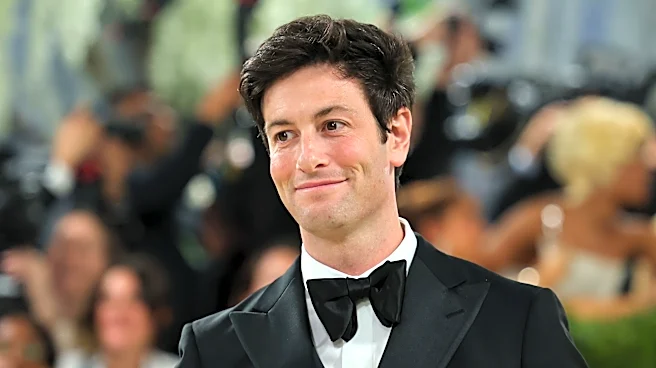
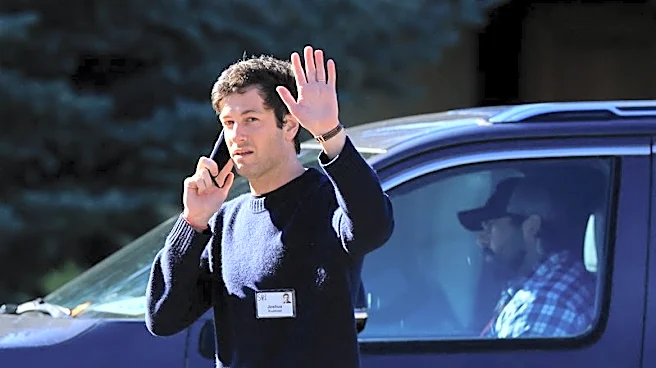
On August 12, ESPN reported that Mark Walter had agreed in principle to sell his interest in the Lakers to venture capitalist Josh Kushner and former Disney CEO Bob Iger for $12.5 billion in a deal brokered over the past weekend.
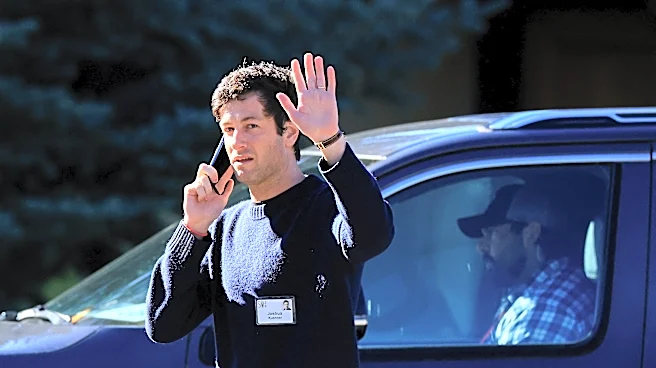
Josh Kushner is the brother of Jared Kushner, son-in-law of President Trump. We have previously covered Josh Kushner, as his private equity firm recently acquired a stake in the San Francisco Giants.
After the sale was announced, Mark Walter issued a statement to ESPN:
“Owning the Los Angeles Lakers has been one of the great honors of my life — an extraordinary investment, but what I will carry with me is the community, the fans, and a city that treats this team as family,” the statement read, in part.
One prominent NBA agent told ESPN anonymously in reaction to the statement:
“It’s the ultimate trophy,” one prominent NBA agent told ESPN. “This isn’t like a building or a complex. Like, these are the L.A. Lakers. I almost laugh that he says, ‘It was an honor and a privilege to own the Lakers.’ Like, you didn’t own the Lakers! You rented them. You made a great business decision.”
Mark Walter is set to profit from his record sale of the Lakers. The NBA Board of Governors would need to approve Walter’s sale of the Lakers, and no announcement has been made yet.
What about the Dodgers?
The Lakers generally fall outside our purview here at True Blue LA, but the reaction to the sale prompted Stan Kasten to address it publicly earlier this week.
“This is a Lakers’ story; it’s not really a Dodgers story. It really has nothing to do with the Dodgers. They’re completely separate. There are no changes here, or contemplated here.”
With respect to Mr. Kasten, he’s incorrect in his assertion that this story applies solely to the Lakers. As most will remember, when Shohei Ohtani signed with the Dodgers before the 2024 season, he included a key man clause, which would allow him to opt out of his deal if either Andrew Friedman or Mark Walter left the organization.
At this introductory press conference, Ohtani explained why he insisted on inserting a key man clause into his contract:
“Everybody has to be on the same page in order to have a winning organization,” Ohtani said through an interpreter. “I feel like [Andrew Friedman and Mark Walter] are at the top of it and they’re in control of everything, and I feel almost like I’m having a contract with those two guys.
“I feel like if one of them is gone, then like I said, (we) might not be on the same page, things might get a little out of control, so I just wanted like a safety net.”
Considering how the Anaheim Angels wasted the first six years of Ohtani’s MLB career, one can see the rationale of his thinking. Sam Blum and Stephen J. Nesbitt of The Athletic reported that even in the unlikely event that Walters sells the Dodgers, Ohtani is likely not to exercise his key man clause:
Even if Walter were to sell the Dodgers in the near future, Ohtani is unlikely to exercise his key-man provision and opt out of his contract, according to a league source with knowledge of Ohtani’s and his agents’ thinking who spoke on the condition of anonymity because they are not authorized to speak about it publicly.
Per Mr. Kasten’s repeated and emphatic denials, Mark Walter did not contemplate selling the Lakers until he did. The Lakers are not supposed to be a flippable asset, for example, a starter home that one pockets a profit from after fixing it up before moving on. It seems unlikely that Walter would sell the Dodgers, but no one anticipated him selling the Lakers.
For the more conspiratorial amongst us, the White House has issued a one-sentence denial that it had anything to do with Mark Walter’s sale of the Lakers.
Bloomberg reported that Mark Walter might be facing a cash crunch to attempt to pay the loans related to the SEC probe. It appears likely that this is a story where those who know are not saying anything, and those who do not will not stop talking. Again, it is worth repeating that no one has been charged with anything, and everyone is innocent until proven guilty in a court of law.
The following admonition applies in both civil and criminal contexts. In the court of public opinion, the story of the investigation introduces an unknown unknown into the ongoing campaign. The problem with potential financial stories is that they often look benign until they spiral out of control, as they did in 2008, or as they are likely to do with the ongoing bubbles in A.I. and predictive markets.