
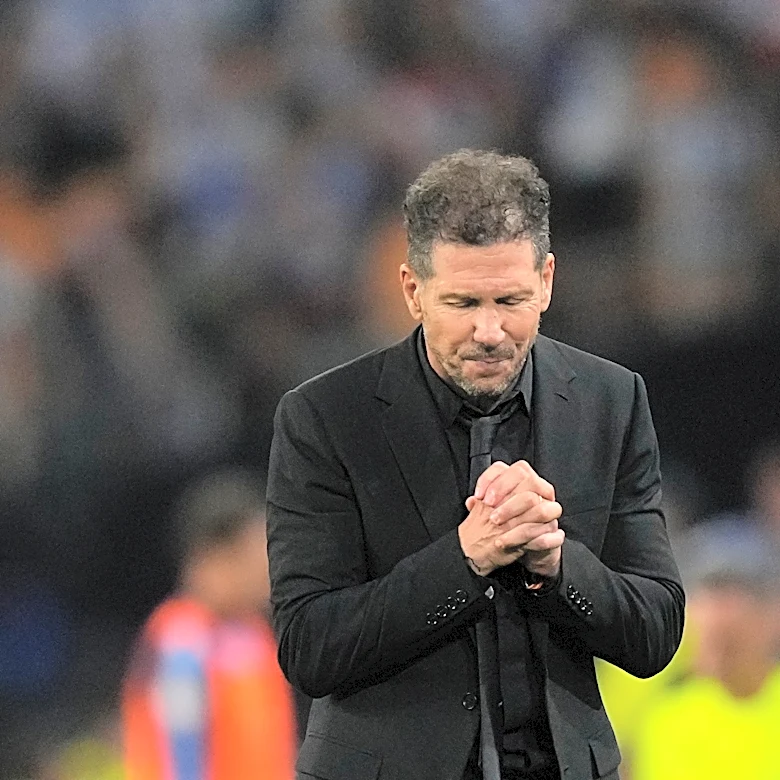




AFTER REAL MADRID’S elimination at the Allianz Arena on April 15th, after Bayern Munich — arguably the best team in the world — took care of business, there was a sense of ‘what if’ in the Real Madrid camp. They had come so close, missed so many chances, and were right there, confident in closing the tie until a nonsensical Eduardo Camavinga second yellow card derailed the game.
“It’s a joke” Jude Bellingham muttered on his way out of the mixed zone.
“We’re very hurt… very hurt,” Arbeloa said after
the game. “Especially because of the way it happened. I congratulate Bayern on their great performance in the tie, but we would have liked them to beat us differently. It was an inexplicable red card, no one understands it. That’s why there’s a sense of injustice and anger. All the work and effort went down the drain because of a decision like the one the referee made.”
But what are we really doing here? It’s not wrong to feel hurt — not wrong to do everything you could’ve before losing to a better and more efficient team.
But by mid-April, all the eggs were in this Champions League basket. The rest of the season was, and is going to be, a drag, because the games mean nothing — because all the work up until this point ensured that the team dropped too many points to still be alive in La Liga.
It’s hard to take a moment to feel sad and hurt about a ‘what if’ loss to Bayern, when the truth is the team hasn’t been good for two years now. What did we really expect? For the team to wake up, against all odds, for one-off games against the best teams in the world simply because the Champions League anthem starts blaring?
At one point, Real Madrid had a seven point lead over Barcelona this season. Last season, they were top of the table for eight matchdays before finally crumbling. Is no one going to question the inconsistency? Is no one going to question that, from game to game, you have no idea whether or not Real Madrid will actually show up or not?
Who is going to be held accountable? The easy answer, of course, is the coach (and it’s wrong). Three of them have come in the last two seasons, and none of them have found answers, because all of them face the same problem: They are asked to make the same puzzle pieces fit. Will the fourth coach in line be any different? Maybe he will, but maybe he will only succeed if Real Madrid don’t fire him for trying to figure it out along the way — and maybe he will fail too because his hands are tied the same way as his predecessors.
Maybe Ancelotti’s time had come, and may Alonso wasn’t the right man. Maybe the team would’ve failed regardless; and certainly this is not Arbeloa’s fault. If those two managers before him couldn’t figure it out, how can you blame a Castilla coach for not securing the floatation device on a sinking ship mid-way through the season?
When will big decisions be made about the players in the squad? In the end, your team is only as good as your leaders — and this team doesn’t have any.
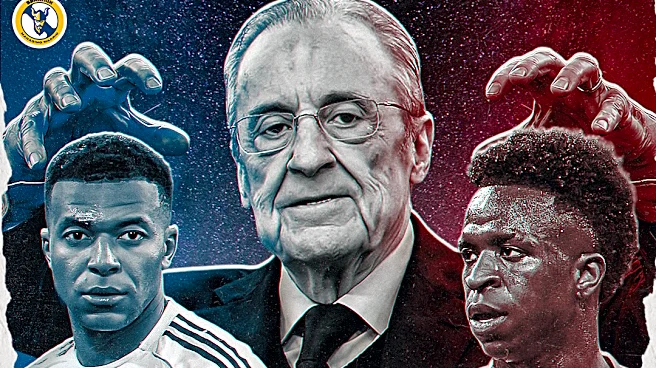
We will now be moving into year three of the Vinicius – Mbappe dyad. A two year sample size should be enough to acknowledge it’s a pairing that doesn’t work. It can be challenging to diagnose why that is, because there is more than one reason, and it’s not entirely the fault of one or the other, but whatever the reasons are, and we’ll discuss them below, it’s hard to digest those reasons given the board will likely stick to their guns and keep the pairing together.

It is hard to blame Real Madrid for signing Mbappe at the time they did. He was arguably the best player in the world, not far removed from one of the greatest performances in World Cup Final history, and was a thorn in every big European side throughout the years — including Real Madrid. The team still searched for someone to play the Karim Benzema role. They had gotten great production from Jude Bellingham taking the mantle, unexpectedly, as a jack-of-all trades pseudo 9 / 10 / 8.
But there was always a sense that Real Madrid could’ve been better despite winning the Champions League through the skin of their teeth, with Andriy Lunin and Thibaut Courtois heroics — as well as generational level football from players like Toni Kroos, Dani Carvajal, Vinicius, Fede Valverde, and Bellingham.
Mbappe was supposed to be the guy that fattens the margin of error — that takes the offense to another level.
On the surface, he did his part: He’s scored 85 goals in the past two season, and that includes a slow start to his Real Madrid career as well as missing seven games this season due to knee problems.
But his goals came with a cost: The team’s defensive shape fell off a cliff, and the structure of the team broke over and over again with him on the field. Vinicius, nominally a hard working winger on defense, had his defense dip when Mbappe was on the field (and not when Mbappe wasn’t). My theory: ‘if that guy doesn’t defend, why should I’? The defensive shape looked better when Vinicius was paired with Gonzalo Garcia or Brahim Diaz.
Paradoxically, despite Mbappe scoring nearly 60% of Real Madrid’s goals, the team didn’t look too worried about Mbappe’s absence in certain games. For example, in a four game stretch without him, they outscored opponents 14-5. Three of those four games were against Manchester City (twice) and Atletico Madrid. Despite being reliant on Mbappe’s goals when he’s on the field, the team looked confident in scoring without him, and part of that was because Valverde had much more offensive freedom without Mbappe. Valverde, in Munich, was a ghost, in part because Arbeloa needed him to do defensive work deep trying to accommodate Mbappe, Bellingham, and Vinicius higher up the field.
SUBSCRIBE: The Managing Madrid Podcast on YouTube.
The question is: How does any of this make sense? Real Madrid added Kylian Mbappe to a Champions League winning team, and it tanked.
Part of the explanation is tactical, part of it is psychological. Mbappe is not a spiritual leader the way Benzema was. He puts his head down and does what he knows how to do. Benzema was more of a leader, a rallier — a man who could pump ice into his veins and tell his teammates ‘I got this, we’ll be ok’ when the team was backed into a wall. He gave directions. Teammates listened.
The tactical aspect is also clear: Mbappe likes freedom to operate in whatever zone he feels like operating in. That’s often deep, in the left half-space, in close proximity to where Vinicius is on the left wing. That’s not dissimilar to where Benzema liked to be; but Benzema also could act as a target in the box when the team needed him to, and he also had tremendous off-ball work rate and led by example.
The solution, from a tactical standpoint, if both players have to play, is also straightforward and not talked about enough, but admittedly more challenging in practice than merely putting it into words: Real Madrid need to recognize, collectively, on the fly, what run the team needs and it requires a constant recalibration of where Mbappe is. They have done better at this specific wrinkle over the past two months. Mbappe did make a lot of the right runs he was supposed to make against Bayern, and when he wasn’t there, Valverde or Thiago Pitarch would make that central forward run instead so that the team remained fluid with options. Most recently, against Real Betis, it was Bellingham acting as the target.
The other tactical concern is more challenging: The defensive side of things. If Real Madrid are to generate more chances without hurting their defensive line, they need to be masterful counter-pressers — something Mbappe is better at than when he’s asked to sit into a mid-block where his presence alone makes the first line of defense vulnerable. The ease at which opponents slice through is because of the numerical superiority they boast once passing the forwards. All of a sudden, the midfielders and defenders tread water marking more than one player.
That’s where finding the right coach becomes challenging, because the tactical concerns they will face won’t go away, and every coach wants his players to work hard, run, press, and make different runs. Every coach will have a difficult task doing these things with this team — hence why the board should look at holding players accountable as much as the coaches they bring in.
There was a promising high press brewing with Xabi Alonso earlier this season, but for reasons discussed to death, that team evaporated and Alonso was fired. Arbeloa’s record is even worse. The main difference between Arbeloa and Alonso is that the players and board both like Arbeloa — though he is a dead man walking anyway and part of the reason the board likes him is because he says what the board wants him to say, which is unhealthy in itself. Alonso was less diplomatic and more authoritative. Many felt that’s exactly what the team needed given what happened the season prior.
Alas, finding the man who can balance everything is challenging. Jurgen Klopp, for example, is a legend. The most obvious question to him is the same one I asked Alonso last summer during the Club World Cup: ‘How will you press with a forward who doesn’t press’?
BONUS REAL MADRID CONTENT for Managing Madrid Members.
It is important to note that blaming Mbappe for everything is lazy. People tend to lean into extremes, and blaming Vinicius’s poor form on Mbappe is too common; as is the disregard of all the variables that coincided, freakishly, with Mbappe’s arrival: Kroos’s departure, leaders leaving one by one, ACL injuries, players playing through pain, and the team relying heavily on young inexperienced talent while putting up with their growing pains. Also: coaching turmoil and shifts in identity. It’s been a two-year, perfect storm.
Vinicius is not without blame when we discuss the failures of the Vini-Mbappe connection. Media tends to have debates about whose fault this all is. It’s not black and white; good vs bad. People should be free to criticize both, because both parties have been poor in their own way.
Keep in mind one important story from this season that will be remembered for decades to come when we look back on the 2025 – 2026 season:
When Xabi Alonso arrived at Real Madrid, he wanted to bring something different — something fresh — to the team’s identity. He had seen the team’s tactical struggles under Carlo Ancelotti the year before. He wanted to play faster, take less touches, be more surgical, and find openings in more creative ways than simply pumping the ball to Vinicius on the left wing and watching the offense stagnate.

THAT OFFENSE WAS built around winning the ball through rabid ball recoveries, hunting opponents high up the pitch, and two key players: Arda Güler and Mbappe. Güler would take one touch, and use his second to feed a through-ball to Mbappe. Mbappe would take one-to-two touches and score. It was a system that worked. Güler racked up assists, Mbappe racked up goals, and Real Madrid racked up wins. Their only loss until November was away to Atletico Madrid — a game where the team rushed Bellingham back in his first start since recovering from shoulder surgery. He wasn’t ready. But eventually, Alonso incorporated Bellingham into the team, and by the time the Clasico rolled around in October, Bellingham himself was providing the through-balls to Mbappe, gliding out of pressure, and pressing opponents.
In all this, it was Vinicius that was losing the spotlight. Alonso rarely gave the Brazilian the 90 minutes — either not starting him or subbing him off in the second half. When he had the ball, Alonso asked him to play quicker, to find teammates before defenses could set, and to tone down superfluous dribbling.
It was a double-edged sword. Vinicius wasn’t happy, and the frustration built up inside him. And this is where the aforementioned story concludes: Alonso took Vinicius off in the second half of the October Clasico. Vinicius reacted furiously. The team collapsed, and was never the same again. What was supposed to be a wave of momentum to start the season as league leaders, turned into a funeral that sucked the soul out of the team.
The moral of the story has less to do with Vinicius and Alonso and more to do with how Real Madrid operate. They win more than any other club in the history of football, but there are frustrating moments in between — periods of drought — where they could clearly do better.
Alonso’s case is a good study for future managers looking in. They will either avoid Real Madrid altogether, fully knowing any tactical decision that demotes one of the stars has dire consequences, or they will need to be more headstrong when they arrive.
Alonso’s mistake was his submission to the will of others — submission to noise from the board, from agents, from entourages, and stars. After the October Clasico, Alonso was only at Real Madrid physically, but not spiritually. He was no longer the Xabi Alonso Real Madrid had signed, but one of resignation. Alonso’s mistake was that he wasn’t bullheaded enough to stick to his guns. From there, he slowly lost the respect of the locker-room.
Florentino Perez will now have to choose: sell one of the stars, or, if he’s hellbent on keeping both Vinicius and Mbappe, then giving keys to the next manager — giving him full authority to do as he pleases, even if that means giving less minutes to big names for the sake of tactical balance.
MANAGING MADRID HOODIES: Rock your favourite Real Madrid podcast as swag
There is no easy path from here. What’s in the past is in the past, and moving forward requires pain, either way. There is real emotional attachment to Vinicius — a player that the board and fans watched grow up, ascend to legendary status, and has been through it all, including unprecedented amounts of verbal and racial abuse all across the country. Losing him would hurt, and losing him does not guarantee winning. It is not like the team has looked better without him in limited minutes this season.
Real Madrid needs to move on from several players in order to make room for a new generation of talent that could upgrade the current squad, but even that in itself is complicated. Players don’t want to leave. Any discussion of parting ways with Vinicius is likely tabled until the summer of 2027, as Vinicius likely won’t terminate his contract prior, or agree to a sale. It is unwise for him to do so financially. If Florentino budges to his contract demands, he wins. If he doesn’t, Vinicius can still ‘win’ by waiting for a signing bonus with a new team the following season.
If it comes down to that, that’s one more year of distractions and plenty of media noise until the situation is resolved, and that’s where reality kicks in: It’s entirely plausible that both parties eventually cave towards each other in reach of compromise. Florentino himself knows that letting the situation linger could turn ugly.
Ultimately, this could all lead back full circle: with Vinicius and Mbappe on the team for the next several years. If that’s what it comes down to, there needs to be serious thought given to the surrounding pieces, the coach, and how the collective can maximize this duo. But it also can’t be done without both of them making sacrifices for the greater good. The last few years of Florentino’s legacy, and immediate success of the greatest football institution on the planet, depends on it.
CARVING A PATH with Vinicius and Mbappe leading the line requires better squad planning, real reinforcements, less tolerance for underperforming players, and a visionary coach (given full power) who can not only mesh egos, but hold them accountable while giving direction to the players. It requires some rigidity to balance the freedom and over-fluidity that Real Madrid plays with, and it requires much better decision-making on offense. That last part comes down to coaching instruction and player buy in. If players don’t buy in, they shouldn’t be guaranteed starters regardless of their name.
Real Madrid also has to be ruthless moving on from players on the fringes who aren’t contributing to the team, in order to make room for several needed player profiles: A deep-lying playmaker / controller, reinforcements all across the backline, and the return of two players that will upgrade the right wing: Endrick and Nico Paz.
That won’t be easy, but it will be necessary, and it should be done with the consultation of a coach who is allowed to implement a vision. It will require patience (admittedly impossible at this club) and self awareness from the board that they are as responsible as anyone else in correcting previous mistakes they’ve made — and the sooner they get their coach, the better. Re-tooling this squad will take time. Putting those pieces in place before next season starts is imperative to give the team a proper runway.