






The ink has barely dried on the 2025–26 Suns season. Hell, I published my season synopsis just yesterday. It’s only been a couple of days since they were eliminated from the 2026 postseason. And still, my mind is already moving forward.
So much is running through my hyperactive brain right now. The decisions that lie ahead, the conversations we’ll collectively have, the thought exercises that are coming, and the determination of what this Phoenix Suns team should look like come October. It’s too early
to fine-tune specifics, the players to pursue, the players to draft, and the trades to make. That part will come.
For now, I want to lay out my initial thought process. How the Suns should approach the short term, how they should think about roster construction, and what this could look like long term. It will be interesting to revisit this at the end of the offseason. To see if they followed the roadmap I think they should. To see if I still believe it’s the right path.
I expect I will change my mind as the summer progresses. For now? This is how I see it.
It begins with patience with the process. Ah yes, patience. A word I’ve talked myself into since the beginning of 2025-26. A word I’ve had to remind myself of at times. Going from the largest bankroll the NBA has ever seen to a respectable cap sheet is a process, and maintaining that moving forward is a challenge. Shiny objects tempt us, but we should not fall for their fallacy.
I’ll start at the 50,000-foot view, looking across the landscape of the NBA. It might be 2026, but it feels eerily similar to 2016. Back then, the Golden State Warriors were evicerating the league, and any hope of stealing a Western Conference title from them felt unrealistic. Not from a Suns perspective alone, from anyone in the conference. Phoenix was deep in a rebuild, with no illusions of grandeur when it came to competing for the West.
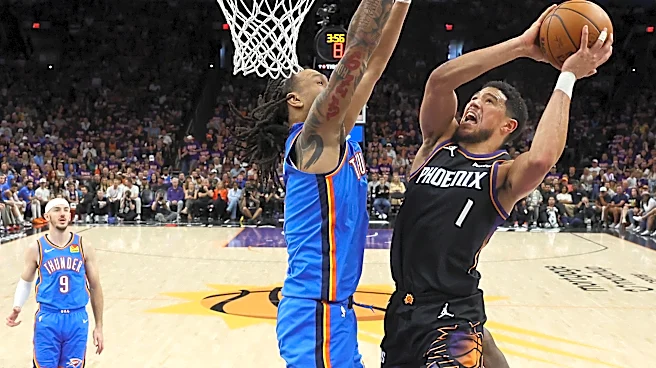
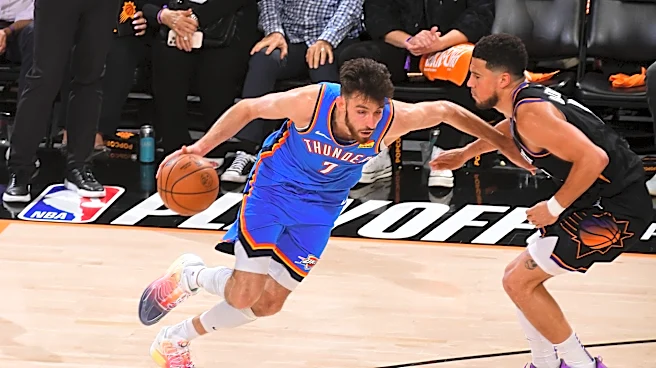
Ten years later, the Warriors’ sun has set, and now two youthful juggernauts are sitting at the top. We just experienced who and what the Oklahoma City Thunder are. A team full of assassins, a defense with connective tissue that’s hard to replicate, and a pipeline of draft capital that keeps the machine moving as players get priced out. Add in their track record for scouting and development, and there’s no reason to think they won’t be a viable contender for the next half-decade.
Then there are the San Antonio Spurs. A team with a generational type player, surrounded by youth that fits. We don’t fully know what they are yet, as this is their first run through the postseason. But the trajectory is obvious. They’re ascending, and they create another blockade at the top of the Western Conference for the foreseeable future.
I’m not saying that because OKC and San Antonio are poised to own the next half-decade that the Suns should roll over and play dead. Quite the contrary. Those teams are where they are due to the processes they had in place, the strategy they deployed, some luck (a lot of luck in the Spurs’ case), and their willingness to stick to the plan. They allowed progression to occur and fostered the environment to grow. They took risks along the way it paid off. Yes, their stories are more complex than those four lines of text, but they exercised patience, and that is the foundational aspect that the Suns should follow.
But I am noting that due to their existence in the Western Conference, expectations must be adjusted accordingly. How far do you think the Suns will go next season? Or the season after that? Or the season after that? Defining expectations allows for an understanding of how the team should operate this offseason with the next half-decade in mind as well.
I bring up that half-decade timeline because it matters for the Phoenix Suns. Five years. It goes by in a snap; in NBA terms, it can feel like an eternity. For perspective, it’s been five years since the Phoenix Suns were in the Finals. When you look forward through that same lens, some timelines start to line up for Phoenix. The question becomes how they operate until those timelines come to fruition.
2030. Four years from now. That’s a big year for this franchise. At the end of the 2029-30 season, Devin Booker will be an unrestricted free agent. That same offseason, the Bradley Beal money comes off the books. His $19.4 million is no longer sitting there on the cap sheet. In 2030, the Suns will have a first round pick. The final destination is still up in the air since it has already been swapped, but the pick exists. And by that point, Phoenix could have a treasure chest of draft capital at its disposal if they choose to hold onto those assets over the next four years.
And that’s where I start thinking about the short term and the long term for the Phoenix Suns as we enter the 2026 offseason. All of these timelines run together, and the goal of this offseason and the ones that follow is patience, progression, and responsibility. I know that’s not what anyone wants to hear or experience. It’s not fun or exciting. But the long pathway to success rarely is. The goal needs to be stacking small wins over the next few offseasons rather than swinging for the fences, putting yourself in position to take advantage of where you are and where the NBA is five years from now.
There are a million things that can happen between now and then. Blockbuster trades, season-ending injuries, paths we can’t even see yet. For an organization and an ownership group that came in and initially operated irresponsibly fiscally, the next four seasons have to be about maintaining the ability to be responsible.
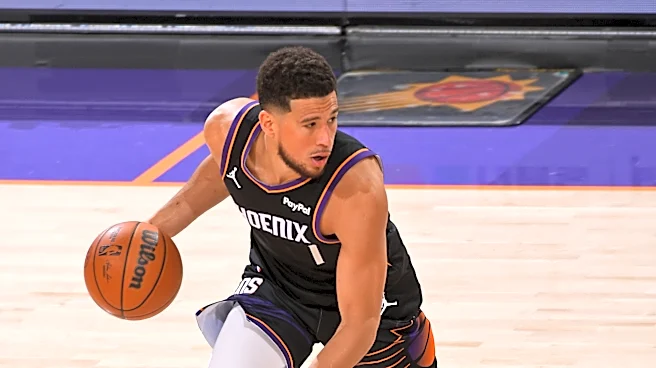
That starts with understanding who and what Devin Booker is.
There is a finite ceiling tied to Booker’s skill set, and age will start to show up sooner than later. His contract is going to feel heavy relative to production in a couple of seasons unless something shifts. That’s part of it. And within the context of this offseason, that’s okay. Trading him now and going full reset will not net the return you want. The picks won’t be premium. The players won’t be foundational. You are not building something better in a landscape where the Oklahoma City Thunder and San Antonio Spurs are sitting there for the next half-decade.
While he might be a depreciating asset, there is value in his presence and abilities. He is the stabilizing force that this team and organization need right now, in this moment. He assists in putting you in a position to win. That is valuable for the young players on this team. To win. We don’t need to go back to 2015, when the Suns had all of the picks but none of the foundation, and therefore, none of the wins.
So lean into it. Embrace the player who defines your culture. Booker is here, he is in his prime, and you should ride that out in an attempt to get better year after year. Next year? You make the best decision at the time, weighing the short-term and long-term health of your franchise.
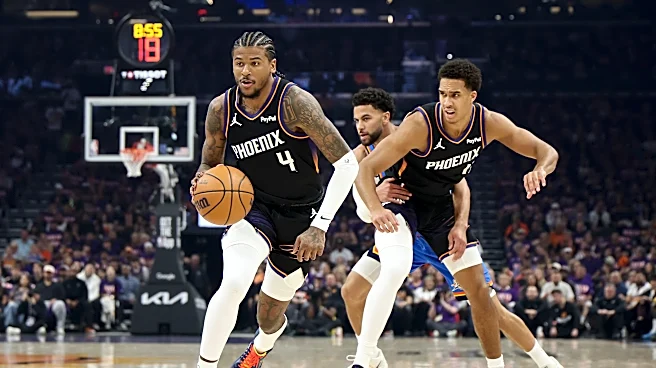
One reality that we have to face is that this team did not hit its ceiling. Booker missed 18 games. Jalen Green missed 50. Dillon Brooks missed 26 and Mark Williams missed 22. That is a combined 116 missed games from just your starting lineup alone. And they still won 45 games. So it is not outside of the realm of possibility, knowing that the top tier of the NBA elite is unattainable, for this team to run it back again next season. That gives them more data points, more understanding of who is valuable and who exemplifies what being a Phoenix Sun is about.
With continuity comes a stronger culture, a clearer identity, and a sustainable path to winning. Those are organizational traits you need as you look toward 2030. You need to know what it means to be a Phoenix Sun, the same way players understand what it means to be a Spur. That doesn’t happen overnight. It starts with continuity.
I know nobody wants to hear that the team should be looking at 2030 as a pivotal point. But looking long-term is the right way to approach any decision. Mat Ishbia has said he plans to own this team for 50 years, and that comes with responsibility. There is still a path to being competitive and engaging over the next few seasons. There is still room for this team to get better.
You have young players like Khaman Maluach and Rasheer Fleming. If one of them pops, your ceiling rises. You have a 2027 first round pick. It’s a swap, the worst of three teams, but still a chance for that player to hit. That’s the bet. That’s what you’re leaning on.
It comes back to development. That’s part of your culture, too. Identifying the right talent, bringing them in, and developing them the right way so they can succeed and maybe exceed expectations. When 2030 arrives, that foundation matters. It shapes what the Phoenix Suns can be and how successful they can become.
I go back a decade, when the Golden State Warriors were stomping the league. The Phoenix Suns at that time had draft capital. They had chances to improve, and eventually they did. They reached the 2021 NBA Finals. But man, it was a long, arduous path. The culture wasn’t right, and the development system wasn’t right. That’s where the focus needs to be over the next few years. Get it right. Set the standards. And still strategically find that balance between fiscal responsibility and progression in the standings.
The foundation is set. The goal now is progression. Progression in development. Progression in scouting. Progression in management. Progression in culture and identity. Progression doesn’t mean burning all of your assets for a name like Giannis or trading Booker in an attempt to bottom out with late-round draft picks. Progression is patience, strategy, continuity, and fortifying the ideals you introduced an offseason ago.
I get it, everyone loves the home run. The big trades. The idea of moving Booker for a pile of assets sounds exciting. This past offseason showed that exciting doesn’t get it done. Being responsible, being smart, being patient, and sticking to a plan. That’s the path. They followed that approach last offseason, identifying pieces that pushed those areas forward. No chasing dingers. They played for doubles. They bunted the runner over. And we got 45 wins out of it.
That’s where they need to live now. This offseason and the ones that follow. So keep it simple. Stack some base hits. Build a roster that makes sense, a culture that holds, and a system that develops. Stay competitive, stay disciplined, and protect what 2030 can be. That’s the window. Don’t close it early.
This is how I feel today, in late April, following the end of the 2025-26 season. It will be interesting to see how I feel in just a few short months. Suns basketball is just a summer away.