



Following the same criteria as our examination of Sunderland’s homegrown post-war footballers, part two applies the same rules to discover whether we’ve produced any players who scored more than Gary Rowell’s 103 goals for the club.
Just as this meant ruling out anyone the club purchased such as Kevin Phillips, Marco Gabbiadini, Brian Clough and Len Shackleton, there are some big-name pre-war players to be excluded, such as Charlie Buchan (signed from Arsenal), Dave Halliday (signed from Dundee) and Arthur
Bridgett (signed from Stoke).
So, who does that leave to consider from a period when Sunderland won six league titles, an FA Cup, and were considered one of the top clubs in the country?
Raich Carter
278 appearances, 128 goals
Carter would be one player who you would put your house on to have come through the ranks at Sunderland and scored a number of goals in excess of Rowell’s total.
Widely heralded as one of Sunderland’s greatest players, Carter was born in Hendon, became a league winner and FA Cup-winning captain, and also played for Sunderland and England schoolboys.
However, he didn’t sign for Sunderland straight from school when he left at fourteen years of age. In fact, he actually knocked them back on the advice of his guardian (his uncle, following the death of his father) because he wanted the young Carter to learn a trade.
Thus, he became an apprentice electrician while playing for an amateur side. He signed amateur forms for Sunderland in 1931, aged seventeen, while also having a trial for Leicester City who turned him down. Eventually, he was taken on as a professional for Sunderland.
Can this rule Carter out? It almost feels like sacrilege to do so, so I’ll leave it for others to debate.

Bobby Gurney
390 appearances, 228 goals
Another of our pre-war legends and club record scorer.
A teammate of Carter, Silksworth-born Gurney was a goalscoring powerhouse of the 1930s. Like Carter, he won the Championship and FA Cup, and was honoured with a mural on the side of a building.
Our record scorer played for his hometown club, living the “Roy of the Rovers” dream forty years before Rowell even made his debut — yet Gurney also didn’t sign for Sunderland straight from school.
He was spotted playing for Bishop Auckland at seventeen years of age (apparently by Charlie Buchan), and there’s a heated discussion with a beer or five at the kitchen table to be had late into the night here.
Johnny Campbell
154 goals
Jimmy Millar
127 goals
Jimmy Hannah
76 goals
These three fantastic players were recruited by Sunderland — then newly-elected to the Football League — around the age of twenty by then-manager Tom Watson.
They shouldn’t really qualify under the criteria as they weren’t produced by the club, but we didn’t produce anyone through a youth system at that point.
Campbell arrived in 1889 and Millar came in 1890 — both from Scottish clubs — and Hannah came in 1891 from Sunderland Albion. Campbell and Millar were with Sunderland as a Football League club from the kick of the first ball in 1890, whilst Hannah came just one year later.
They scored just over 250 goals between them as Sunderland became champions in only their second season in the league. Campbell fired Sunderland to three league titles while Millar won four with the Lads over two spells.
George Holley
315 appearances, 157 goals
There are three striking similarities between Holley and Rowell.
The first is obvious in that they each scored over 100 goals for the club. The second is not so in that they both happened to have been born in Seaham, but do you know the third?
They both scored a hat trick for Sunderland at St. James’ Park, with Holley hitting three in Sunderland’s record away win — a 9-1 victory at Newcastle on 5 December 1908.
Like Carter and Gurney, Holley played local football with non-league clubs before being spotted by Sunderland’s scouts, signing in 1904 as an eighteen-year-old. He then went on to win the First Division title in 1913 as part of a team that came so close to winning the double.
He scored eleven hat tricks for Sunderland and hit eight goals in ten appearances for England. He was still in his prime at only twenty eight years old when the First World War brought his career at the top of the game to a halt — and he would’ve been a strong challenger to Gurney’s record total.
What a guy!

Patsy Gallacher
308 appearances, 107 goals
Scottish-born Gallacher played for Linwood St Coval and Bridge of Weir before moving to Sunderland as an eighteen-year-old in 1928.
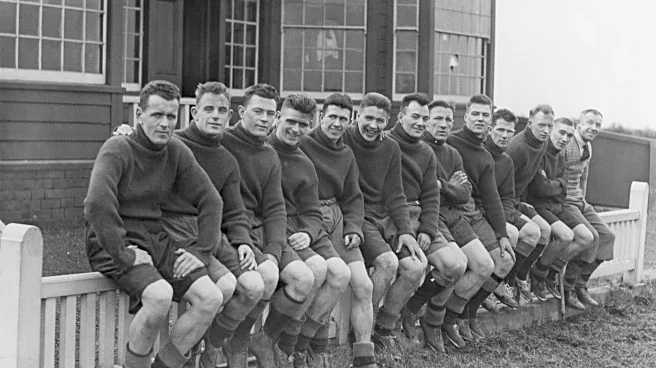
New manager Johnny Cochrane brought the outside left into the Sunderland team alongside Carter and Gurney, as they slowly became a force in English football in the 1930s.
Predominantly a winger, Gallacher would often change positions with Carter and he could also play on the right. He was a key member of the team that won the league title in 1936, the FA Cup in 1937 and also reached the semi-final in 1938 — a game that seems to have been forgotten over time.
Later that year, he was transferred to Stoke City and just one year later, the Second World War effectively brought his career to an end.
I apologise if I’ve missed out any glaring candidates, and I have to say this was very much a step into the unknown for myself in terms of what I would find, especially during the pre-war era.
I also have to credit my fellow Roker Report writers Andy Tomlinson and Kelvin Beattie for helping to point me in the right direction. Andrew Smithson was also a huge help in fact-checking the player stats and the accuracy of the summary.
I certainly expected at least a couple of the huge names from the pre-war era to have at least signed for the club on either amateur or professional terms upon leaving school, but in summary, it seems that prior to World War Two, there was a Sunderland schoolboy side, but this was run by teachers.
Sunderland Association Football Club would offer terms to any worthy players — either as amateurs or professionals, as they tried to do with Carter — and they certainly would develop young players in the A team.
However, they did put a lot of faith in scouting local talent and as can be seen from some of the names above, this proved to be a pretty fruitful policy. Yet times were different and nowadays, promising schoolboy players are heavily courted by clubs from all areas of the country to sign with their academies from a very young age. Clubs just didn’t have the resources and means to undertake the present day policies in that era.

Post-war, Sunderland had a junior side and completely bought into the benefits of the youth setup from the Alan Brown era onwards.
From the 1960s through to the 1990s, there are several names in each decade that became mainstays in the first team. Goalscorers are less common and Gary Rowell remains the only player produced by Sunderland to have scored over one hundred goals for the club since the Second World War — an eighty-year period.

The first thought is “why”?
Other than Rowell, only three other players to have scored over one hundred goals in their career have been produced by Sunderland: Dennis Tueart, John O’Hare and Colin West. If you can think of any others, by all means get in touch with us here at Roker Report.
However, consider how many other players have achieved the same feat across football — that of scoring more than one hundred goals for the club that produced them. There are players out there that’ve done it, and many are big names.
Harry Kane, Ryan Giggs, Paul Scholes, Robbie Fowler, Michael Owen, Matt Le Tissier, Jimmy Greaves (for Chelsea), George Best, Bobby Charlton, and Gary Lineker for Leicester City (who matched Gary Rowell’s record of 103 goals) spring to mind, and Clough also did it for Middlesborough.
If you consider the British-born record goalscorers in the Premier League who don’t qualify, such as Frank Lampard, Jermain Defoe, Alan Shearer and Wayne Rooney, it puts it in a more enlightening context — and perhaps Gary Rowell was more unique than we all thought.