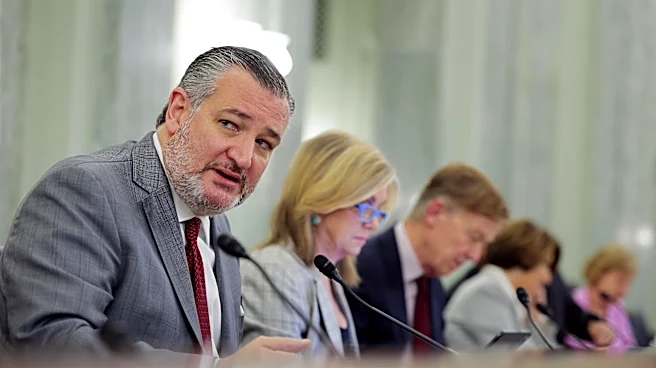




A decade from now, college sports fans may look back at May 27th, 2026, as an integral start of needed reform that preserved the sports we care about, or it could be met with laughter, like Kansas hiring Charlie Weis to turn its football program around back in 2012.
The bipartisan bill, the Protect College Sports Act, was introduced after over two months of work. It is important to note that this should be seen as the start of college sports reform, not the definitive solution to every issue. It’s
extremely likely that the bill will continue to go through revisions, and aspects of it may not hold up in court. But it doesn’t have to be perfect from the start; it only has to start meaningful conversations that lead to productive changes.
Until that hypothetical day comes, we can pick apart what is in this initial version. A few posts have already come out on this, with Ross Dellenger, Justin Williams, and Matt Brown sharing their thoughts last week. All of those are worth reading to become familiar with the bill, unless you want to read all 111 pages yourself.
Transfer Portal:
The bill would permit one transfer before sitting out a season to go to a new school. There would be exceptions to this ruling, accounting for the unlikely elimination of the sport at a school and for the common practice of a coach leaving for another school. With the latter presented as an exception, it still makes it likely that a player transfers multiple times in their career and builds in safeguards to limit the extent of player movement without consequence.
In all likelihood, this facet would face an uphill battle with the courts. Judges have already ruled that the one-time transfer rule wasn’t fair to athletes when non-athlete students are free to transfer every year if they want to. It’s anyone’s guess what will actually happen, but this one has a precedent already. Instead of limiting transfers with a hard rule, they may have a better shot with incentivizing players to stay at the same school multiple years. Obviously, the best thing would be binding contracts through collective bargaining, but as shown below, that is still a ways off even in this plan.
Eligibility:
College athletes would all have five years of eligibility, an idea that has gained a lot of momentum from seemingly all invested parties this offseason. While it doesn’t appear to lay out any exceptions for multiple seasons lost to injury, perhaps that is by design. Exceptions are a slippery slope, but if a player were to miss two years due to season-ending injuries, that would make sense.
One potential way to keep injury exceptions from becoming ridiculous would be to add an age cap or a maximum number of games. The age idea has been discussed when considering players who take LDS missions between high school and college. A game limit would potentially allow for an extra year due to injury, while also not letting things get out of control. Something like “Athletes have five years of eligibility. They may get an additional year if they have lost two seasons to injury and have not played more than 50 games.” Or maybe that is more complicated than it needs to be.
Arguably, the more important and more obvious aspect of the eligibility discussion is that it prohibits professional athletes, international or otherwise, from coming back to the college level to play sports. Common sense is prevailing here.
NIL:
This is less of a massive overhaul and more of enforcing existing rules. Basically, make NIL about Name, Image, and Likeness, not about ways to funnel money to players to get them to come to schools. The bill would grant the NCAA legal protection to enforce NIL rules, particularly by prohibiting third-party NIL deals. This is great and sorely needed, hopefully helping balance out the transfer portal in the process.
The legal protection would also stand a better chance of winning in court battles than the transfer portion above, hopefully. Again, direct compensation to players as school employees would simplify all of this, but until that happens, reserving NIL payments for actual NIL deals is a productive move.
Salary Cap:
Continuing the theme of some limits as opposed to the current lawlessness going on, the proposal includes the mention of a salary cap for revenue sharing. Along with enforcing true NIL deals, every time subject to a salary cap, it should keep player compensation demands from escalating out of control every cycle.
It’s a necessary move if it can get through the legal hoops, although it seems like it also has the foresight to be forward-thinking in addition to solving present-day issues. There’s a line about the salary cap being able to “float”, which potentially points to two things.
The first is possible flexibility for larger conferences to have bigger caps than some of their peers, to satisfy their constant need to feel superior to others. The second would be room to increase the salary cap every year or every few years, like professional sports, to ensure players don’t face decreases in compensation.
Super League:
Short and sweet, the act would slow down conference realignment and the creation of “super leagues” that have been thrown around in recent years. Any league that earns $1 billion or more would be prevented from merging or consolidating with another conference or adding new members from another conference.
Sounds a lot like making sure the biggest conferences can’t poach the top teams from other conferences, or the two biggest conferences combining forces to form one mega conference.
Common sense prevails again.
Pooling Media Rights:
This aspect may be the most interesting part of the bill, and that’s saying something.
To be clear, pooling media rights would be an option, not a mandate, but it’s the first meaningful option to mimic the Sports Broadcasting Act of 1961, which is why pro teams can pool their media rights without getting into antitrust laws that the NCAA is constantly battling.
The bigger conferences will definitely be against this, because it likely means less money for them, but everyone else should be happy at the thought of pooling money. But while optional, it wouldn’t work unless the Big Ten and SEC are willing to give a bit of their riches so everyone else can have a bit more. It would take something like more guaranteed playoff spots for them to even consider that proposal.
Although the math isn’t in their favor. In order to pool media rights, there would need to be a vote with 75% in favor of the idea. 75% of 138 FBS schools is 103.5, so 104 schools. There are 18 schools in the Big Ten and another 16 in the SEC, combining for 34. And what’s 138-104? It’s 34, although a school like Notre Dame might side with the other two conferences. The two senators likely knew that they were doing when they came up with the percentage threshold, and if there’s one thing politicians know, it’s the challenge and importance of convincing someone to cross the aisle for significant votes.
Athlete Employment:
In some ways, this is a missed opportunity to finally make a decision on student-athletes to be seen as employees. However, given how divisive this topic is across the aisle, taking a neutral stance and leaving the door open down the line comes across as a rare, productive compromise between the two parties.
The best thing that can’t be said here is that it’s not a step backward, which, in some ways, is a step forward.
Lane Kiffin Rule:
Another simple ruling that would pay dividends, this aspect of the bill would disallow coaches from leaving their teams before the end of the season, while also stating that teams could not hire new coaches until the end of the season.
It’s probably fair to assume most, if not everyone, is in favor of this, but there are still many questions about how to go about this. Pro sports don’t have to deal with recruiting classes or academic calendars, both of which are vital to why the current system is what it is.
This implementation would mean either living with a lame duck recruiting class that signs without a head coach and the new coach inherits for at least a year, or more likely, pushing back recruiting later in the cycle to the spring. The transfer window would likely have to be pushed back as well, either the month before or after high school signing day. And because of the spring semester, none of those players will be able to enroll until the summer, which means they will miss spring practices, unless those get pushed back as well.
The Lane Kiffin rule is still important, but it’s part of a larger calendar mess that will still need to be worked out.
Regional Rivalries
Conference realignment has ruined many traditional rivalries and taken the regional games out of the sport. The Protect College Sports Act would seek to put regional games back in the fold by requiring schools to play non-conference games under certain criteria. If a team is in a conference without three teams in their top ten opponents for most games played, they would have to have rivalry games against those three teams. Some of these games are obvious, but it’s interesting to think what this means for other teams, such as North Dakota State, who is coming from the FBS ranks. There are probably other teams that would have to play some teams that no longer make sense.
It’s important to note that this would only take effect if media rights are pooled.
There are other minor aspects of this bill, but the most important points are the ones currently worth discussing. Expect these points to be discussed, contested, taken to court, and altered before taking effect, if they ever do. But starting the process is vital to creating change and that is sufficient for the time being.