

We’ve reached the end of the week here at BCB After Dark: the coolest club for night owls, early risers, new parents and Cubs fans abroad. Come on in and sit with us for a while. Get out of the fall chill. We can check your coat for you. We still have a few tables available. The hostess can seat you now. Bring your own beverage.
BCB After Dark is the place for you to talk baseball, music, movies, or anything else you need to get off your chest, as long as it is within the rules of the site. The late-nighters
are encouraged to get the party started, but everyone else is invited to join in as you wake up the next morning and into the afternoon.
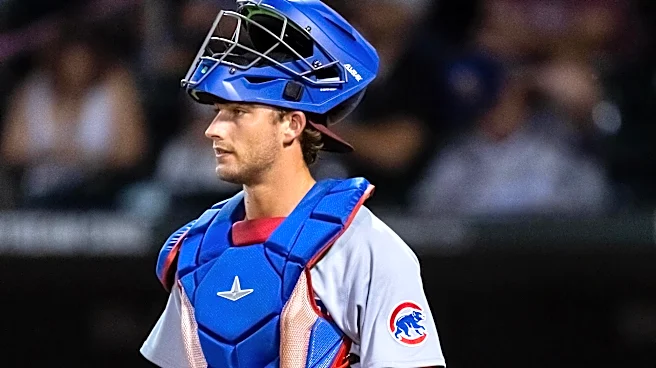
Last night I asked you what the Cubs should do at catcher in 2027. A clear majority of 62 percent of you want the Cubs to re-sign Casey Kelly. Another 22 percent think the Cubs should let Kelly walk and go with Miguel Amaya and Owen Ayers as their catching tandem.
Here’s the part with the music and the movies. You’re free to join us there.
Tonight in honor of Veteran’s Day, we have the United States Air Force’s Airmen of Note, the official jazz band of the USAF. Also the best jazz big band your tax dollars can buy. I can’t think of many better things to spend that money on than a jazz band, personally.
This is “Hunting Wabbits,” a tribute to Looney Tunes written by Gordon Goodwin, who joins the Airmen of Note on the piano.
I don’t actually have a film to tell you about tonight. Sorry about that. So instead I’ll throw the floor open to you.
Since it’s Veteran’s Day, I’m asking you for your favorite war/military films. I doesn’t necessarily have to be about war. It can be a story of returning veterans like The Best Years of Our Lives. Or it could be a film just about life in the military like Private Benjamin. Or you could go the more traditional route like Saving Private Ryan or Patton.
Since Veteran’s Day started as Armistice Day, I’m going to recommend three World War I films. As you might guess, it’s hard to find many movies that glorify that conflict. All three of these are pretty anti-war.
The first is the Lewis Milestone-directed original adaptation of All Quiet on the Western Front. I’ve seen the 2022 German version by director Edward Berger, and the 1930 version is a lot better. I’m really not sure why the 2022 version got so much praise. It’s not bad, per se, but adding that dry history lesson about the armistice talks (which also makes the Germans look like the victims in the war) and cutting out some key events from the book to make room was a pretty terrible decision. The 1930 version is in the public domain now, so you have no excuse to have not seen it already.
Another is director Jean Renoir’s 1937 film La Grande Illusion, which is French for exactly what you think it means. It features two terrific performances from Jean Gabin and Marcel Dialo. I’ve been clear before that I consider Gabin to be one of the greatest actors of the 20th Century. La Grande Illusion is about war, of course, but it’s also about so many other things.
Finally, no list of great World War I films would be complete without Stanley Kubrick’s 1957 masterpiece Paths of Glory, starring Kirk Douglas. That this film is loosely based on a true story makes it all the more horrifying. French soldiers who are sentenced to die by firing squad to serve as an example/scapegoat for a botched attack that should never have been ordered in the first place.
I’m not saying those three are my three favorite War/Military films, but I can guarantee were I to make up a list of the best such films, all three of them would be on it. So would Kubrick’s Dr. Strangelove and quite likely his Full Metal Jacket.
So tell us what your favorite war/military movies?
Welcome back to everyone who skips the music and movies.
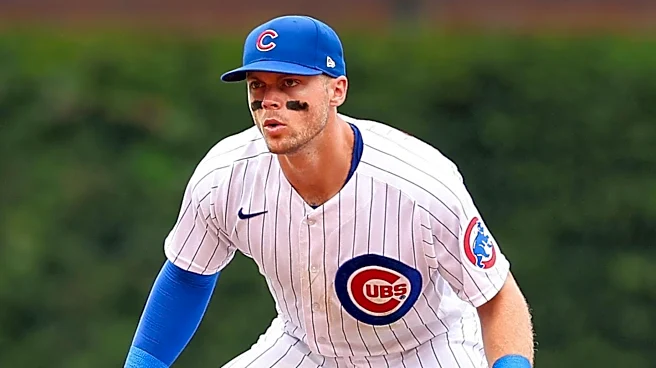
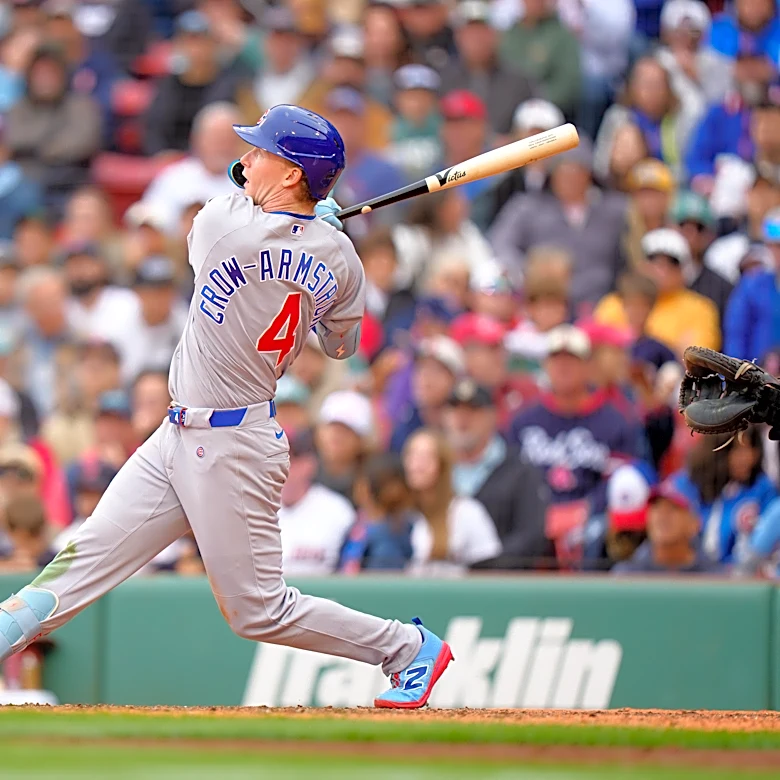
I’m going to assume that Pete Crow-Armstrong is going to win the National League MVP Award later today. When you look at all the awards he has already won, the only question is whether or not it will be unanimous. I believe that it will be. Shohei Ohtani not having thrown a pitch after July 3 and his late-season fade means his contributions come up far short of PCA’s. Brice Turang had a fantastic season, but he’s going to have to be content with a World Series ring. I think the only way the award isn’t unanimous is if a voter votes against Crow-Armstrong out of spite.
When PCA wins later today, it will be the 13th time that a Cubs player has won the MVP Award and Crow-Armstrong will bee the 12th Cub to win the award. Ernie Banks won the MVP Award twice, of course, taking home the honor in both 1958 and 1959.
The winners were
1911—Frank Schulte
1929—Rogers Hornsby
1930—Hack Wilson
1935—Gabby Hartnett
1945—Phil Cavarretta
1952—Hank Sauer
1958—Ernie Banks
1959—Ernie Banks
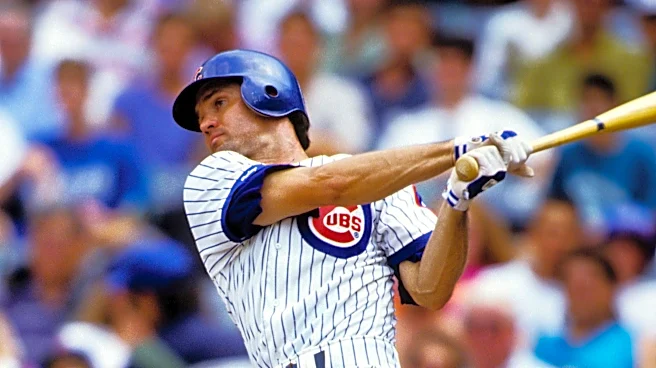
1984—Ryne Sandberg
1987—Andre Dawson
2016—Kris Bryant
2026—Pete Crow-Armstrong (we assume)
So among those 12 seasons, which one is the best?
Here we run into some problems as our silly polling software only allows for six choices.
So I’m going to have to eliminate six of those seasons. First, because I don’t want Ernie Banks to be two of the choices, I’m eliminating his 1958 season. Banks had a higher bWAR in 1959, but that’s mostly because his defense rated out better that year. Best in the league, in fact. But I’m extremely dubious of all defensive evaluations done decades after the fact. But in truth, Banks’ 1958 and 1959 seasons are almost identical. The first season has a few more home runs and a little higher slugging. The 1959 season had a better on-base percentage and a lot more RBI, if you care about that. You could pick either year, but I’ll go with 1959 today. Maybe he would have won the Platinum Glove in 1959 if it existed. But if you think 1958 was better, just vote for 1959.
Next, Schulte is out. Schulte hit 21 home runs that year which is quite an accomplishment in the Deadball Era. He led the league in slugging percentage and OPS+. But the game in 1911 is so different that I can’t see how we can make a fair comparison.
The next player I’m eliminating is Cavaretta, who put up his numbers against mostly inferior wartime rosters. Yes, the soldiers started to return to lineups in July and August, but most of the season were against some of the worst competition ever fielded in the major leagues.
Sauer is out. He had a good year in 1952, winning the home run and RBI titles, but you’d be hard-pressed to find many people even back then who thought Hank Sauer was the best player in the league. He won the award on a three-way split in the vote where he got eight first-place votes, Philadelphia’s Robin Roberts got seven first-place votes and Brooklyn reliever Joe Black got eight-first place votes. Roberts or Stan Musial probably should have won the award.
Now come the hard choices. I’m sorry Andre, but you’re out. The decision to award the MVP to Andre Dawson in 1987 has been criticized for a few reasons. One, the Cubs were a last-place team and how valuable is a player on a last-place team? Second, recent understandings of the game have shown that while the 49 home runs Dawson hit that year were indeed very valuable, his pedestrian .328 on-base percentage wasn’t, nor were his creaky knees in right field. Dawson won the MVP that year, in part, because of the narrative of collusion and the blank check he had to give to the Cubs in order to get the team to sign him.
Finally, Gabby Hartnett is out. It came down to Hartnett versus Hack Wilson and while clearly Hartnett was the better player over the course of his career, Wilson hit a National League record 56 home runs, a record that would stand until 1998. His 191 RBI is still the major league record. That 177 OPS+ from Wilson is just too hard to ignore.
So the six players you can vote for in the “Greatest Cub MVP of All-Time Are as follows. Remember, OPS+ and WAR are adjusted for the era and environment the player competed in.
1929: Rogers Hornsby. .380/.459/.679. 39 HR. 149 RBI. 178 OPS+ 10.6 bWAR.
1930: Hack Wilson. .356/.454/.723. 56 HR. 191 RBI. 177 OPS+ 7.4 bWAR.
1959 (or ‘58): Ernie Banks. .304/.374/.596. 45 HR. 143 RBI. 156 OPS+ 10.2 bWAR.
1984: Ryne Sandberg. .324/.367/.520. 19 HR. (19 3B) 85 RBI. 32 SB. 140 OPS+. Gold Glove. 8.5 bWAR.
2016: Kris Bryant. .292/.385/.554. 39 HR. 102 RBI. 146 OPS+ 7.3 bWAR. Won World Series.
2026: Pete Crow-Armstrong. .280/.372/.570. 45 HR. 107 RBI. 41 SB. 156 OPS+. 9.8 bWAR. Platinum Glove.
So which one of these would you say is the Most Valuable Cubs’ Most Valuable? You don’t have to only use the numbers I provided here. You can use whatever criteria you want.
Thanks for stopping by tonight and all week. Stay warm out there. Please get home safely. Tell your friends about us. Leave us five stars. Recycle any cans and bottles. Tip your waitstaff. And join us again next week for more BCB After Dark.