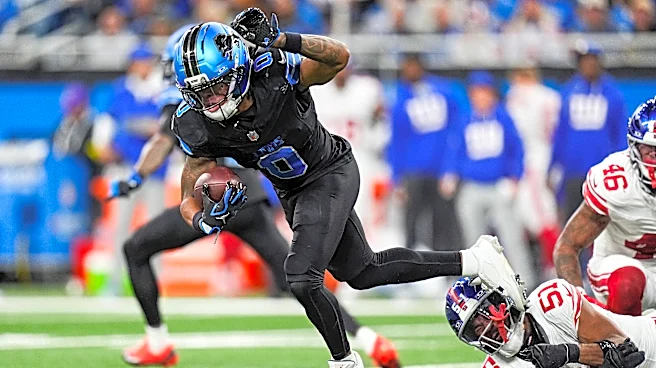



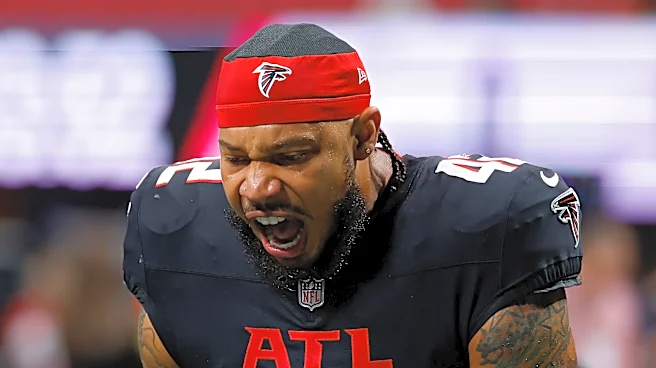
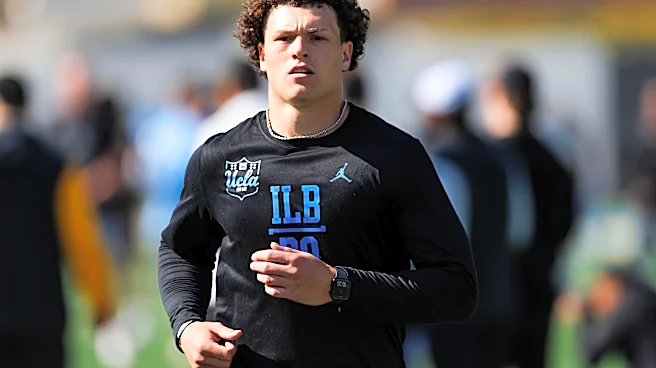
Atlanta Falcons running back Bijan Robinson continues his hold-in in an attempt to land a new contract that will completely reset the running back market, with an extension expected to push toward $25 million annually. He and Detroit Lions running back Jahmyr Gibbs seem to be colluding by both sitting out practices during training camp to put more pressure on their respective teams to get a deal done sooner rather than later. All signs indicate that the Falcons will eventually pay Robinson, but there
are still some out there that would question if it’s worthwhile. However, paying Robinson is the right call for the Falcons.
Certainly, a case can be made that paying running backs doesn’t age particularly well given the relatively short shelf life of the position in the NFL. Given that Robinson has already gotten a high volume of touches during his first three seasons, there is an increased risk of declining production from here on, according to a June article from The Athletic’s Austin Mock, who demonstrates that high-workload backs suffer a sharp drop-off after age 26.
The replacement value running back fallacy
However, the alternative to not paying Robinson and going with a cheaper running back option offers little upside to Atlanta. The idea that backs like Robinson and Gibbs can be readily replaced has been debunked recently by CBS Sports’ Ryan Wilson, who argues that second-contract running back fears are overblown because elite, multi-dimensional talents like them are virtually irreplaceable and historically sustain high-level production after getting paid.
Looking closer at middle-round running backs drafted from 2018 to 2022 to gauge real ‘replacement value’ over a rookie contract, a typical mid-round running back produces roughly on par with Kenny Gainwell (1,185 rushing yards in four combined seasons), which pales in comparison to the 3,910 yards Robinson has put up in just his first three seasons. If you can land a player like Kyren Williams (3,824 combined rushing yards in his first four seasons), it closes the gap.
However, finding “surplus value” like Williams is a lot harder than people realize: less than 10 percent of mid-round backs in the sample produced for a combined 3,000 rushing yards over their rookie contract. And that level of production is a far cry from the over 5,000 rushing yards Robinson is on pace to achieve after four years if he has just another “average” season in 2026. It only underlines the notion that finding competent running backs like Gainwell to fill out a committee is relatively easy, but landing a true lead back like Robinson who can produce at an elite level is much more difficult.
What else could Atlanta actually buy for $25 million?
Another argument against paying Robinson is that running back is a non-premium position and $25 million per year is too high a cost. Instead, only premium positions like quarterback, wide receiver, left tackle, edge rusher, or cornerback are worth that type of money. But when you look at recent contracts around $25 million per year handed out at the premium positions, you’re looking at players that don’t come close to Robinson in terms of their impact on the game.
Quarterback Malik Willis, wide receiver Christian Watson, left tackle Bernhard Raimann, edge rusher Odafe Oweh, and cornerback Jaycee Horn have all signed deals ranging between $22 and $25 million per year in the past calendar year. Except for Horn, none of them is an elite player. Horn is the only one in that group who is close to elite for his position, landing eighth in a recent ESPN poll of NFL execs ranking the top cornerbacks in the NFL. Watson wasn’t among the 26 WRs who received a vote in a similar ESPN poll.
Nor did Willis or Oweh get a vote in the quarterback and edge rusher rankings. However, Raimann was one of 22 offensive tackles that received a vote. Essentially, spending that same price tag on a premium position only lands you a second- or third-tier player at best.
By guaranteeing Bijan’s prime, the Falcons avoid the age 27 cliff
Extending Robinson today also protects the Falcons against the exact post-age-26 drop-off Mock highlights since Robinson is currently 24. Assuming the Falcons lock in three years’ worth of guarantees on Robinson’s new deal, including this year, it should guarantee his contract through 2028, which will be his age 26 season. By waiting another year to get a deal done, the Falcons take on more risk if Robinson begins to decline thereafter. Instead of no guaranteed money after age 26 if they extend him this summer, every year the team waits adds a year of potentially paying for declining production.
Of course, one might offer the alternative: why pay Bijan at all? After all, he’s already under contract through the 2027 season because the Falcons picked up his fifth-year option. The Falcons can let his contract expire after that season, franchise tag him in 2028, and still have the flexibility to move on from him after if they are seriously concerned about a decline in 2029 at age 27.
The high cost of pinching pennies
The problem with that strategy is that it falls under the technical term of not cool, bro. It basically means that you’re holding Robinson hostage for the next three years, barring him from earning massive money. Let’s assume that at least $60 million in guaranteed money is potentially on the table for Robinson on his next extension, with the bulk of that being paid out in the first three years of the new deal. Robinson is set to be paid about $15 million over the remainder of his rookie deal according to OvertheCap, and let’s project the 2028 franchise tag for a running back to be about $16 million, up from its current $14.3 million. That means if the Falcons do nothing, they can pay Robinson around half of what he could earn on a new deal in guaranteed money.
Is saving $30 million over the next three years worth alienating your best player and the current face of your franchise? A player who is also widely considered to be one of the best people in the NFL? $30 million represents about 3 percent of the combined salary cap projections over the next three years.
Is risking a toxic split with one of the NFL’s best players and one of the primary reasons that the Falcons are watchable each Sunday worth saving three cents on the dollar? Don’t you think if Bijan’s hold-in doesn’t result in a new deal this year, that things will only escalate from here to full-blown holdouts and demanding trades in the future? I’m sure there are some people out there that are fine with such an outcome, but those people are jerks.
Robinson sets the stage for the next great Falcons quarterback
Not to mention, the Falcons need Robinson on and off the field, for the time being. Without having any long-term solution at quarterback, Robinson is a huge stabilizing force for the Falcons offense. Let’s imagine the scenario where the Falcons find their long-term answer at quarterback in the much-hyped 2027 NFL Draft. It’s likely going to take the better part of two or three years for a rookie quarterback to be ready to shoulder the burden of carrying the Falcons offense.
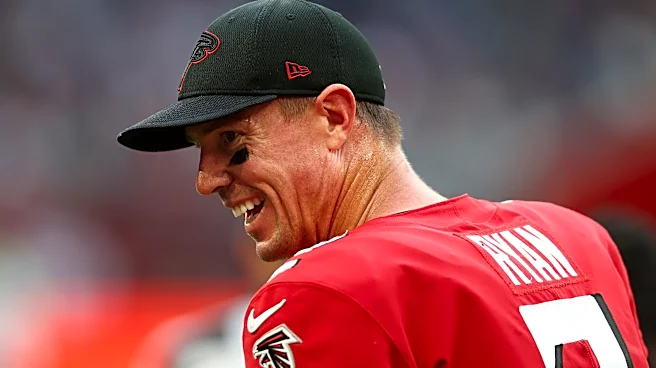
In the meantime, having Robinson in the offense will be hugely beneficial to that QB. You only have to look at the last franchise quarterback in Atlanta, where Matt Ryan relied heavily on the ground game spearheaded by Michael Turner during his first three seasons, before the Falcons began transitioning into a pass-first offense after trading for Julio Jones.
Robinson can be the Turner to the Falcons’ next great quarterback. Even if you think the Falcons already have said quarterback on the roster, do you think Tua Tagovailoa, Michael Penix, or dare I say, Jack Strand are capable of carrying this team without his help? Bijan isn’t an overpriced luxury for the Falcons, but rather the foundation of the entire offense. Pay the man his money.