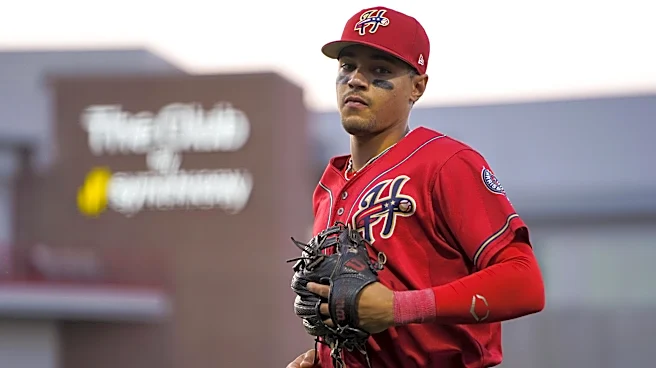



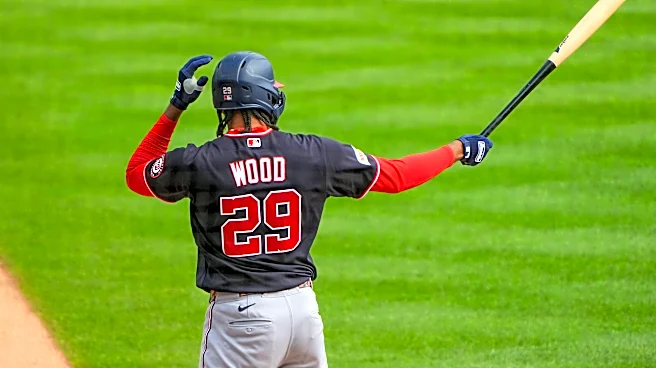

After a disappointing first full season as a pro, Seaver King was at a crossroads entering 2026. If he continued to struggle, the former top 10 pick would lose most of his prospect shine. However, he also had the chance to put himself back on the map. That is exactly what King did this season.
This season, Seaver King showed exactly why the Nats took him 10th overall in the 2024 draft. With some adjustments which we will dive into, King was able to tap into his explosive athleticism and power. After
dominating AA and AAA this year, King is a consensus top 100 prospect and knocking on the door of the big leagues. It was truly a dream season for the 23 year old.
Even as early as Spring Training, Seaver King looked impressive. I remember seeing him take at bats in big league Spring Training games and I came away very impressed. However, I still had plenty of doubt because of his 2025 season and the fact we have all seen Spring Training mirages before.
In that 2025 season, King really struggled. In High-A and Double-A, King hit just .244 with a .631 OPS. That is not what you want to see from a top 10 pick, even with the fact that King was seen as more developmental than most first round college bats. King’s plate discipline was poor and he hit too many ground balls to tap into his power.
Those were the two things that King needed to fix, and he knew it. I wrote a story about King and talked to him in Rochester. In that piece, he emphasized how much he has been working on his approach and elevating the baseball.
Early in the season, we saw King come to AA with a borderline passive approach. That led to a lot of walks and much more production. As the season went on, he was swinging more, but his chase rate never got out of control in AA. When he got to Rochester, those chase issues appeared again, but they gradually got better as he adjusted to the level.
Seaver King is always going to have some chase in his game. That is just naturally who he is as a hitter. If you neuter that aggression too much, it could have negative effects. The key will be balancing his natural aggression with good enough swing decisions.
Along with fine tuning his swing decisions, King needed to hit the ball in the air more. He has always had impressive bat speed and exit velocities, which got even better in 2026. However, he hit the ball on the ground over 52% of the time last year.
This year that number was around 45%, which is right around average. With more balls in the air, King saw his slugging percentage go from .337 in 2025 to .516 in 2026. After hitting 6 homers last year, King launched 21 this season.
With an approach that is naturally geared towards right center field, King is not one of those hitters that pulls the ball in the air a lot. He told me that he just wants to elevate the ball, and he does not really care if it is pulled or not. That resulted in a lot of opposite field power like you can see with this home run.
This season, Seaver King was just a completely different hitter. In 2026, King hit .303 with 21 homers and an .898 OPS. After really struggling offensively last year, King now looks like a bat that can hit for power and average. In my opinion, King has the ability to be a .280 hitter that hits 20 homers and steals at least 20 bases. That is not something that seemed realistic after last season.
We should see Seaver King in the big leagues next season. The only question is what position he will play. King mostly played shortstop this year, but he spent time at second and third as well. While King is an elite athlete, his defense is still inconsistent. Even during my two days in Rochester, I saw this inconsistency. He made a couple unbelievable plays, but also airmailed a throw.
Once King gets to the show, I think he has the chance to be a fan favorite. I was struck by the energy he plays with and the passion he has. This is a player who lives and dies by every game.
When Paul Toboni took over, a big part of his plan was to revitalize this farm system. He is doing that not only with his trades, but also through development. The story of Seaver King is the best example of that. King was a distressed asset, but with hard work and player development, he looks to be a huge part of the Nats future.