

From the very first time I saw Sunderland play Liverpool, these games have held a different kind of anticipation for me.
In the mid to late 1960s, Manchester United, Busby’s Babes, were the glamour boys of the division who had risen phoenix-like out of the ashes of Munich. Shankly’s Liverpool were their working-class challengers.
I thought then that Sunderland could become like Liverpool. What they had done, we as a club could do – we just needed to find our Shankly!
The first time I saw Sunderland
play Liverpool at Roker Park in 1965/66, they went on to be league champions that season. We were in the middle of a relegation battle, but in an enthralling game we drew 2-2, with all the goals coming in a pretty remarkable first half. Liverpool full-back Chris Lawler, a regular goalscorer, got two goals, and Neil Martin and a rare Martin Harvey goal saw us earn an unlikely point. It was a memorable game in front of a big crowd.
The following season, it was the same score again. Billy Hughes made his debut, and Bobby Kerr went on a wild ten-game run of goals and performances that lifted us out of the relegation dogfight, for a spell at least (until Norman Hunter broke his leg). Ron Yeats and Peter Thompson were Liverpool’s scorers. Bobby Kerr scored an absolute cracker in the first five minutes, and John O’Hare drew us level with the only goal of the second half in front of another massive crowd.
I felt blessed to see these games and bragged to anyone who would listen about my team holding “the mighty Reds” to account, especially my Toony-supporting mates at my Morpeth primary and then Newcastle grammar school. It was great fun!
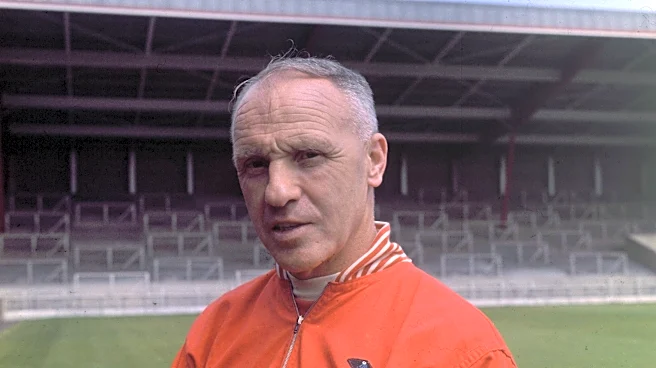
As we came into this game in November 1967, Liverpool sat second in the table. They had added a ferocious and skilful centre-forward to their attack in Tony Hately. He was a right handful. Bill Shankly was not just a great manager of his team, but a master tactician and clever with the press.

In a less than obvious attempt to get the referee onside, he had made great play in the press prior to this game about being a very big supporter of the Football League paying referees £50 per game (the fee at this time was somewhere in the region of 10 to 15 guineas).
A ray of hope dawned on me as I took my place in the Boys’ Enclosure. Liverpool had also suffered two defeats that week: a 3-1 defeat against bitter rivals Man United and a 2-1 midweek defeat in a Fairs Cup game in Munich against TSV 1860. Maybe, just maybe, we could get something out of this game for the third season in a row!
Ian McColl had problems coming into this game, some of them probably of his own making. He did not seem to know what his best team was, struggled to get the best out of the mercurial Jim Baxter and did not seem to fancy our two experienced full-backs, Cecil Irwin and Len Ashurst.
McColl had played a number of players out of position at left-back, and John Parke was the current nervous incumbent. McColl compounded this issue with a daft plan to play big George Kinnell at right-back against Leeds in the midweek. It was a disaster, and I actually felt sorry for Kinnell in this game. He was tortured by a youngster called Terry Hibbit (who went on to provide excellent service to Newcastle in the 1970s) and was being barracked by the Roker crowd in the process, who I don’t think had ever forgiven him for accepting the captaincy from McColl in place of Charlie Hurley.
We went into this game having lost at Stoke the weekend before, as well as suffering the midweek defeat to arch-rivals Leeds, and were hovering dangerously on the edge of the relegation battle in fifteenth position.
I had hoped to see one of my favourites, Martin Harvey, play in this game. He was another player whom McColl did not seem to rate. Harvey had been out of the team so much that he had asked to go on the transfer list. Rumours were rife that Coventry were coming in for him, and also that Aston Villa were going to come back in for him.

Villa had actually agreed a £30,000 deal with Sunderland a couple of weeks earlier, but an injury crisis had seen McColl stall on the deal as Harvey was drafted in at left-back for a game at Arsenal. By all accounts, he had played well, but nonetheless was back out of the team the following game and the Villa move fell through.
To be fair to Harvey, he had asked to come off the transfer list and try to bury his differences with McColl just prior to this game, but it still took another fortnight before this cultured half-back was back in the team.
Thankfully, McColl dispensed with the experiment of playing Kinnell at full-back as Irwin was recalled. Kinnell was moved to left-half and Brian Heslop dropped out of the team, while Ralph Brand came back in at inside-forward.
There was a fair bit of wintry fog on a cold day as the game kicked off, with around 30,000 fans in the ground.
After some early sparring, it was Sunderland who almost took the lead. Jim Baxter lost his marker and sent the lively Colin Suggett away down the left wing. He slipped a clever pass right into Neil Martin’s shooting channel. Martin let rip with a rocket of a shot that looked like it was heading into the back of the net. Liverpool keeper Tommy Lawrence sprang and just got one hand to the ball to stop it scorching into the net at the upright.
Two minutes later, it was Charlie Hurley who rose majestically for a corner to get a powerful downward header away. Lawrence again got a hand to the ball but could not clear the danger as Brand zipped in. However, as quickly as he won the ball, he lost it to the hard-tackling Tommy Smith, who cleared it.
Ian St John had started the game well in midfield. He made a darting run right down the centre of the pitch and steered the ball out to Roger Hunt on the left side of the penalty box. His hard, low cross was right in the corridor of uncertainty, as Parke, Irwin and Hately all went for the ball. Parke got there first and attempted to smash the ball clear. Unfortunately, the ball cannoned off Irwin’s thigh and flew past Montgomery into the back of the net.
Liverpool had the bit between their teeth after the goal. Baxter was getting increasingly involved in defence as Sunderland struggled to break out.
Left-winger Peter Thompson beat John Parke easily and forced an acrobatic save out of Montgomery. Hunt sent a shot over the bar, and Callaghan and Hately sent shots past the post.
Sunderland broke the siege in fine style when Allan Gauden beat his marker and sped away down the right wing. He fired in a cross that Liverpool full-back Gerry Byrne put out for a corner. The kick was perfectly flighted for Neil Martin to get a powerful header on target. Lawrence fingertipped this away.
Suggett picked up the loose ball and sent an accurate pass to Martin just inside the box. He struck the ball with his left foot, and it powered into the net at the angle of the bar and post. What a really good strike this was, just before half-time.
The teams left the field to good applause. It had been a ding-dong battle, and we more than deserved our equaliser.
The second half proved to be more intense rather than exciting, with Liverpool keeping the ball and slowing the pace of the game down whenever they could. The two midfields cancelled each other out, but still it was Sunderland who probably created the best chance of the half.
Suggett was involved again as he controlled the ball and aimed an accurate pass to Brand, lurking with intent. Unfortunately, he fluffed the opportunity right in front of goal.
Sunderland had been defensively much better as Liverpool retained possession for large stretches of the game in the second half.
The final whistle brought good appreciation from the crowd. It had not been the great game we had watched the previous two seasons, but once again we had taken a much-needed point from the game.
Former Sunderland player Ivor Broadis, writing in the Sunday Sun, said: “Spirited application rather than matching skill against skill earned the Wearsiders a point they just about deserved.”
He added that “Hurley’s handling of Hately (a player he had often struggled with in previous games) and Todd’s policing of Hunt became complete subjection” as the game progressed.
Todd and Hurley were probably Sunderland’s best players on this day, with Thompson and St John best for Liverpool.
The Journal’s Merit Table (for all North East players) showed Jim Baxter at the top of the table with a 7.9 average score per game. Colin Todd and Jim Montgomery were just behind on 7.7.
Liverpool went on to finish in third position. Sunderland avoided relegation for another year, finishing 15th.
In other news elsewhere, Bobby Kerr played his first game for Sunderland since breaking his leg the previous March, turning out for Sunderland 4ths against Seaham St Cuthberts.
Division One
Date: 18.11.1967
Venue: Roker Park
Attendance: 29,933Sunderland 1-1 Liverpool
Goalscorers: Irwin (own goal, 25 mins), Martin
Sunderland: Montgomery; Irwin, Parke, Todd, Hurley, Kinnell, Suggett, Brand, Martin, Baxter, Gauden.
Sub: Herd.Liverpool: Lawrence; Lawler, Byrne, Smith, Yeats, Hughes, Callaghan, Hunt, Hately, St John, Thompson.
Sub: Ross.