
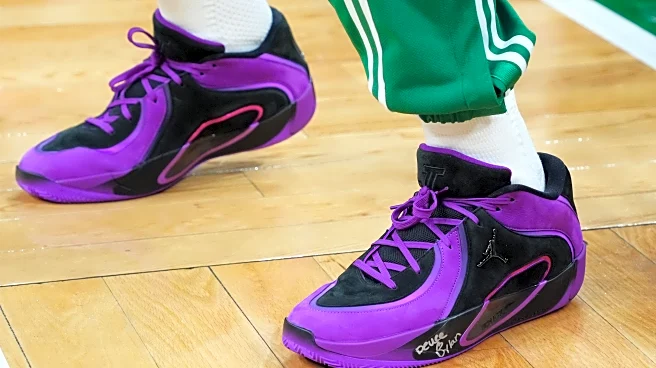
#1 – Surviving thanks to Jaylen
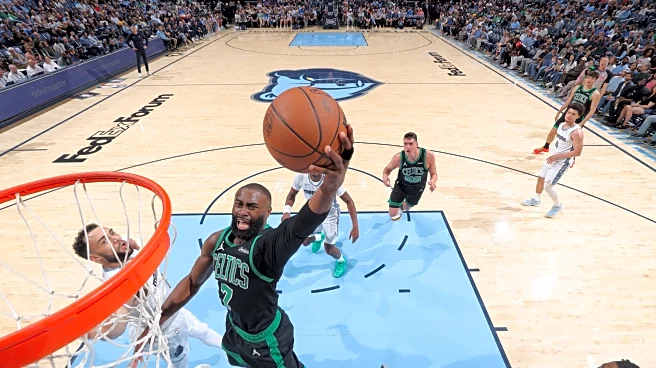
At half-time, Jaylen Brown had scored or assisted on 50% of the Celtics’ points. As the Timberwolves have one of the best rim protections in the league, Brown’s ability to be somewhat efficient from the mid-range is what got the offense going.
The problem the Wolves sometimes have is that, because of Gobert, the spacing gets too crowded and their offense struggles. That is one of the reasons they were stuck at 14 points after the first quarter. In the second period, the Wolves were able to go on a run
with the Frenchman out, thanks to better spacing but also more aggressive defense.
Yet, these moments without Rudy Gobert create another problem for the Wolves: Jaylen’s drives. In the first half, the Celtics were able to get to the rim thanks to Brown and make the most of the lack of rim protection. Here, JB first gets the switch he wants and goes for an impressive reverse drive.
But after a remarkable start, Jaylen Brown slowed down in the second half, going 3-for-13 from the field. And, like the rest of the team, he collapsed in the fourth quarter, when the intensity was at its peak for the Wolves.
#2 – A fourth quarter to forget
To start the last quarter, the Wolves decided to go small and be mobile rather than tall. They put pressure on the ball as early as possible in the possession and tried to disrupt the offense that the Celtics were trying to run. As Joe Mazzulla said, the Wolves’ defense without their big man disrupted the Celtics’ offense even more.
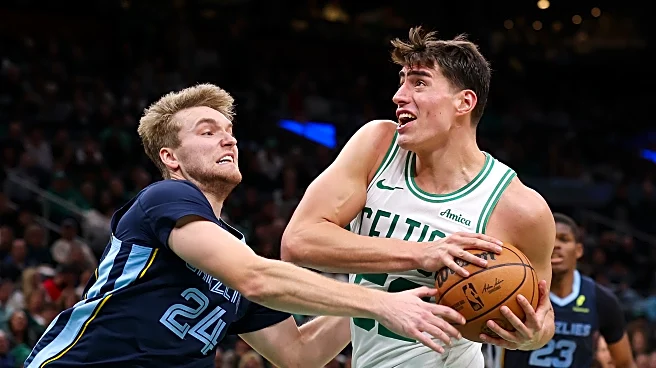
On this drive from Jaylen Brown, we can see that the pressure on the ball comes much higher than in the first quarter, and the screen from Luka Garza isn’t really set. The All-Star drives early—maybe too early—and goes into a crowd of three Wolves ready to protect the paint.
Behind the Celtics’ collapse in the fourth, there was also a big shooting slump, going 0-for-7 from deep. Some of these shots were really well contested, and the Celtics weren’t able to get the good 2-vs-1 situations they wanted.
These misses created another problem: the Wolves could attack much more in transition and didn’t have to deal with the Celtics’ half-court defense.
#3 – The quickness off the bench
While the small-ball defense offers much more mobility for the Wolves, it also gave them an opportunity to run faster in transition and avoid being stuck in half-court situations. Without Anthony Edwards, the Wolves must avoid stagnant situations as much as possible because they lack the driving force that usually creates gaps.
So, as soon as they got a rebound, they ran. On the play below, you can see the willingness to push the ball up the floor as quickly as possible, with everyone running to offer passing options to the ball-handler until someone cuts to the rim.
With more speed off a miss, the Wolves could also force the matchups they wanted early in the possession. Here, Naz Reid gets a post-up against Brown while his normal matchup, Luka Garza, is far away from the ball. So this isn’t strictly transition, but because the Celtics weren’t able to get an offensive rebound or stop the break, Reid gets the ball exactly where he wants it against a favorable matchup.
As the Celtics kept missing, the Wolves had more and more opportunities to play fast, get away from half-court offense, and capitalize on their defensive intensity.
#4 – Getting Jayson Tatum in rhythm
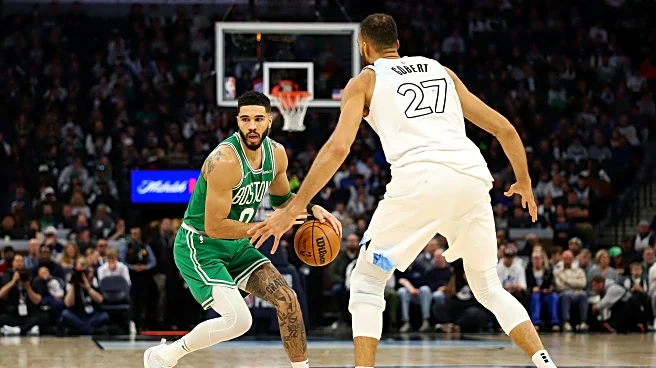
The first half was a little brutal for Jayson, with one assist, one turnover, and four missed shots. But to get his groove back, the Celtics coaching staff involved him right away after half-time. A couple of play calls with Neemias Queta particularly stood out. They went to a Spain pick-and-roll action, with Sam Hauser positioned to bother Gobert. That gives a bit more space to JT after Queta’s second screen to attack the rim.
Same play call on the possession below. This time, Jayson snakes the pick-and-roll, and we can see that Queta isn’t fully used to that pattern. Yet, Tatum isn’t bothered and can launch a triple like he used to when a defense is in drop coverage. Bang!
With this action putting a player behind Gobert, the Celtics could punish his presence on the court and give Jayson Tatum the momentum needed to get back on track. Still, Tatum needed Queta’s screens, and the Portuguese big did a great overall job helping him attack the Frenchman’s coverages.
#5 – Going around Mount Gobert
Before the game, Joe Mazzulla and Chris Finch talked about the central role of Rudy Gobert in the Minnesota Timberwolves. They both highlighted that the French center has improved his versatility and is doing a better job on the perimeter than earlier in his career.
The Wolves’ coach also mentioned that, with Neemias Queta at center, the Celtics don’t have the typical stretch-five they had with Al Horford or Kristaps Porzingis. However, recently, the Celtics have started using the Portuguese big man as a hub on the perimeter.
With Queta’s screen quality, the Wolves were sometimes forced to switch instead of staying in drop coverage. Here, Reid gets stuck in the screen long enough that Gobert has to switch on the perimeter, which opens a cut to the rim for Queta.
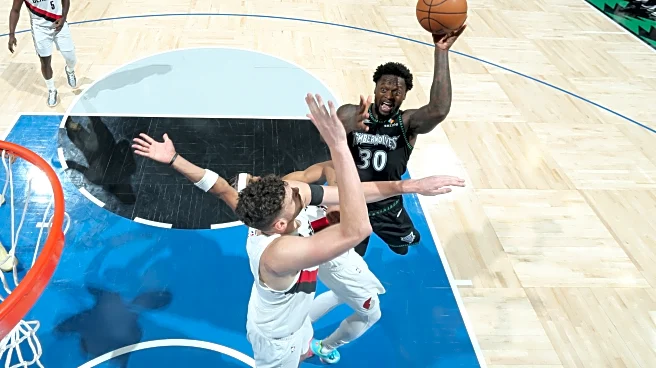
#6 – Dealing with Julius Randle
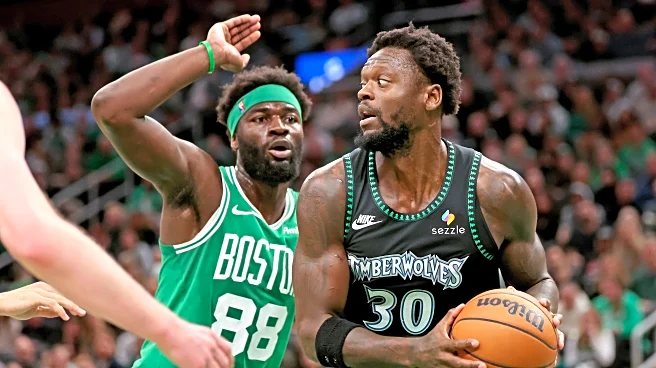
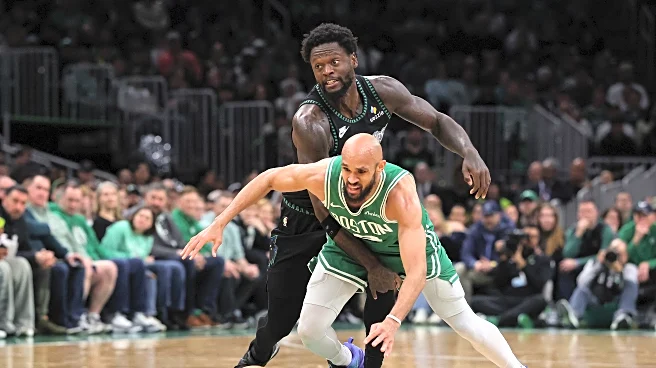
The Celtics’ defense is elite but still has a couple of weaknesses: quick guards and heavy wings like Julius Randle are among them. Going into the game, the Celtics knew they would have to adjust: do they let him play one-on-one, or send help and rotate behind his passing?
The biggest threat comes from his post-ups because of his frame, but also because his passing improves when he’s stationary. The Wolves knew that and started the game right away with a post-up for Randle. What I didn’t expect was to see Hauser matched up with him. Yet, you can clearly see that the others are ready to help and willing to leave Jaden McDaniels open, for example.
With players like McDaniels and Gobert on the court, the Wolves made it easier for the Celtics to decide how to defend. As often, the goal was to protect the paint and leave below-average shooters open, as long as the drive didn’t break the first defensive line.
This is another reason the Wolves went small later in the game. Reid is a much better offensive fit next to Randle. Here, he sets the screen, and Garza is stuck for a second protecting against a potential drive from Julius. This leads to more space for Reid when he catches the ball, and the shot is open.
#7 – Bones’ revival
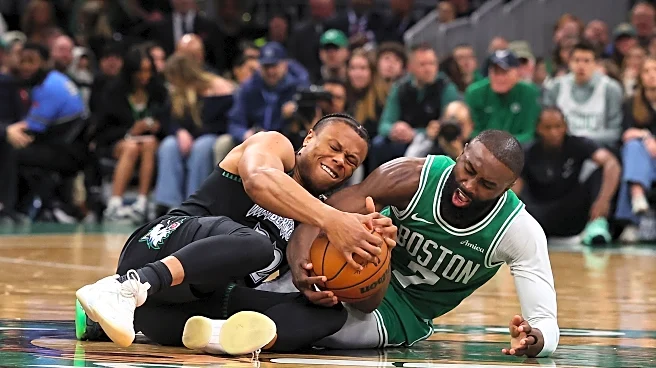
As we said earlier, the Celtics struggle with quick guards and heavy wings. And while Julius Randle’s threat was well managed, the quickness of Bones Hyland was not. The guard, who was first signed on a two-way contract, is showing very good offensive potential for the Wolves. Not only was he fast in transition, but he also exposed the Celtics’ pick-and-roll defense.
But, as Joe Mazzulla mentioned after the game, it was his speed in transition that caused the biggest problems. On this play, he outruns everyone and gets to the rim in just a couple of seconds. Brown doesn’t have time to get set, and the Wolves get another layup.
#8 – The aggressiveness is rising
After the Thunder, the Suns, the Warriors, and now the Wolves, this is the fourth team in recent games trying to avoid the Celtics’ half-court defense as much as possible by pushing in transition.
While the three other teams mostly did it by forcing turnovers, the Wolves were able to combine speed off live rebounds with on-ball aggressiveness to disrupt the Celtics’ flow.
Opponents are now aware that the Celtics’ ability to take care of the ball can be used against them. They can attack more freely but also make sure they are set defensively. With the Thunder and the Hawks coming to town this week, it will be interesting to see how the Celtics adapt to that level of aggressiveness.
#9 – Losing the bet against McDaniels
In the second half, the Celtics paid the price for their bet on McDaniels’ shooting. We mentioned earlier that Celtics defenders were often helping off McDaniels because he was seen as the lesser shooting threat. However, he scored 9 points from deep in the second half, fueling the Wolves’ run.
The defense would rather go under screens against him to protect the paint, but this gives him a chance to punish that approach if the shooting variance swings his way. It was a bold choice considering his efficiency from deep this season (41%), but the Celtics’ paint protection is sometimes worth the gamble. It just didn’t work this time.
#10 – Too lackadaisical
After the game, Jaylen Brown spoke candidly and said, “we didn’t play Celtics basketball tonight,” and used a word I had never heard back in French school: “lackadaisical.” For those who, like me, hadn’t heard it before, it means “lacking life, spirit, or zest.” And I think that perfectly captures the Celtics’ performance once the Wolves went small and attacked them with speed and intensity.
The Celtics will need to regroup and find their “zest” again before Wednesday to be ready for the biggest game of the season: OKC Thunder at home, with Jayson Tatum and Jalen Williams back on the court.”